



 Markets
  Weather

Police are pushing to introduce facial recognition cameras, alcohol restrictions and dance floor limits on a popular pub in Sydney’s inner west, in a proposed crackdown that local councillors have blasted as heavy-handed and at odds with the city’s night-life resurgence.
Weeks after the Minns government ditched the last of Sydney’s infamous lockout laws, NSW Police are proposing tougher conditions for The Marlborough Hotel on King Street in Newtown, citing dozens of reports of alcohol-related incidents in the past few years.
City of Sydney deputy mayor Jess Miller, who will oppose the changes with the support of most councillors at a meeting on Monday, said the proposed rules were “worse than the lockouts”.
“This signifies a major step backwards in reviving the 24-hour economy and undermines the work of the City and the state to balance vibrancy and safety in a way that is reasonable,” Miller said.
The state government’s “vibrancy” reforms have aimed to resurrect Sydney’s night-life by slashing restrictions on live music, hospitality and entertainment at NSW venues.
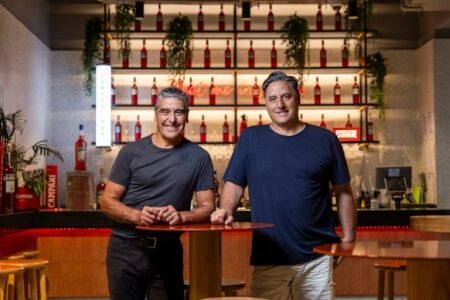
The Marlborough, also known as The Marly, has operated since 1860 and is owned by hospitality group Solotel. As many as 1500 patrons can pass through on a busy night.
Police from the Inner West local area command wrote to the NSW Independent Liquor and Gaming Authority in September, requesting changes to the hotel’s liquor licence due to “ongoing compliance issues” that they said had caused a “significant risk to public safety”.
The submission said there had been more than 90 reported incidents of assault, offensive behaviour, sexual touching, drink-spiking, sexual assault and resisting, hindering or assaulting police, at or near the pub, by patrons or revellers who had recently left the venue, in the past five years.
Police acknowledged that the venue had introduced measures – including body-worn cameras for some security staff, and shifting the main entrance – to improve safety and compliance, but they were concerned this “has had minimal impact on reducing the frequency of alcohol-related incidents”.
They are seeking to impose conditions including a facial recognition system that would operate daily across the venue after 9pm; uniformed security guards monitoring the dance floor and beer garden after 10pm; extra RSA (responsible service of alcohol) marshals; alcohol restrictions after midnight; and limiting capacity on the venue’s dance floors to one person per square-metre.
Solotel was contacted for comment.
A draft submission from City of Sydney councillors opposing the changes suggested the figures police used in the submission were “misleading”, and the licensee’s own analysis showed 40 of the 93 reported incidents were withdrawn, or the matters did not proceed.
The submission said the analysis showed that the number of police-reported incidents at the venue had fallen from 25 matters in 2023 to seven incidents in 2025, a 72 per cent drop in two years. Staff at the hotel had also refused entry to more than 1800 hopeful patrons in the year to August 2025.
Miller said: “The number of incidents that the police have highlighted alone does not reflect the proactive measures that the venue takes in preventing and managing the patrons.
“It also does not take into account the size of the venue, the key location on King Street or the fact that it is usually the latest trading venue in the precinct with entertainment and dancing.”
The draft submission urged the authority to reject the conditions in their current form, arguing that the Marlborough was a cultural institution they considered to be a “safe, well-managed venue”.
It said that requiring facial recognition technology represented an “extraordinary intrusion into personal privacy” which would have a “chilling effect on patronage and cultural participation”. It also argued that the “cumulative impact of the proposed conditions would render the hotel commercially unviable for late-night entertainment”.
“The proposed conditions [are] disproportionate, privacy-invasive, and directly contrary to the NSW government’s clearly stated policy direction toward targeted, risk-based regulation and a thriving 24-hour economy,” the draft submission said. Councillors will debate the matter on Monday night.
Music and Night-time Economy Minister John Graham said he hoped all the parties could reach a solution to the matters that balanced “safety, vibrancy and cost to the business”.
“Any progress we make unlocking the night-time economy cannot come at the expense of safety,” he said.
“Compared to the lockout era, we have less of a blanket approach and better processes for resolving issues at individual venues.”
The liquor authority will consider the submissions before deciding on any changes to conditions.
Liberal councillor Lyndon Gannon said: “Policing is a hard enough job, but no one is suggesting our collective ambition for Sydney is to go back to pre-lockout law days. That’s not going to happen.”
Start the day with a summary of the day’s most important and interesting stories, analysis and insights. Sign up for our Morning Edition newsletter.
From our partners
Read the full article here