




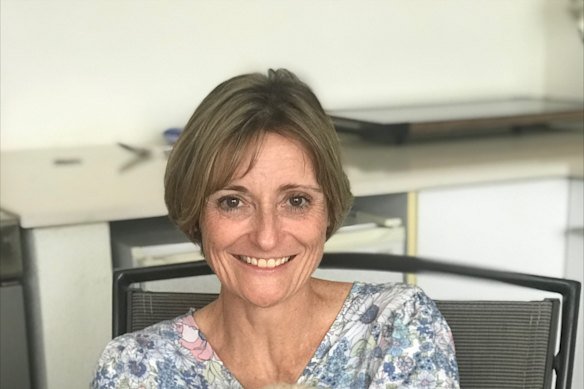
Dr Deb Ibbotson is one of Australia’s foremost advocates for Voluntary Assisted Dying to be available by telehealth. Her practice is in Emu Park in central Queensland.
Fitz: Thank you for your time, Doctor. I want to get to the events of this week, where telehealth and Voluntary Assisted Dying are suddenly on the agenda, but can we go first to your medical background?
DI: I’m originally from South Africa, and have been a GP for nearly three decades. As a doctor, you deal with looming death every day of your professional life. Shortly after arriving in Australia, I got very involved in providing palliative care for my patients.
Fitz: When did you get involved with VAD and were you an activist for it from the beginning?
DI: Not an active activist. But when I heard that VAD was going to be legalised in Australia, I immediately went to the first meeting held in Rockhampton to find out about it, and quickly signed up to do the study required to administer VAD. As a doctor, we so often have families and patients just looking at us and going, “How much longer is this going to take?” The family are exhausted. Not eating. Not sleeping. Despite wonderful palliative care helping to ease their passage, it can be excruciating for them to watch their loved one lie there for days on end, waiting to die with loss of dignity and sometimes making gurgling noises.
Fitz: And can have lasting impact on those left behind?
DI: I have found that family members certainly suffer from post-traumatic stress disorder after witnessing their loved one going through a prolonged dying process. I am passionate about VAD because I believe that every person deserves the right to die with dignity, quickly and as peacefully as possible if they so wish. In my experience families are left with much better memories of their loved ones passing with VAD.
Fitz: Was it challenging to actually do your first VAD?
DI: The first case I did, this lady’s best friend was there. I was nervous, of course, but all went well. And literally, the moment she passed, her best friend just turned around and said, “Oh my god, I so wish my father could have gone like that.” And I’ve been doing them ever since. Australia’s had 7000 VADs in the last seven years since it’s been legal.
Fitz: You also ran a case that garnered quite a lot of public attention.
DI: Patrick Hammer was from here at Emu Park and had leukemia [and end-stage liver disease]. He was 38 years old – a loving husband and father of two – and was so imminently dying, that we were allowed to speed his case up because we knew he was in agony and did not have long. We got everything in place very quickly, but then because we were not allowed to send the script electronically to the one pharmacy in Brisbane authorised to send the required drugs, we had to post the script.
Fitz: Hang on, why did you have to send such an important script via snail mail?
DI: Because Queensland Health has interpreted the federal Criminal Code Act (1995) to mean that sending a VAD prescription electronically could see the doctor liable to prosecution under provisions against using a carriage service to assist a suicide. To this day, I cannot fathom how the Criminal Code Act has anything to do with uploading a script on a safe portal versus posting a script in an envelope.
[In NSW, doctors are allowed to upload the script into a special, secured portal and Victorian doctors are allowed to email them to the pharmacy for dispensing.]
Fitz: To me, that is insane, but go on.
DI: Before my mailed script had got through, and the medicine [could be delivered by the pharmacists], his wife Helena contacted me and said, “It’s too late.” Patrick had lost the capacity to affirm he still wanted to die, and all that remained was his agony. I was devastated. It was another case where we could not give him the death he wished for, and that’s where I became an advocate in this whole area, including the need to change our approach to telehealth so that it can become a full part of the process as well.
Fitz: So there are two issues here? The first is the absurdity of situations like that of Patrick Hammer, and the other is restrictions of use of telehealth in the process of VAD – and both are because of fear of contravening the Criminal Code Act, which was legislated eons before VAD was even thought of?
DI: Yes.
Fitz: Tell me about telehealth and VAD, please?
DI: Living in regional Australia, we already have a massive shortage of doctors. There are simply not enough of us to go around. Telehealth – doing medical consultations over things like Zoom and FaceTime – helps massively in being able to consult patients who might be a great distance away. But the law is such that we are restricted in the way we use telehealth in doing the preliminary consultations with VAD, which is ludicrous. Among my colleagues, there are doctors in places like Longreach and Cairns driving for hours for one VAD consultation. The net effect is that Australians in regional areas are being denied the opportunity to die with dignity in the same way as other Australians. It is as simple as that.
Fitz: To get my head around this, I think I need to understand more of the process of VAD. There are many consultations, yes, before they get to the “dying of the light?”
DI: Yes. You start with the co-ordinating doctor, who can talk of the process and make an assessment if the patient meets eligibility requirements – which vary a little from state to state. In Queensland, they have to be a resident and citizen who is older than 18, and have a terminal illness that is both causing suffering, and expected to take their life within 12 months. They have to have capacity all the way through the entire VAD process, to express consent to the process, right until the very end. If they lose capacity, we cannot continue the VAD process. A second doctor then must consult the patient and come to the same conclusion. At this point, the co-ordinating doctor has the third consultation, which is getting into the nitty-gritty, including the choice of how their medication is administered – whether orally or intravenously. The patient has to sign a second request for VAD – witnessed by two people who are not beneficiaries of the will – and later make a third request verbally. If the co-ordinating doctor is satisfied that all criteria are met, then, on an agreed time and date, they move to the final part of the process.
Fitz: And your view, and that of the vast majority of your colleagues, is that when doing face-to-face consultations is a logistical nightmare, you should be able to use telehealth at every step along the way, without restrictions, bar the final part where the VAD actually takes place?
DI: Yes. Telehealth can be used at the moment on a restricted basis, but in the first two consultations, the doctor can’t discuss anything bar matters of eligibility. That must change. Even in those rare cases where both doctors’ assessments need to be done using telehealth, there would still be a face-to-face visit to assess the person’s situation by a senior VAD-trained pharmacist, for cases where the medication is to be taken orally, to explain all aspects of it.
Fitz: And yet now some light at the end of the tunnel. That was the motion put up and passed at last weekend’s ALP National Conference, a 110-word amendment to the Criminal Code Act which would exempt legal VAD from being covered by its provisions against assisting a suicide. Still, opponents, including Prime Minister Anthony Albanese, maintain that although they support VAD they think that allowing greater use of telehealth would risk removing important guardrails. What’s your response?
DI: [With some emotion.] Well, you’re not losing guardrails, because VAD is a regulated medical practice, not a criminal act. I take offence to a code being applied to VAD regarding suicide. These patients are not suicidal; they would do anything to live if they could. But they can’t, and while they are waiting to die are gravely suffering. It’s insulting and disrespectful to even link suicide to these patients.
Fitz: Surely, however, the issue of coercion is a factor? A doctor actually on site would be much more capable of assessing both the physical condition of the patient and if someone is possibly being coerced into going through with it.
DI: I’d agree with that, to a point. But we’re not doing this on a phone call. It’s things like FaceTime where you can see each other and you can get a pretty good feeling for all of that – the state of the patient, the state of the family. Is the patient being coerced? At least allow us to do it via a video conference where you can see everyone. But in terms of coercion, we explain very clearly throughout the process that it is the law that no one can coerce them and fines etc can apply.
Fitz: Does it pain you greatly to see enduring suffering that does not need to be happening?
DI: Absolutely. I get deeply affected by it all. I mean, the stress here is about the patient and their family, but the stress is a massive impact on us too because we’re trying to move heaven and earth to give them what they’re wanting, and then we’re completely blocked by posting a script, while a lot of other doctors are getting blocked by not being able to do telehealth. We have people who are just begging us to please help fulfil their wishes. So it’s deeply stressful on all of us VAD doctors.
Fitz: Anything else you’d like to say?
DI: Yes. The next issue outside of the impact of the Criminal Code on VAD is that of the varying time limits on likely death as one of the eligibility criteria. In Queensland, it’s 12 months. NSW has a six- to 12-month limit. But there are many people who, though they fall outside that prognosis, have still got a terminal illness and they’re suffering. ACT has no requirement of any time period like that, only that the person be approaching the end of life, and it is a much better way of doing it. Are they dying? Are they suffering? Do they want to die? They should not be denied their desire, on the reckoning that the suffering is actually going to go longer than others.
Fitz: That certainly makes sense to me. Thanks for explaining it all so cogently, and allow me to say, bravo your work.
Get a weekly wrap of views that will challenge, champion and inform your own. Sign up for our Opinion newsletter.


From our partners
Read the full article here