

 Markets

Updated ,first published
For hours, the country had held its breath.
The word went out at 11am that Anthony Albanese would address the nation at 7pm, and that was enough to rattle things. You don’t summon the country in prime time for good news.
Families paused holiday plans. Group chats lit up. Were we still going away? Was this about petrol – or something worse? In Britain, Keir Starmer would be speaking overnight. In America, Donald Trump too. Would we be dispatching troops?
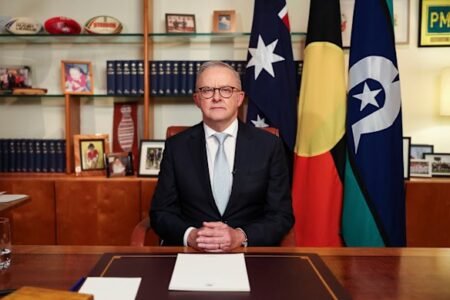
By the time Albanese appeared from behind his desk in a pale blue tie, expectations were high: this was big.
“My fellow Australians,” he began, before reminding us we are, at heart, “an optimistic country”. Then he conceded it was, right now, “hard to be positive”.
He struck a grave tone, warned of “the biggest spike in petrol and diesel prices in history”, spoke of months of economic pain ahead – and then, after three or so minutes, told Australians to enjoy their Easter.
That was the moment it landed. That’s it? Did Anthony Albanese really have to address the nation for this?
After a day of speculation, the country had been summoned at tea time for a message that, at its core, was: carry on. Fill up as normal. Don’t take more than you need. Maybe catch public transport if you can.
It left a nation panicked for hours, only to be told not to panic. It’s difficult to think a message of tough economic times ahead couldn’t have been saved for any day.
Prime ministers don’t address the nation lightly – or at least, they didn’t. In March 2020, Scott Morrison went on television as COVID closed in. That address came as borders were tightening, stimulus was being rolled out, and within days the country would move into lockdown. Each step escalated. And then it got even worse.
That’s what gives these broadcasts their weight. They signal a turning point – that something fundamental is shifting, and Australians need to adjust, quickly.
It turned out that Albanese was there mostly to re-announce his previously announced announcements, and to waffle on about how great he was for cutting the petrol price by 26 cents a litre. Does that really count as worthy of an urgent national address?
After weeks of misjudging the severity of the looming crisis, of admonishing those who thought the moment needed action, of missing the moment, he wanted to change tack and prepare the country.
A generous interpretation is that it reassures people that there is a plan after a month of mixed messaging.
The risks are real. Tensions in the Middle East are pushing up global prices, and there are credible warnings that supply could tighten in the weeks ahead. Governments would rather nudge behaviour early than impose blunt restrictions later.
But that’s not how it was framed.
After weeks of insisting fuel supplies were strong, and days after cutting the excise to make petrol cheaper, the government is now gently urging Australians to use less of it. Not a hard directive – just a suggestion, wrapped in the language of national effort.
If it’s serious enough to warrant a national address, the message felt thin. If it’s not, the whole exercise was over-dramatised.
What’s left is a government trying to turn the dial without admitting it’s changed the setting – and a public left to reconcile two messages within a week.
Fill up or hold back. Take your pick.
It is a difficult balance to strike: sound serious, but not alarmist; shift behaviour, but not admit a shift; prepare people without spooking them.
But the spooking happened anyway – before the speech even began.
Have a Happy Easter, everyone. But not too happy. Grim times await!
Cut through the noise of federal politics with news, views and expert analysis. Subscribers can sign up to our weekly Inside Politics newsletter.
 Rob Harris is the national correspondent for The Sydney Morning Herald and The Age based in Canberra. He is a former Europe correspondent.Connect via email.
From our partners
Read the full article here