




 Markets
France’s local elections and the leaked communication between centre-right and far-right parties in the European Parliament have brought the issue of political polarisation in the European Union back to the forefront.
Brussels, My Love? explored these topics with the French-German researcher Sophie Pornschlegel, Svenska Dagbladet’s correspondent Teresa Küchler, and Euronews’ Stefan Grobe.
The right-wing group chat
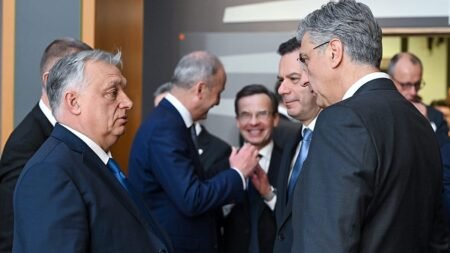
According to an investigation by the German news agency dpa, the centre-right, pro-EU European People’s Party (EPP) has been collaborating with far-right parties, including Alternative for Germany (AfD), on tougher EU migration laws, with communication happening on a WhatsApp group. Manfred Weber, the EPP’s leader, is at the centre of the scandal.
“It’s very bad for Manfred Weber and the Christian Democrats in Germany,” Stefan Grobe said. “Not a day goes by that they don’t say ‘there’s a firewall between us and the far-right’ (…) and all of a sudden we learn that he [Weber] in secret negotiated with the AfD,” he continued.
According to Pornschlegel, on the other hand, this investigation should not come as a surprise.
Pornschlegel underlined that the EPP has been working with the European Conservatives and Reformists (ECR) and other far-right parties since the last European elections in 2024 on numerous legislative files, including deregulation and migration.
The polarised local elections
Last Sunday, the first round of the 2026 municipal elections was held in France, with nearly 48.7 million voters called to the polls. In cities where no candidate reached 50%, a second round will be held on March 22.
In Paris, the socialist candidate Emmanuel Grégoire is polling ahead, while in Lyon an alliance between the Greens and the hard-left France Unbowed has reshaped the race.
According to Küchler, these elections show once again that “Macron’s centre is gone,” as more extremist parties to the right (National Rally) and left (France Unbowed) are taking the lead.
Pornschlegel, however, believes these elections are not a litmus test for the presidential race of 2027. According to her, the political stakes are different, and the turnout of this election was particularly low.
You can listen to the podcast in the player above or wherever you get your podcasts.
Get in touch with us by writing to Brusselsmylove@euronews.com.
Additional sources • Georgios Leivaditis, sound editing and mixing.
Read the full article here