


There are two distinct kinds of optimism. The optimism of the entrepreneur, who sees limitless vistas ahead. And the sweaty optimism of the gambler, chasing good money after bad in the hope of recouping oppressive losses. Australia has every right to inspire the former. Yet somehow we’ve succumbed to the gambler’s curse.
I am sick of doom and gloom. And I expect many readers are, too. Australians have a shard of sunshine lodged in our souls that revolts against prolonged pessimism. At the end of winter, as the chill lifts from the air, we find it hard to believe that the economic pall hanging over our country is any less transient.
So it was a great relief to read a report this week that articulated a case for the first kind of optimism. Management consultancy McKinsey has laid out a path for “Australia’s next century of plenty”. It argues that after a lost decade, in which growth flagged, the nation can draw on its strengths to choose prosperity.
The vision is an inclusive one. It’s an Australia-focused version of a global project by the consultancy, which imagines even the poorest country in the world achieving the prosperity and quality of life of Switzerland. The alpine nation is chosen as an illustration for its desirable attributes – a country with high trust, reliable infrastructure, clean energy, safety and prosperity. Switzerland’s GDP per capita is $US82,000 ($115,000) – almost $US20,000 higher than in Australia.
Both the global story of progress and the Australian version point out that we have what it takes to realise a world and an Australia in which living standards improve as dramatically over the coming century as they have in the past.
The only catch is that it’s up to us. That’s a call to action, not an insurmountable hurdle. Australians have, again and again, proven that we are capable of changing course to seize opportunity.
The report argues that, while we tell ourselves that we have been the passive recipients of good fortune – repeating Donald Horne’s scathing assessment that “Australia is a lucky country, run mainly by second-rate people who share its luck” – the truth is very different. McKinsey details how Australia made its own luck through hard work – embarking on bold reforms and making the most of our resources, geography and creativity. Trade and liberalisation laid the foundations of boom times from 1945 to 1970 and 1983 to 2015.
This coming week brings another report that will be framed in optimistic terms. On Monday, Treasury will release the Intergenerational Report, a series started by Howard-era treasurer Peter Costello to generate discussion over long-term demographic, economic and spending challenges.
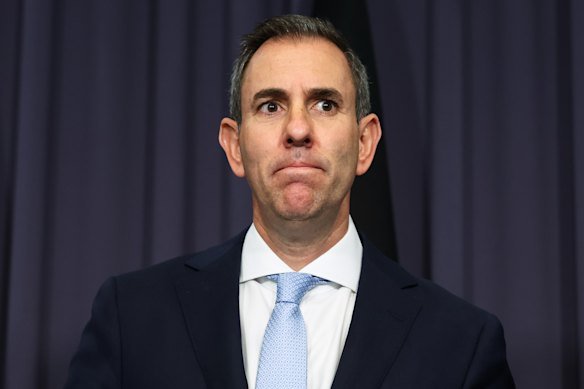
To put it bluntly, the reports are supposed to act as the bad news on what could happen if we get lazy and complacent. The clearest sign that we have become lazy and complacent is that Treasurer Jim Chalmers is trying to cover up the bad news in the coming report – painting a picture of prosperity that our current trajectory can’t justify. He let the cat out of the bag on this one when he decided to revert to the 30-year productivity average, rather than the 20 years he’d previously said was more honest and accurate.
Australia is in a slump, as it was in the war years and before 1983. The McKinsey report calls the years since 2015 a lost decade of growth. Productivity is flagging and, despite the government’s best efforts to raise wages by mandate, inflation keeps overtaking them. The real worth of an hour’s work in a low-productivity economy keeps revealing itself through this dynamic.
It’s the old Soviet joke: we pretend to work and they pretend to pay us. But, as in Soviet times, it wasn’t really people who weren’t putting in the effort – it was capital. When capital withdraws or gets caught up chasing the wrong incentives, we all lose out. The direct result is that Australians are now able to afford less, and have been for the past five years. Yet with the coming increase to capital gains tax, Australia seems set on punishing capital that is invested too well.
Early reports are that Chalmers is planning to announce a $500 billion improvement in the federal government’s long-term debt outlook in the Intergenerational Report. But he’s already been pinged by economists for overly optimistic assumptions. Despite a precipitous decline in productivity over the past 10 years, and a 20-year average of 0.8 per cent productivity growth, Chalmers will assume a 1.2 per cent rate of growth will improve the national bottom line.
This is the second type of optimism: the sweaty optimism of the gambler on a losing streak, hoping against hope for a magical turnaround in his fortunes.
And just like a gambler, this coming report will undoubtedly fall victim to the sunk-cost fallacy – planning more spending on lost causes, instead of quitting before we fall further behind. The 2023 Intergenerational Report, or IGR, released under this government painted a picture of a future in which Australia would reap the benefits of manufacturing using cheap renewable energy, with significant reliance on green hydrogen. Since that report – just this month, in fact – Energy Minister Chris Bowen told the ABC that he “never quite bought the hype on green hydrogen”.
Losing a unicorn like green hydrogen from the 2023 report’s set of assumptions should, by rights, cause an adjustment in productivity forecasts, as the technology was said to be key to having energy at the right cost in the right place at the right time. Instead, I expect to see the report dig in behind the economic dividends of renewables, not just their importance for climate outcomes.
Also like a gambler, the coming IGR is unlikely to own up to the full extent of our debts. The treasurer already makes liberal use of an accounting trick to keep the full extent of Australia’s national debt off the budget bottom line. It allows him to keep anything classified as an investment – such as the vastly over-budget Snowy Hydro 2.0 project, which Liberal prime minister Turnbull first hid from the bottom line – off the balance sheet. It’s a neat trick that doesn’t stop taxpayer money pouring into a money pit that just keeps getting bigger and further away from completion.
The difference between the two types of optimism is reality. One is luck we can make, the other a story of luck to placate us. It’s time we gave up the gamble, rolled up our sleeves and got on with making the real deal.
Parnell Palme McGuinness is an insights and advocacy strategist. She has done work for the Liberal Party and the German Greens and is a senior fellow at the Centre for Independent Studies. She is also an advisory board member of Australians For Prosperity, which is part-funded by the coal industry.
Get a weekly wrap of views that will challenge, champion and inform your own. Sign up for our Opinion newsletter.
From our partners
Read the full article here