





 Markets
  Weather
It is more than two years since the Albanese government received an independent audit of the Department of Defence’s real estate portfolio, which at 3 million hectares is the largest of the Commonwealth’s land holdings. Sites across Australia, including several in Victoria, were identified as underused and expensive to maintain.
The auditors, former Defence Housing Australia managing director Jan Mason and Infrastructure Victoria chair Jim Miller, said tough decisions were needed. “It is very clear and widely acknowledged that Defence does not need and cannot afford all of the current estate,” they said.
Asked this week about the delays in the government’s response, Defence Minister Richard Marles said: “It has been difficult. This is a challenging issue.”
One reason announcements were postponed beyond last year’s general election is surely the emotive nature of proposals to sell off and even dismantle historic sites.
Base sales were previously proposed in a report delivered by independent consultant George Pappas during the Rudd government, only to be rejected. The need to consolidate bases and reinforce those in the country’s north and west was reiterated in the 2013 Defence White Paper. Then, when the RAAF recommended a sale including its base at Laverton in 2016, the Turnbull government quickly disowned the idea.
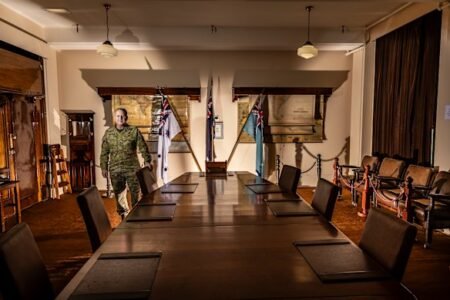
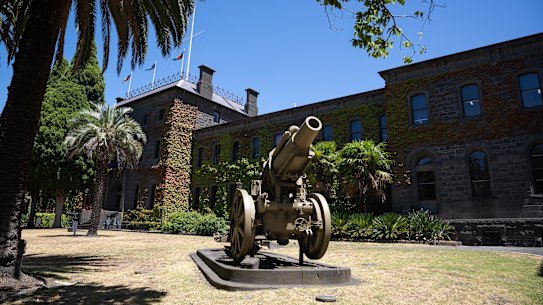
Commenting on the current plans to sell Sydney’s Victoria Barracks, Coogee MP Marjorie O’Neill described it as “the spiritual home of the Australian Army”, adding: “Our history should never be balanced away on a spreadsheet.”
We should certainly be mindful of our heritage, but as Marles and Assistant Defence Minister Peter Khalil noted, it serves little purpose while lying idle behind high walls, least of all meeting our present-day defence needs.
Among the properties on the auction block in Victoria is the first home of the Royal Australian Air Force, the 112-year-old base at Point Cook in Melbourne’s south-west.
In 2024, when there was talk of demolishing its historic hangars, Australian Council of National Trusts chair Lachlan Molesworth argued that “it is purely a decision based on the cost of maintenance. That is, these buildings are essentially going to be bowled over in order to have a bare patch of land.”
That is clearly not what is proposed now, and when Wyndham Mayor Josh Gilligan spoke to our reporter Adam Carey, his concerns were over the use the land would be put to. “We’re sick of housing and no jobs and services for the people who move into them,” he said.
Senthill Sundaram, of the volunteer Point Cook Action Group, was also thinking about jobs, urging that the site be considered for an employment precinct.
The need for a mix of development and better infrastructure was covered in depth by The Age in our series on the growth of the city’s west. While Marles and Finance Minister Katy Gallagher both agreed the land was unlikely to be used for housing alone, if we are serious about using every lever at our disposal to fight urban sprawl and create better places to live, houses should be a significant part of that vision.
Too often opportunity from Defence land is bogged by obstacles. It is more than 20 years since discussions began over the possibility of developing more than 120 hectares of land in Maribyrnong, including about three kilometres of river frontage owned by Defence. Yet, the site with potential for thousands of homes remains derelict.
In Maribyrnong it is not heritage overlays but the cost of remediation of contaminated land – estimated in the hundreds of millions of dollars – that poses an obstacle to sale.
Though the estimated sale price of the 67 audited properties, including Maribyrnong, listed this week is $3 billion, relocating staff and remediation works could leave Defence only $1.8 billion of net benefit. Crucially, though, the benefits to our cities and the people who live in them sit beyond Defence’s balance sheet.
At a time when nationally building approvals fell short by 66,000 homes in the 12 months to September 2025, and most of Melbourne’s councils are failing to meet their state-guided housing targets, there is no doubt that thousands of homes could be built on these sites.
The community appetite is certainly there. Then-Maribyrnong mayor Sarah Carter told The Age in 2023: “There is great potential for a significant level of housing on the site … we are keen to see social and affordable housing in the mix.”
In Maribyrnong, developer David Hodge called for supervision of any such development by an urban renewal authority, including representatives from federal, state and local government with an independent chair and board, to tackle remediation and planning issues.
This week, Greens defence spokesman David Shoebridge warned of the possibility that sites would end up being “flogg[ed] … for luxury private developments” rather than meeting social need.
All these concerns are legitimate and the success of any sale must be measured against them. But The Age believes that it’s past time the land was put to better use and that governments should roll up their sleeves to make sure that happens.
As another former mayor of Maribyrnong, Michael Clarke, told our reporter Sophie Aubrey last year: “The number of sites that are this big, this close to the CBD, you can count on one hand … There will be a tipping point where demand absolutely requires the federal government to move on cleaning this land up and making it available.”
The defence minister reminded us this week that “the heritage value of these properties does not belong to the Australian Army or, for that matter, the Australian Defence Force. It belongs to the Australian people.” Let’s get on with ensuring that those people are the main beneficiaries of this move.
Get a weekly wrap of views that will challenge, champion and inform your own. Sign up for our Opinion newsletter.
 The Age’s View – Since The Age was first published in 1854, the editorial team has believed it important to express a considered view on the issues of the day for readers, always putting the public interest first.
From our partners
Read the full article here