



Monash University has cut law tutorials, reducing some students’ contact with teaching staff by up to six hours a semester in what has been described as a “cost-cutting, degree-factory move”.
The prestigious Group of Eight university this year replaced 30-student tutorials with “active learning seminars” for 120 students as part of what it says is a two-year trial.
The move has riled law students, who fear the model could become permanent and rob them of valuable interaction with teaching staff, mentoring opportunities and reduced tutor availability.
“Law students aren’t by nature activist-type people, but they have been incredibly vocal about this,” Monash Student Association president Leroy Van Schellebeck said.
“It’s a cost-cutting, degree-factory move,” he said.
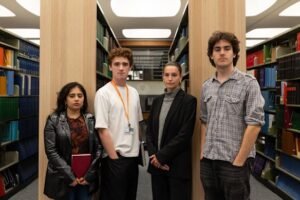
Students Remus Brasier and Esha Serai are both doing a double degree in law and politics, philosophy and economics.
Nine weeks into the semester, they said attendance at Monash, which is one of the biggest and most prestigious universities in the country, was noticeably down as students became increasingly disengaged because of their reduced contact with staff and peers.
“A lot of people don’t even come to lectures because they are recorded. So tutorials are what gets them through because they are the most effective and practical part of the degree,” Serai said.
Fourth-year student Zoe Wilkinson, who is doing a double degree in law and global studies, said her only contact was one three-hour seminar a week as her law subjects didn’t have lectures or tutorials.
“Over the four years I have studied here, I can really see the degradation of the quality of my education which is really sad,” she said.
“And we’re still paying the same fees despite there being a reduction in contact hours.”
First-year undergraduate domestic students, who receive Commonwealth Supported Places, pay about $16,300 a year for a full-time place. International students studying law pay $48,700 a year.
“They want to bring in as many students as possible who pay tens of thousands a year, but they don’t want to pay more teachers,” Van Schellebeck said.
Monash University Law Students’ Society president Thomas Hall declined to comment so as not to jeopardise negotiations with the university, which is set to meet with students this week.
A survey conducted by the Law Students’ Society after students were told of the change last November received 881 responses from honours students, with 95 per cent saying they were against removing tutorials.
The survey results were outlined in a letter from the Law Students’ Society to law faculty executive dean Steven Vaughan and associate dean Heli Askola last month.
The letter, seen by The Age, proposes the faculty return to its recorded lecture, workshop and tutorial model of teaching.
The Law Students’ Society stresses tutorials should not be seen as a supplement but “the most valuable component of [students’] legal education.”
Student perspectives were included in the letter with one stating “we are paying over $2000 a unit to receive one class that we share with 80 other people”.
With more than 4000 undergraduate and postgraduate students, Monash University’s law faculty is one of the biggest in the country.
A Monash University spokesperson denied there had been any change in contact time between staff and students and that 17 academics had joined the law faculty this year.
“There has been no reduction of face-to-face teaching and learning,” the spokesperson said in a statement.
“We are investing more in our students and in active learning, ensuring students get the most from every class.”
The Times Higher Education rankings placed Monash law school as the fifth-best law school in the country this year based on metrics including academic impact and career opportunities. But Van Schellebeck said if the model remained, the degree’s reputation was at risk.
“If this continues, Monash University law students won’t be seen as having a really high-quality educational experience which will affect their prospects when they enter the jobs market,” he said.
Brasier agreed the impact of the faculty’s reputation was a concern for students.
“I think there will be a lot of unease as we go into grad years and practice wondering whether we are actually as tooled up as the generations before us,” he said.
Fears of sliding standards and reduced contact with academic staff at Monash University comes on the back of revelations that Melbourne University was using six-year-old taped online lectures for bachelor degrees in biomedicine.
Tuition fees for the course for domestic students last year were nearly $13,600 and more than $56,000 for international students.
Start the day with a summary of the day’s most important and interesting stories, analysis and insights. Sign up for our Morning Edition newsletter.


From our partners
Read the full article here