





There’s help on the way for taxpayers and first home buyers – while property investors and trust fund users won’t be as thrilled.
Updated ,first published
While some budgets seek to play it safe and minimise offence, the government is taking risks this year, emboldened by the enormous majority it scored at last year’s federal election.
In Treasurer Jim Chalmers’ words, it is “the most important and ambitious budget in decades”. With intergenerational equity a key buzzword, the budget proudly tries to redistribute benefits away from the older and the wealthier to younger and less well-off Australians.
There are also difficult decisions to cut spending and raise revenue to pay for new tax cuts, defence equipment and policies to boost housing supply.
Winners
Most taxpayers
A new working Australians tax offset, or WATO, will provide an extra tax cut of up to $250 a year, on top of tax cuts announced in the past two budgets. This latest tax cut, which increases the tax-free threshold to $19,985, will be permanent and benefit more than 13 million workers. On top of this, 6.2 million workers will be able to use a $1000 instant tax deduction, producing an average annual saving of $205.
First home buyers
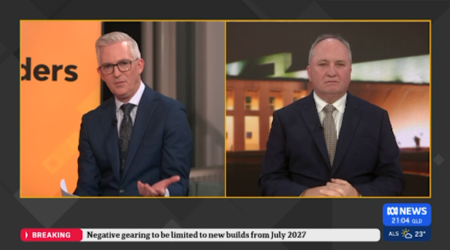
After years of growing frustration at being locked out of the property market, hopeful entrants will receive a hand-up with a major overhaul of investor tax rules. The government says its changes to reduce the capital gains tax discount and scrap negative gearing for purchases of existing properties will tilt the market towards first home owners. The government estimates that 75,000 Australians will be helped to buy their first property.
The construction sector
The government is also trying to increase housing supply by spending $2 billion over the next four years supporting local councils, power providers and water utility businesses to build critical infrastructure to support the construction of up to 65,000 homes. There will be an overhaul of planning and zoning regulations to enable quicker methods of construction. Mandatory Australian standards will also be made free for construction firms.
The Australian Defence Force
While not enough to please defence experts, the military is receiving a substantial funding boost of $53 billion over 10 years, including $14 billion over the next four years. The money will be used to modernise the defence force by investing in drone and counter-drone technologies, as well as preparing the navy to acquire nuclear-powered submarines under the AUKUS pact.
Small-business owners
Small business is usually seen as a key Coalition constituency but Labor is making a play for this demographic by announcing $3.5 billion in support for the small-business sector. This includes making the $20,000 instant asset write-off permanent from July and a permanent two-year loss carry back for all companies up to $1 billion in turnover.
Road and rail users
The budget contains $8.6 billion in spending for significant road and rail projects, including an extra $3.8 billion for Victoria’s controversial Suburban Rail Loop. The Australian Rail Track Corporation will receive $1.75 billion in equity to upgrade the nation’s rail freight network, while there is $812 million for an upgrade of the Bruce Highway. Motorists hurting because of oil spikes caused by the war in Iran are also benefiting from a halving of the fuel excise.
Losers
Property investors
Australians wanting to negatively gear an investment property will not be able to use the tax perk from July next year unless it is a newly built home or they have already made the investment. This means new investors will no longer be able to deduct losses from a rental property from their taxable income, reducing the incentive to invest in the property market. The generous Howard-era 50 per cent capital gains tax discount will also be scrapped and replaced by inflation-adjusted indexation, returning the scheme to the way it was designed in the Keating era. A slight reduction in house prices is expected as a result of the changes.
NDIS recipients
More than 160,000 current recipients will be kicked off the National Disability Insurance Scheme under an overhaul of eligibility requirements aimed at stopping the cost blow-outs that have hampered the scheme since its introduction. Australians with autism and lower support needs will bear the brunt of the cuts so that the scheme is focused on those with permanent and severe disabilities. The changes are projected to save the budget $36 billion over four years, by far the biggest saving contained in the document.
Trust fund users
A minimum 30 per cent tax rate will be introduced on discretionary trust distributions, effective from 2028. This will hit primarily wealthy Australians trying to minimise their tax payments through the use of tax vehicles. This will raise $4.4 billion over four years, the second-biggest budget saving behind the NDIS cuts. Farming and inheritance income will be excluded to minimise political blowback, and 90 per cent of small businesses using discretionary trusts will not be affected.
International travellers
Australians departing the country by air or sea will pay an $80 passenger movement charge when they buy their ticket, up from $70 currently. This may not sound like a lot but it adds up to an extra $755 million in revenue over four years.
Older people with private health insurance
Subsidies for Australians aged over 65 purchasing private health insurance are being cut, increasing bills by about $240 a year. This will deliver savings of $3 billion to be diverted to aged care and dementia care units.
Gas exporters
The government’s gas reservation policy will require gas companies to reserve 20 per cent of gas exports for Australians, stymying their ability to maximise profits by selling overseas.
Luxury EV buyers
Anyone considering reaping the generous fringe tax benefits of a $90,000 novated lease for an electric Volvo or BMW will be wanting to lock in their contract sooner rather than later. From April 1, 2027, vehicles priced between $75,000 and the luxury car threshold of $91,387 will get a 25 per cent discount on their fringe benefit tax – down from the current 100 per cent reduction.
Get across all our coverage


From our partners
Read the full article here