




Barker College on Sydney’s north shore has a proud 136-year tradition, but has bowed to the realities of teaching in the 21st century with the introduction of a document it hopes will combat bad parent behaviour.
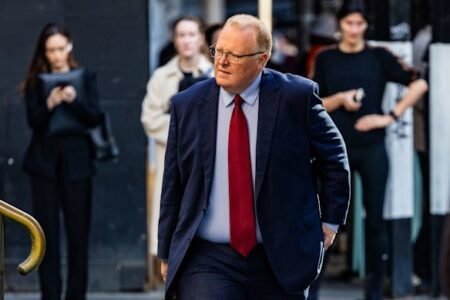
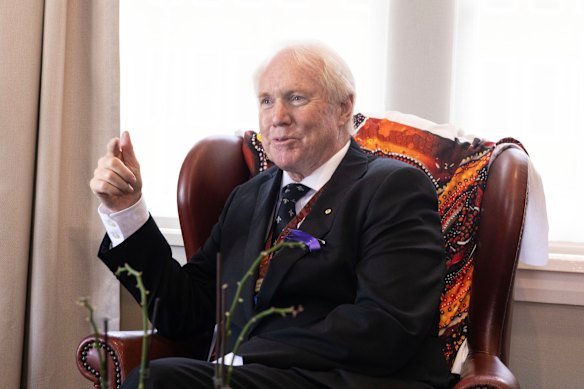
Parents must sign a charter agreeing to support the school’s decisions. “Ten years ago that would have been considered radical,” headmaster Phillip Heath said. But, during his time as an educator, he has watched the relationship between parent and teacher shift from “at best a partnership” to “at worst a consumer sentiment”.
The agreement was needed, based on legal advice, he told this masthead.
An increasing number of schools are turning to parent codes of conduct, contracts or behaviour agreements in an attempt to wrangle back control, amid a sharp rise in parent overreach into schools.
At Geelong Grammar, one of Australia’s most expensive schools, students at its unique bush campus Timbertop, once attended by King Charles, chop wood, participate in cross-country runs and sleep in lodges.
When some year 9 girls snuck out to the local pub to smoke and vape last month, the school principal decided there had to be consequences, deciding to punish the students by making them sleep in isolated tents for five days.
Some of the parents of children enrolled in the $94,000, year-long Timbertop program did not agree. It was a violation of their children’s “human rights”, a psychological risk, said one, invoking the United Nations’ Convention on the Rights of a Child, emails subsequently leaked to The Australian newspaper revealed.
For independent school principals, the story captured the reality of the modern-day private school. They say a sense of parental entitlement is growing, to the extent that some parents behave as if they own and control teachers.
Heath said parents were increasingly “weaponising” complaints, with some parents escalating to lawyers or police. Many complaints were written with AI; “there is a more formulaic approach to complaints handling than there used to be”.
So prevalent has the issue become that lawyers have begun running seminars on topics such as “dealing with parents who refuse to accept or co-operate regarding impacts of the student’s behaviour on staff or other students” and “responding effectively to ‘vexatious’ parents ‘bullying’ staff.”
The problem was not “impassioned” parents, Heath said. “It means that they care a lot, and the fundamental ingredient of school and home partnership is care and love for the student.
“Where it crosses the line is if it becomes a power struggle where the interests of the family and child start to impact the culture of the school.”
He said some parents resist teachers exercising authority over their child, while simultaneously expecting the highest form of authority to be demonstrated against everyone else’s child.
Former principal Shane Hogan, who has worked across several private schools including Sydney’s Riverview, Kambala and Scots, said a growing sense of parent entitlement was linked with the sharp increase in fees.
“There is a figure – whatever that number is – and when fees cross that number, parents believe they own you and know how a child should be taught,” he said.
He said fees were not as high relative to incomes in the 1990s. Now, several schools charged in excess of $50,000 a year.
“Parents will back their child now, regardless of whatever they have done to breach a school’s code of conduct,” he said. “And do their best to keep them out of major trouble.
“Schools used to tell students they should model the school’s values 24/7. Today, parents delineate between school and weekend and [do] not want schools involved in behaviour which occurred on the weekend.”
Another experienced private school leader, not authorised to speak publicly, said that when children made mistakes, the intent of a school’s response, in the vast majority of cases, was to correct and develop, not to end a student’s time at the school.
“Leading a school today is more complex than it was 25 years ago. Expectations are higher, scrutiny is more immediate, and there is less tolerance for perceived error,” said the school leader. “At the same time, there is often a reluctance to accept that students themselves have fallen short and need to take responsibility for their actions.”
Codes of conduct and disciplinary policies and frameworks have become vital for schools: “Independent schools depend on expectations being set clearly up front and applied consistently.”
“The fact that the parent-school relationship is ultimately a contractual one is sometimes forgotten when a difficult issue arises. When choosing a school, parents are not only selecting an educational offering. They are signing up to a framework of expectations and consequences that underpin the life of the school.”
While entitled parents were “nothing new”, Heath said the speed and intensity of parent reactions had changed dramatically. “Social media has become the battleground, and it escalates very quickly, unexpectedly quickly.”
“The source of truth becomes the opinion of those write on social media platforms and WhatsApp, rather than the classroom teacher or school itself.”
At Glenaeon Rudolf Steiner school in Middle Cove, head of school Diana Drummond has watched the relationship between parent and teacher become “more of a transactional interaction”.
“I think in society there is a changing value on authority and where that authority sits,” she said. “Twenty years ago, it sat squarely in one space and that was with the school and the teacher, and now it sits somewhere in the middle.”
With many parents now expecting “tailored expertise” for children with learning, behavioural or social-emotional needs, teachers were increasingly navigating competing expectations. Drummond estimates that up to one in five students now required some kind of adjustment to their learning.
The school had worked hard to gain parents’ trust, she said. Parents were seen as the child’s “first teachers”, and when students faced an issue, teachers worked with parents, making accommodations where needed.
The wide influence of public conversations about school decision-making and teacher competence can weigh heavily on staff. Sue Middleton was head of Tara School for Girls and Roseville College. She said that sometimes there was a lack of respect for the expertise and professionalism of teachers. “They work really hard,” said Middleton. “That can be very distressing for teachers when they are accused of the opposite.”
In response, some teachers are taking to social media themselves. Tyson Popplestone is a casual teacher in Victoria and has garnered a social media following sharing real and exaggerated videos titled: “Emails that I Have Gotten from Parents.” Millions have viewed them.
“There is this unrealistic expectation placed on what teachers are actually expected to do,” Popplestone said. He said dealing with parents now took up so much time, “teaching is almost a secondary part of the job.”
Start the day with a summary of the day’s most important and interesting stories, analysis and insights. Sign up for our Morning Edition newsletter.


From our partners
Read the full article here