





 Markets
  Weather
With visitor numbers predicted to hit record levels in 2026, many European hotspots are planning or have brought in tourist taxes to offset the burden.
These extra fees are often overlooked when budgeting for a holiday, but they can add up.
Here is a comprehensive summary of all the tourist taxes travellers should be aware of in Europe this year.
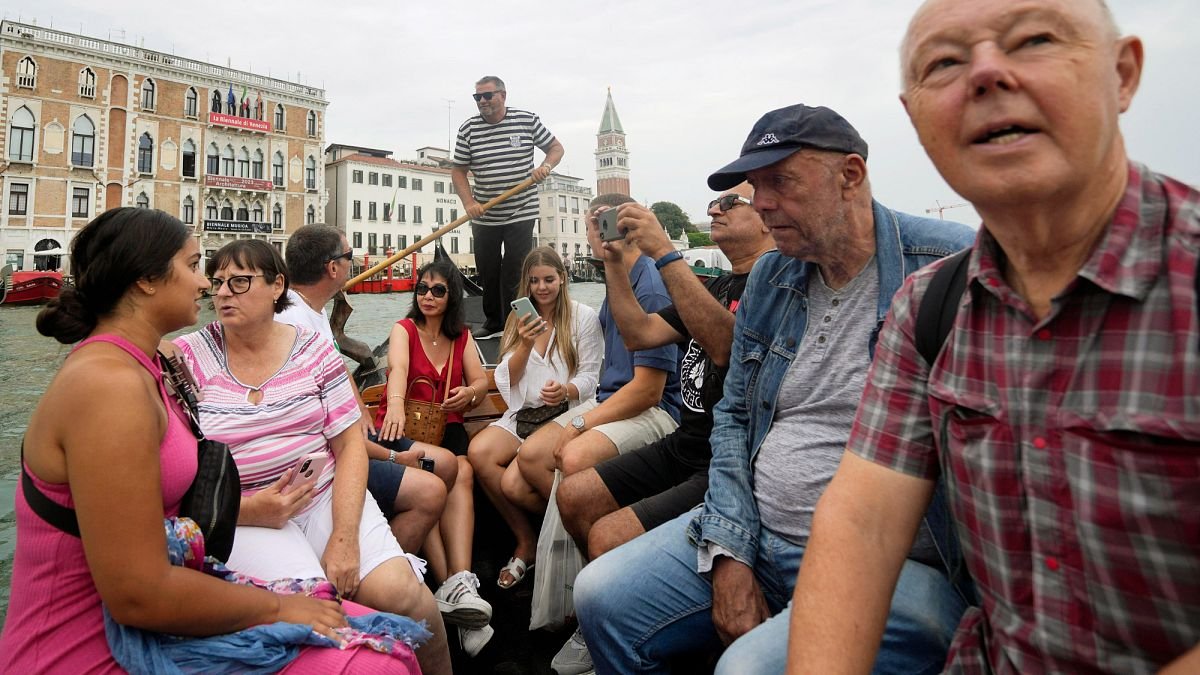
Venice daytripper tax returns for 2026
Venice’s council has confirmed that its daytripper fee, introduced in summer 2024, will return once again in 2026.
This year, the number of days that the levy will be in place has been extended to 60, compared to 54 in 2025.
Daytrippers will be required to pay from Friday to Sunday in April, May, June, and July.
The specific dates that the system will be active are:
- April: 3, 4, 5, 6, 10, 11, 12, 17, 18, 19, 24, 25, 26, 27, 28, 29, 30
- May: 1, 2, 3, 8, 9, 10, 15, 16, 17, 22, 23, 24, 29, 30, 31
- June: 1, 2, 3, 4, 5, 6, 7, 12, 13, 14, 19, 20, 21, 26, 27, 28
- July: 3, 4, 5, 10, 11, 12, 17, 18, 19, 24, 25, 26
As in 2025, the daytripper fee will be in force during peak hours from 8.30am until 4pm. Outside of those hours, access is free.
A host of exemptions apply. Those who don’t have to pay the tax include residents, Venetian-born visitors, students and workers, as well as tourists who have hotel or other lodging reservations.
Visitors can ‘reserve’ their day in Venice on a dedicated platform. The fee is €5, doubling to €10 for tourists who don’t make reservations up to four days in advance.
Bucharest brings in accommodation flat tax
In 2026, tourists staying in accommodation in Bucharest will be charged 10 Romanian leu (around €2) per night. Unlike many other cities, the tax does not vary based on accommodation price.
The levy will be collected by accommodation providers, online booking platforms such as Airbnb and Booking.com, or travel agencies.
According to local media, non-compliance may result in fines of up to 1,500 leu (€294) for individuals or 4,000 leu (€785) for businesses.
Edinburgh tourist tax will launch in July
Edinburgh’s city council has approved a proposal called the ‘Transient Visitor Levy’ to be introduced in 2026.
The Scottish capital will charge guests staying at hotels, B&Bs, hostels and holiday rentals, including Airbnbs, 5% of the cost per room per night.
The fee will be capped at seven consecutive days and is scheduled to come into force on 24 July 2026 and applies to bookings made since October 2025.
Norway approves tourist levy
Norway has approved a new levy which allows municipalities to introduce a 3% tax on overnight stays in “areas particularly affected by tourism”.
The law allows local authorities to apply the tax at their own discretion, so some destinations may choose not to enforce it. The fee will be added to accommodation charges, excepting tents or caravans.
Tenerife introduces eco-tax for hikers
Tourists have to pay an “eco-tax” to hike popular trails in Tenerife’s El Teide National Park in 2026. The park, which encompasses the Teide-Pico Viejo volcano, is the most visited natural site across the islands.
This fee is capped at €25 per person. Certain trails also have different prices. An unguided hike on the trail to the summit of the volcano (the “Telesforo Bravo” route) costs €15, whereas a guided tour costs €10. The Montaña Blanca-Rambleta hike costs €6 on weekdays and €10 on weekends and holidays.
Tenerife residents and children under 14 enter free, and Canary Island residents get access at a reduced rate.
Milan hikes tourist tax for 2026
At the beginning of the year, Milan raised its tourist tax in a bid to support infrastructure for the Winter Olympic Games. The increase reportedly only applies in 2026 and only to accommodation within 30km of Olympic venues.
Rates depend on accommodation type and are levied on the first 14 consecutive nights.
Guests staying in four- or five-star hotels have to pay up to €10 per night, while one to three stars and other accommodation like B&Bs and holiday lets range from €3 to €9.50.
Brussels increases tourist tax
As of January 2026, Brussels’ existing tourist tax has risen by €1 per overnight stay, bringing the fee for hotel stays to €5 per night and €4 for homestays and camping sites.
The levy applies to each accommodation unit, defined as “a bedroom or a space arranged for sleeping”.
Barcelona raises city surcharge
Barcelona’s city tax is increasing to €5 in April 2026. Last year, the council approved a plan to raise the surcharge by €1 annually until it reaches €8 in 2029.
Visitors to the Spanish city also have to pay the regional Catalan tax. This is also going up.
As of April, guests of five-star hotels and luxury rentals will pay €6 per person, per night, or around €7 per night for those in Barcelona.
Four-star hotels anywhere in the region will rise to €2.40 per night, and three-star and lower-rated, or other tourist establishments, will range between €1.20 and €2.
Greece’s cruise ship taxes continue in 2026
In July 2025, Greece introduced a fee for cruise ship passengers, which is continuing this year. The rate depends on the season and the island of disembarkation.
For the period from 1 June to 30 September 2026, the fee will be €20 for disembarkation at ports on the islands of Mykonos and Santorini. For other ports, it will be €5.
During shoulder season in October and from 1 April to 31 May, the fee for Mykonos and Santorini drops to €12 and €3 for all other ports.
And, during the winter months from 1 November to 31 March, the fee is €4 for Mykonos and Santorini and €1 for other ports.
Read the full article here