




 Markets
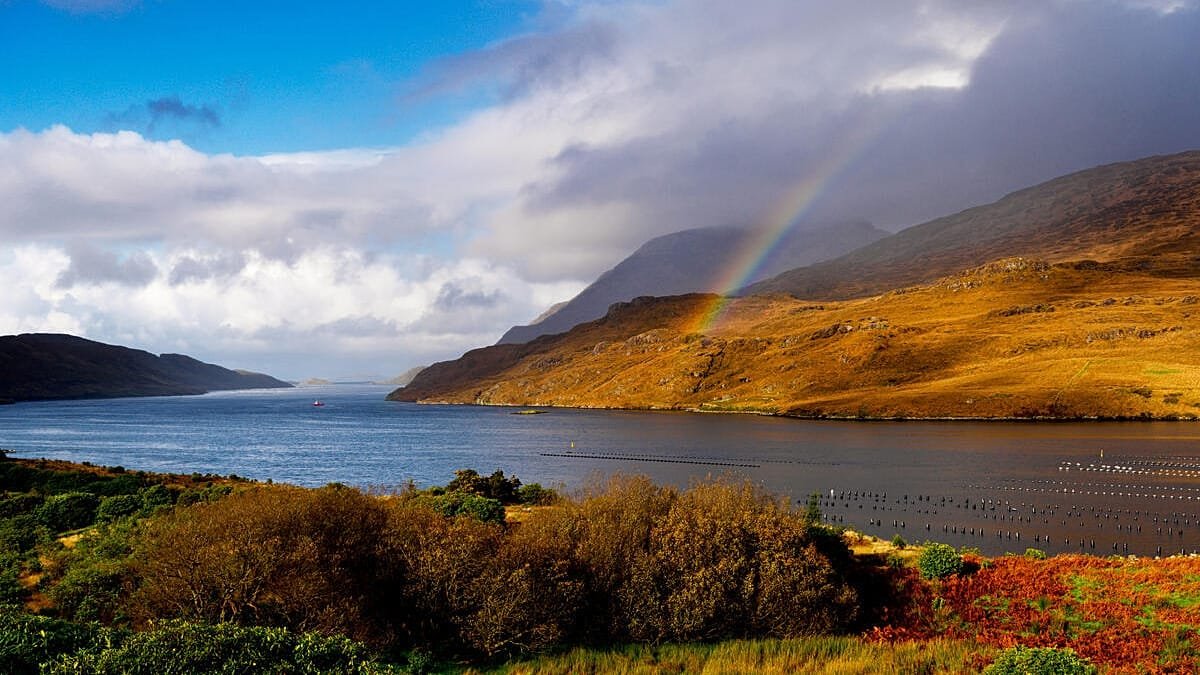
When looking at a beautiful view, you probably aren’t thinking about the geological processes that went into creating it – but maybe you should.
From tectonic plates movement and volcanic eruptions to erosion, the landscape’s history is just as rich as that of humanity’s, and far more long-lasting.
Which is exactly why UNESCO introduced its Global Geoparks designation in 2015 in a bid to celebrate and protect destinations that share this history with visitors while working together with local communities and Indigenous people on the land.
“Every rock formation, every canyon and every fossil tells a story that belongs to all humanity,” Khaled El-Enany, UNESCO Director-General, said in a statement after the organisation announced its new additions.
“In just ten years, UNESCO Global Geoparks have shown that protecting geological heritage also means advancing science, strengthening education and building local resilience. What unites its 241 sites across 51 countries is not just geological significance, but a shared commitment to pass on knowledge, with local communities at the centre.”
Earlier this week, 12 new sites were designated Global Geoparks, including Changshan and Mt. Siguniang in China, Miné-Akiyoshidai Karst Plateau in Japan, Lenggong and Sarawak Delta in Malaysia, Toratau in Russia, Dahar in Tunisia and Manantiales Serranos in Uruguay.
Here are all the ones you can visit in Europe.
Terres d’Hérault UNESCO Global Geopark, France
So named for the river that passes through this geopark, Terres d’Hérault is found in the Occitanie region of Southern France.
Spanning 112 municipalities, the varied geological sites you can visit here include the Coumiac marble quarry; the Navacelles cirque, a valley formed by erosion from the Vis River; and Salagou Lake, which has red rock formations formed over 250 million years ago.
To make exploring even easier, the Terres d’Hérault Geopark website features a number of geohike routes for you to follow.
Nisyros UNESCO Global Geopark, Greece
Part of the Dodecanese island group, Nisyros and its surrounding islets were shaped by one of the youngest and most active volcanic systems in Greece.
It was chosen to join UNESCO Global Geoparks network as it features one of the best-preserved calderas (aka volcano craters) in the Aegean, as well as a number of lava domes, volcanic cores, submarine volcanic centres and hydrothermal craters, including the Stefanos, which is one of the largest on the continent.
Geology’s influence on humanity can be seen in the volcanic-stone architecture in villages such as Nikía and Mandraki, while the island’s volcanic soil has meant that it is home to both endemic and rare plant species.
Like Terres d’Hérault, you can find geo hiking routes on the Nisyros Geopark website.
Joyce Country and Western Lakes Global Geopark, Ireland
Encompassing large parts of south-west Mayo and west Galway, Joyce Country and Western Lakes Global Geopark was chosen as its landscapes tell the story of the Grampian-Taconic Orogeny mountain building event over 450 million years ago.
Visitors can embark on hikes around areas such as the Cong Woods karst landscape, which has one of the world’s fastest flowing spring complexes; the deircs, glacial corries and valleys overlooking Lough Mask; and Ireland’s only fjord at Killary Harbour, all while being accompanied by audio trail guides explaining what you’re seeing.
The first in Ireland to include a Gaeltacht area where Irish is used on a daily basis, tourists can also take part in traditional cultural festivals like Lá Feile Bhríd in February, which marks the start of spring, Domhnach na Cruaiche, the Reek Sunday pilgrimage, and Samhain, aka Halloween.
Algarvensis UNESCO Global Geopark, Portugal
While we probably don’t need an excuse to visit the Algarve, the Algarvensis geopark certainly offers a different take on the area known for its beaches.
Geological sites here include tsunami deposits at Lagoa dos Salgados formed during the 1755 Lisbon Earthquake, the Loulé Salt Mine, which is the deepest point in Portugal open to the public, and Evaristo Beach, which is rich in fossils from the the Miocene epoch some 23 to 5.3 million years ago.
It is hoped that the geopark will be able to rebalance the amount of tourists that descend on the region’s beaches, instead sending them to explore inland villages where they can support communities by buying handicrafts and trying local food.
Read the full article here