




 Markets
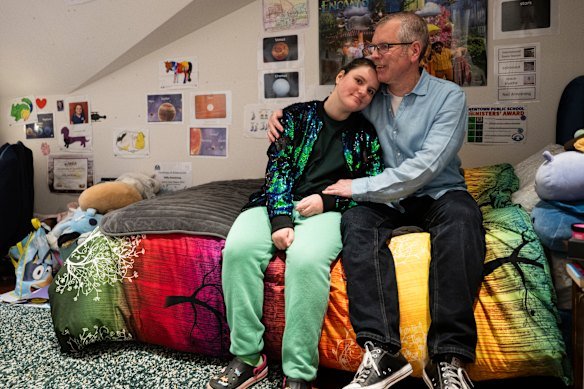
When the National Disability Insurance Scheme was introduced in 2013, Colin Armstrong’s daughter, Milly, who lives with autism and an intellectual disability, was among the earliest participants to qualify for an individualised support package.
“It provided us not only supports for Milly, but also a sense of security and stability for families,” Armstrong said. “The thought of that now being removed – the thought alone – is a little bit traumatic, to be honest.”
It’s not necessarily the case that Milly will be among those people who lose access to the NDIS once eligibility changes to the scheme come into effect in July 2028 – there’s every chance she will retain her support package.
But she will be entering adulthood soon, and it’s the uncertainty around how eligibility will be determined – the scheme will move from a diagnosis-based access list to an evidence-based assessment of people’s functional needs – that is causing great anxiety for Armstrong, as well as 324,000 more NDIS participants with a primary diagnosis of autism.
That’s because autistic participants are the fastest-growing section of the NDIS, and now the largest group, making up 43 per cent of the scheme. While annual growth among other participants is relatively stable, the number of autistic participants, mainly children, grew 24 per cent last year.
Some have significant support needs that require around-the-clock care. Most, however, have what the scheme classifies as mild or moderate support needs: data supplied to this masthead by the NDIA puts this category at about 310,000 people.
With the government making its eligibility changes to return the scheme to its original purpose, of serving people with the most profound permanent disabilities, thousands of autistic participants believe they will be the first removed.
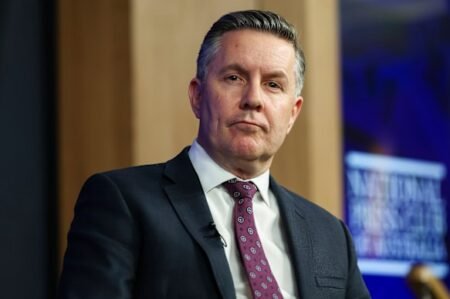
Health and Disability Minister Mark Butler is emphasising that the new system won’t take a particular approach to any one diagnosis – whether it be autism or something else. “What we want to do instead, is to look at a person’s functional capacity: what is their capacity to function in a daily sense?” he explained in an interview with 3AW on Thursday.
“If it’s substantially reduced, which was the intention of the scheme in the first place, yes, they’re on the scheme. If their functional capacity impacts are more mild to moderate, then they shouldn’t be on the NDIS, they should be accessing some other type of support.”
He conceded the number of people with autism on the NDIS was significantly higher than predicted when the scheme was designed. “But I’m not proposing that any particular approach is taken to autism or any other condition,” he said.
“What I am saying, though, is everyone on the scheme, everyone applying to get onto the scheme, will have to undertake one of these objective tests.”
Sharon Fraser, chief executive of autistic-run charity Reframing Autism, said she was worried about what that functional assessment test will look like.
“Functional capacity is quite a variable concept for autistic people. There are many autistic people who need round-the-clock support, but there are others who very much have sporadic needs. Those needs can be variable and context-dependent,” she said.
“Invisible disabilities are very difficult to measure and track in the same way as other disabilities might show up … It makes you question: am I disabled enough? Is my child disabled enough to actually get individualised support? That, and the risk of being kicked off the system or this repeated reassessment, is very much anxiety-inducing.”
The pledge made by Butler this week is that people moved off the NDIS will be able to access a new system of “foundational supports” that the state governments will run outside the scheme.
“We’re not going to change eligibility and move people off the scheme before we’re confident – and we know the community is confident – there are other systems of support in place,” he said.
These are designed to reinstate a raft of state-based and community services that dried up when the NDIS was introduced.
The system for autistic children under nine years old, called Thriving Kids, is already being developed and will be rolled out in phases from October this year. It has been allocated $4 billion, and will range from information services for parents to playgroups and targeted therapies for some children.
A further $6 billion will be allocated to a broader system of foundational supports, Butler revealed on Wednesday, which will cater to other age groups.
Fraser is worried they will return to block-funded supports, which can be inflexible and dictated by one’s postcode and what services are available at a particular time or place.
“With the NDIS you can campaign and say: ‘I need this.’ Whereas in a block-funding model, you get what you get, and that’s really scary for people who have specialised needs,” she said.
“Whatever is created will need to have a level of flexibility and relational care. For many people, but specifically for autistic people, there needs to be a relationship. There needs to be a certain amount of trust.”
David Tonge, chief executive of autism advocacy group Amaze, said it was important that foundational supports covered social and community participation, as well as therapies from psychologists and allied health professionals. He said retaining individual options in addition to group-based support was important.
But he is nervous about the government’s timeframes. “We know from experience that designing these things is complex – you need to pilot, evaluate and phase the rollout,” he said.
“It needs to be designed with people and families that know: how would a single-parent family with two or three kids on a plan get support if they’re not eligible? That will look different to an autistic adult. I don’t think we should settle for a second-rate support system.”
If changes are rushed, he said costs would simply shift onto the health, education and justice systems. “The community has come out strongly to contact us, saying they don’t think the speed and scale of these reforms are safe,” he said. “They’re worried about what the gap might be for their children or themselves.”
Mardi Terrasson, who has two adult children with autism, is another of those worried families.
Both her children can speak, but rarely do, and her daughter, 18, is an ambulant wheelchair user. This means that she can stand and walk, but not for long periods. “They’re too complex. Not clear-cut,” Terrasson said.
“People who have complex presentation don’t fit generic tick-box systems easily. People who are non-verbal are not accommodated in the administrative process well, or at all.”
That was the same testimony of another Melbourne woman, Nicole, who did not want her surname used. All four of her children were neurodivergent, but only her youngest daughter, who is 16, had been able to access the NDIS.
“One day, a person can be shut down, unable to speak, get out of bed. The next day, maybe they can dress themselves or eat. It can be very much a matter of what sensory overload they’re experiencing in that moment,” she said.
“I just really fear for people. I’m confident in my ability to express [my daughter’s] need for support. Is that going to be enough, though?”
Cut through the noise of federal politics with news, views and expert analysis. Subscribers can sign up to our weekly Inside Politics newsletter.
 Natassia Chrysanthos is Federal Political Correspondent. She has previously reported on immigration, health, social issues and the NDIS from Parliament House in Canberra.Connect via X or email.
 Broede Carmody is a health reporter for The Age. Previously, he was a state political reporter for The Age and the national news blogger for The Age and The Sydney Morning Herald.Connect via X or email.
From our partners
Read the full article here