





 Markets
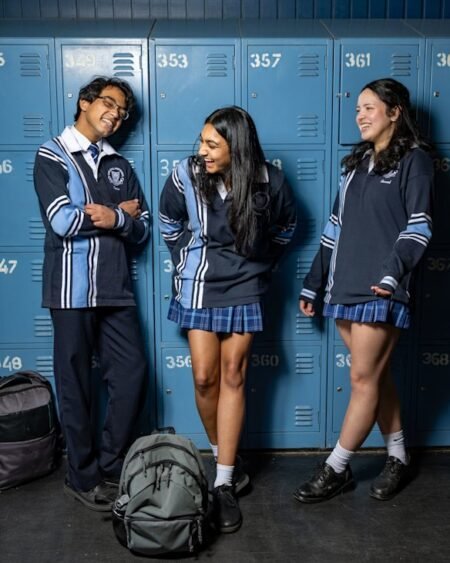
The number of Victorian government schools in poor condition is steadily increasing, according to a major audit of the state’s school building authority, with about one in seven campuses found to be in poor condition last year.
The Victorian Auditor-General’s Office (VAGO) also found that some government schools could be scoring upgrades on the back of community advocacy or having an “active” local member of parliament, rather than on the urgency and need for repairs and renovation.
Of the 10 schools approved for high-priority upgrades in the most recent financial year, the only three that were not ranked “poor” or in urgent need of works were all in Labor-held electorates, including Education Minister Ben Carroll’s.
The state Labor government previously said it would deliver 786 funded school upgrades between 2017 and 2026, according to the auditors – worth about $5.4 billion and to be delivered by the Victorian Schools Building Authority (VSBA).
However, the Auditor-General’s Office said it had found several major problems with the Schools Building Authority’s approach and systems, finding that it did not appear to always follow its officially stated strategies when making recommendations to the government on which schools should be upgraded.
“It is unclear why VSBA makes some of its recommendations, which include schools that are not in poor condition,” the Auditor-General’s Office report said.
“They are often influenced through informal, undocumented processes.”
In VSBA’s internal documents relating to the 10 schools, the Auditor-General’s Office found reasons included advocacy from the school community, and that the school had an “active local member”.
There was also a lack of documentation around the Schools Building Authority’s processes for selecting schools, including discussions with the department’s regional office and with the minister, and limited transparency around costings and timelines, the auditors said.
The number of schools in “poor” condition was also increasing, with 81 per cent of schools rated poor in the 2023–2024 financial year remaining unchanged two years later.
While 30 schools rated poor in 2023–2024 had that designation removed by 2025–2026, an additional 95 schools had received poor condition ratings in that period.
The Department of Education – the VSBA’s parent department – has accepted the audit’s six main recommendations, but secretary Tony Bates said he disagreed with many of VAGO’s findings because auditors had made several key factual errors and presented data in a “misleading” way.
Bates disputed the Auditor-General’s Office’s claim that costs had blown out on 29 per cent of upgrades, saying the correct figure was just under 11 per cent. He also said auditors were wrong in claiming 25 per cent of projects were delivered late, stating the true figure was 18.7 per cent.
He also said VAGO appeared to have misunderstood important aspects of the work of the Victorian Schools Building Authority, with feedback and clarifications from the department not included in the final report.
“While the department acknowledges many of the findings outlined in the report and has accepted the recommendations, there remain several areas where the department does not agree with VAGO,” Bates wrote in his official response.
When schools that had received an upgrade are accounted for, the report found that as of 2024-25 there were 221 in poor condition, or 14 per cent of all government schools. That is an increase from 182 schools in 2022-23.
Brimbank had the most schools in poor condition, at 14, which equated to more than one-third of schools in the area.
There were also 28 schools with no assessment record as of December 2025.
According to the Auditor-General’s Office, the three schools the Schools Building Authority recommended as high priority for upgrade and located in Labor electorates – Buckley Park College, Glenroy College and The Grange P-12 College – were ranked as “worn” but not “poor”.
A spokesperson for the government said the specific building being demolished and rebuilt at Buckley Park College was rated poor, pointing out a school’s overall condition score is an aggregate figure that does not reflect the condition of individual buildings.
“Our record speaks for itself – 121 new schools opened, more than 2400 school upgrades and over $20 billion invested in giving every Victorian child a great place to learn,” the spokesperson said.
“Victorians can rely on Labor to deliver world-class schools – and the latest budget backs that up, with more than $5.5 billion for our children’s future.”
The opposition said VAGO’s report demonstrated that school upgrades had become more influenced by politics than need.
 Jackson Graham is an education reporter at The Age. He was previously an explainer reporter.Connect via email.
From our partners
Read the full article here