





 Markets

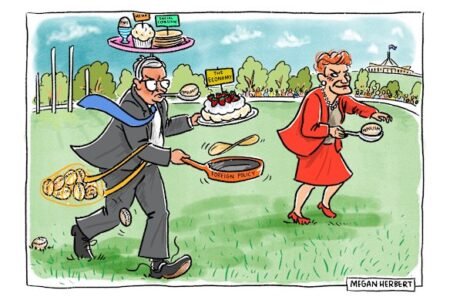
Pauline Hanson has, for decades, railed against the nation’s – and the world’s – elites.
Politicians and the media and universities and business leaders who might have an interest in the environment have all been targeted for being out of touch with ordinary Australians.
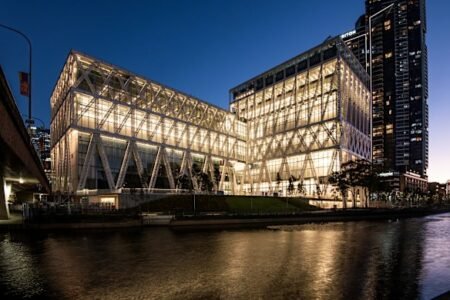
In terms of elites, the Reserve Bank is absolutely at the tip of the spear. Its headquarters is in Martin Place, Sydney, just across from the NSW Parliament. If that’s not the centre of economic elitism in this country, you can certainly see it from there.
But according to Hanson’s treasury spokesman Barnaby Joyce, the Reserve should be able to pressure governments to reduce inflation by calling for spending cuts or reductions in “red tape”.
Saying the current government had made the Reserve Bank less independent – something that would come as a shock to governor Michele Bullock as well as Jim Chalmers and Anthony Albanese – Joyce said that under One Nation, there should be a review of the Reserve, with some vague suggestion it would look at its inflation target.
Joyce may have forgotten the RBA went through an independent review just three years ago. Its proposals, adopted by the government, have on any measure increased the bank’s independence.
We know that because of the government’s discomfort over Bullock’s commentary during her regular press conferences.
Commentary is one thing. But by saying the Reserve should tell the government what it should be doing, Joyce’s proposal effectively outsources economic policy to unelected boffins in Martin Place.
Bullock and team already cop criticism for allegedly being “out of touch” with ordinary people. Imagine if she said the government should cut the age pension or assistance to regional areas? Or that it argued for a tax increase to help slow consumer spending?
Joyce was recently in Britain, a nation that provides a case study in what happens when a government and a central bank collide.
Failed former British PM Liz Truss, who had Hanson on her podcast last week, has been in a running war with the Bank of England since her short term in Downing Street. After Truss announced $90 billion in unfunded tax cuts, the bank had to buy public debt to ensure the survival of a host of British pension funds that had been exposed by the government’s policy.
As Bullock often notes, the Reserve has one job – to hit the inflation target while maintaining full employment – and one lever. Governments have many, many more that require trade-offs and choices. That’s the essence of democracy. It’s difficult to argue the RBA should have a view on the level of defence spending or tax incentives or public health policy.
The last thing Bullock or any central bank (just ask former US Federal Reserve boss Jay Powell) wants is to be drawn into that sort of maelstrom.
And it’s predicated on the assumption that the RBA gets it right all the time. During the pandemic, the Reserve created about $500 billion which, combined with record low interest rates, delivered a bigger stimulus to the Australian economy than what was provided by the federal government.
Members of the RBA board from the early 1990s remember hearing the economy “crack” as they drove interest rates beyond 17 per cent. The cost of that was measured in the one million people put out of work.
Joyce also believes the cost of land (and housing) should be included in the measure of inflation. There’s a whole body of research among elite economists warning of the danger of central banks targeting the prices of assets such as land.
There’s also the problem of inflation tracking land which, because there’s only a set amount of it, appreciates over time. That would leave a constant inflationary pulse in the official consumer price index that ultimately would force the RBA into higher interest rates settings.
The populist right has a long history of abhorring government debt (while the populist left has never seen a tax it didn’t like) with fears of foreigners and lenders demanding their money back at every turn.
Joyce lost his short-lived term as Tony Abbott’s shadow finance spokesman in part for arguing Australia was in “hock to our eyeballs to people overseas” and that the country was probably on its way to being unable to pay its debt.
Australia is one of just nine nations with the top credit rating of all ratings agencies. It remains one of two developed nations never to suffer a federal default. And it has one of the lowest levels of debt in the world.
Off-loading economic policy to an elite Reserve Bank is unlikely to change those fundamental facts.
Cut through the noise of federal politics with news, views and expert analysis. Subscribers can sign up to our weekly Inside Politics newsletter.
 Shane Wright is a senior economics correspondent for The Sydney Morning Herald and The Age.Connect via X or email.
From our partners
Read the full article here