



 Markets
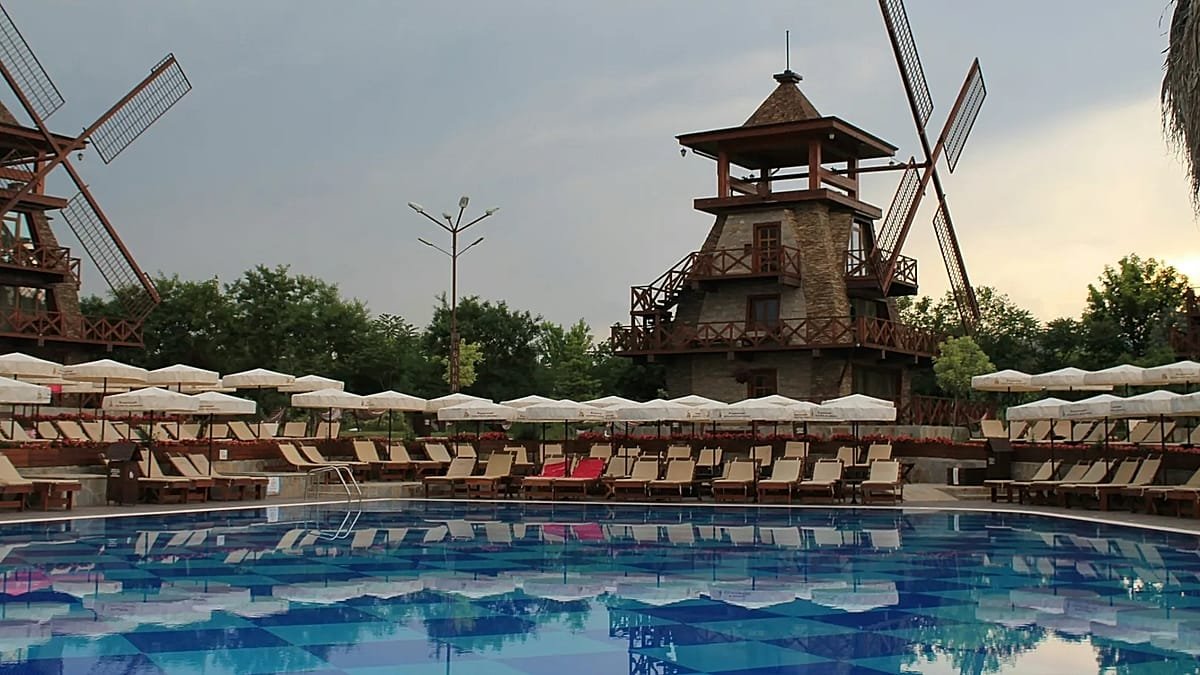
In an age where burnout is real, fast-paced jet-setting might be doing us more harm than good.
Away from the allure of bright city lights and high-speed bullet trains, there are alternative getaways for travellers in search of rest, recovery and a much needed reset.
A country like Austria may be known for its Alpine wellness hotels and Finland for its saunas, but in the Balkans, one nation is emerging as a new European wellness hotspot.
Home to more than 700 mineral springs famed for their healing properties, Bulgaria is attracting growing numbers of travellers drawn to its expanding spa and wellness tourism offer.
“It is an encouraging trend that in recent years the desire to come for spa tourism in Bulgaria has increased by 15%,” said Irena Georgieva, Bulgaria’s caretaker Tourism Minister.
“At present, the question of what kind of destination Bulgaria is should not be framed as ‘is Bulgaria a cheap destination?’, But rather ‘is Bulgaria worth visiting?’, And I believe that more and more European tourists are answering this question positively.”
The town of Velingrad, located 130 kilomotres from Sofia, is famed as the spa capital of the Balkans, according to Bulgaria Travel. Tucked away in the Rhodope Mountains, where legend has it mythical singer Orpheus was born, Velingrad is known for its mineral-rich waters, believed to benefit those suffering from hypertension, respiratory and gastrointestinal diseases.
Meanwhile, in the southwest, various hotels in Sandanski, such as Medite Spa Resort & Villas and Park Hotel Pirin, offer relaxing spa and wellness services.
A stone’s throw from the borders with North Macedonia and Greece, Sandanski is home to around 80 mineral springs ranging from 42C to 81C. Influenced by its Mediterranean climate, the town is known for waters believed to benefit musculoskeletal and nervous system conditions, as well as arthro-rheumatism.
The Thracians, who inhabited what is now modern-day Bulgaria more than 4,000 years ago, are said to be the first to discover the healing properties of water. They valued it so highly that they established cities such as Sofia, Hisar, Sandanski and Kyustendil around healing springs.
A highly lucrative industry, the Global Wellness Institute values wellness tourism at $894 billion (€758.7 billion).
What else does Bulgaria have to offer?
The Balkan nation’s interim tourism minister said that visitors from new markets are also increasingly attracted to the country for its cultural offerings.
So far this year, as many as 12,000 permits have been issued for workers in Bulgaria’s tourism sector, compared with 24,000 in 2025 as a whole.
What can you expect if you choose to holiday in Bulgaria this year?
The line-up of events for the rest of the year includes the annual Rose Festival, Cherry Festival, and various dance and folklore music festivals.
Bulgarian state media reported that the country’s Tourism Ministry has dubbed 2026 the “Year of Cultural Tourism”. The move comes within the framework of encouraging year-round travel, unlocking local tourism potential and aligning with global trends favouring authentic experiences.
Key priorities will include health, gastronomic, mountain, pilgrimage and luxury tourism.
Almost a third of the country is adorned with mountains, inviting visitors to go skiing during the winter, with the ski season lasting about 130 days each year in the medium-high and alpine resorts, or hiking in the summer.
However, Bulgaria has ambitious plans to shift towards a four-season model, where visitors can also enjoy mountain biking and climate therapy, alongside investment and the establishment of newer infrastructures.
In January 2026, the Balkan nation became the 21st country to adopt the euro. Despite mixed reactions from citizens, observers say adopting the single currency could boost its tourism prospects.
“For international travellers – particularly those from euro area markets such as Germany, France, Italy, Spain, and the Benelux countries – the most immediate impact is simplicity,” said the Tourism and Society Think Tank.
“The removal of currency exchange steps and associated fees improves the travel experience and reduces the ‘hidden costs’ that can influence destination choice.”
Read the full article here