



 Markets
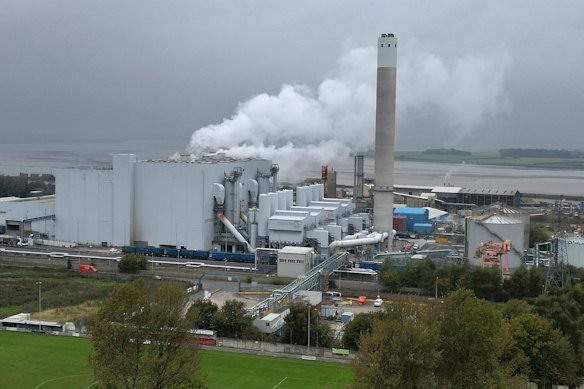
Calling waste-to-energy projects “renewable” is a bit like extolling the economic benefits of expanding private prisons. It is only renewable while negative behaviour and poor societal outcomes persist (“Stoush over whether burning waste for energy is renewable”, July 16). Burning waste for energy is an admission that successive governments have failed to do the hard work on controlling waste at its source, reusing resources and recycling. As the Danes have realised, it can also lead to perverse incentives and a downward spiral, where success in reducing waste in your own backyard is punished by the need to import waste to feed power plants. Sydney has an urgent problem with waste. Landfill sites won’t even meet short-term demand and waste incinerators may be the least-worst solution, but please don’t dress them up as a desirable outcome. They are not renewable, nor are they a zero-emissions solution. They create their own emissions and residual waste and are not without risks. At best they are a stopgap while we get our act together. Acknowledging that reality is critical to solving the real problem of waste. Tony Judge, Woolgoolga
Make polluters pay
Of course federal Resources Minister Madeleine King should ensure oil and gas companies pay to clean up their own messes (“Labor threatens oil giants with emergency offshore clean‑up fee”, July 16). Australia faces an estimated $US40.5 billion ($57.85 billion) decommissioning liability on offshore oil and gas structures. That’s immense. These costs should never fall on the public. Nor should we be footing the bill for the climate impacts the same multinational oil and gas companies create. When will the Albanese government finally make polluters pay for both their mess and their damage? Polluter accountability isn’t radical, it’s responsible governance. Amy Hiller, Kew (Vic)
How intelligent
Anthony Albanese outlined the government’s proposed framework for dealing with the challenges of AI (“PM warns firms against job cuts in AI revolution”, July 16). How did Opposition Leader Angus Taylor respond? Like a responsible, intelligent statesman seeking shared consultation on an issue of such national importance? No, he simply dismissed the proposal as “unnecessary bureaucracy”. When will the Liberal leaders learn that saying no to everything is not the way to win government? Their chances might improve if they showed some interest in contributing to the dialogue on matters of such economic and national significance, rather than denigrating the government at every opportunity. Sue Ellyard, Epping
The current rush into AI and the required data centres has all the classic signs of an economic boom-bust cycle. It’s hard to imagine that we really need this massive investment in computing power, with its high energy and water demand, to meet what may or may not be needed in the future. It seems to be driven more by hype, fear of missing out, and/or plain greed rather than a rational conversation. The projected energy demands are just shocking at a time when we are threatened by global warming. The advantages are a minimal step forward in our global standard of living compared to the investment involved, and a massive increase in wealth for those who ride the boom and get out before the bust. Well done to the PM for putting some brakes on the whole thing. Neil Ormerod, Kingsgrove
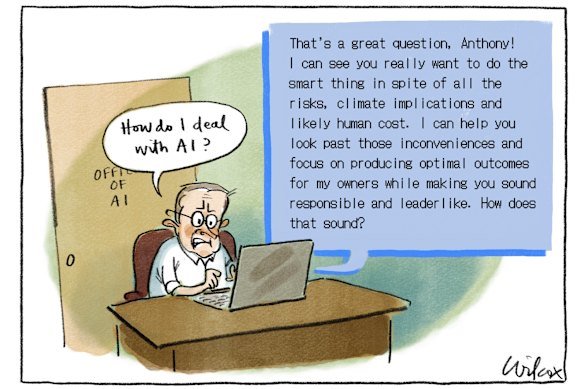
The prime minister’s new Office of AI sets out our AI future in the language of investment, productivity and approvals. One question goes unanswered: where do children fit in? A week ago, the UN secretary-general called for global rules to protect children in the age of AI, and 17 countries launched an international coalition for children’s rights and protection. Australia is not there yet, despite the urgency. Nearly eight in 10 Australian children aged 10 to 17 have used an AI assistant or companion, and one in eight of those users reports controlling behaviour by AI. In school, half of year 6 students have never been taught to judge whether AI output is accurate. Use is at compulsory scale. Instruction isn’t. Keeping children away from technology is neither realistic nor desirable. The systems already shaping how they learn, play and connect need independent safeguards designed in: standards that strengthen children’s agency rather than diminish it. The Office of AI exists to secure an economic future that will be delivered by the children who are in school right now. Children’s safety, capability and participation belong at the centre of national AI governance. Megan Gilmour, Canberra
Ask AI why AI needs so much water. It will tell you, but then you have just wasted water asking the question, and even more water getting the answer. Keith Russell, Mayfield West
Make TAFE great again
The only solution to improving universities’ behaviour is to restore TAFE to its traditional role as the main platform for teaching vocational and trade courses (“Universities slammed at royal commission”, July 15). As the largest recruiters to the print and packaging sectors, our company has noticed a definite decline in the skill standards of graphic design graduates ever since universities virtually stole those students away from TAFE. Why? Because the universities are reluctant to immerse their students in the workplace. It’s not in their DNA. By contrast, workplace exposure has always been part of the TAFE teaching formula and students are far more job ready emerging from a TAFE environment than from a university one when it comes to “the trades”. James Cryer, ChatswoodOld school
Old school
I wonder if the Swedes were using mandatory online exams in their education system (Letters, July 16). Their reversion to the handwritten processes needs consideration locally. I have witnessed first-hand the disheartening experience of students at a major university when technology fails mid-exam. It has occurred more than once and the process for redress is impersonal, bureaucratic and frustrating. Examination conditions delivered on a hit-or-miss basis is very poor management. Brian Jones, Leura
Good to see the move to bring back pens and pencils in schools. I have noted though, with amazement, the weird clenched-fist way most kids and young adults now hold a writing implement. What bright spark came up with this one? Do they hold a knife and fork the same way? Oh sorry, you don’t need those archaic tools to eat chicken nuggets, fries or a pizza do you? Duncan McRobert, Hawks Nest
Hard to swallow
I used to work at Bar Coluzzi in Darlinghurst many moons ago so I’ve known good coffee from bad for more decades than I care to reveal (“Black isn’t white. This coffee myth must be confronted”, July 16). I don’t mind admitting that these days I buy a supermarket’s own brand of unfancy coffee beans, which have more flavour as they’re probably the cheaper Robusta beans rather than the Arabica variety. I disagree with correspondent James Panichi when he says Italy has better coffee than Sydney. After marching through the streets of Italy, France, England and New York in search of a decent morning hit, coming home to a full, flavoursome, non-bitter double shot soy latte is one of the few things I look forward to when travelling in otherwise magnificent places. Clare Raffan, Campsie
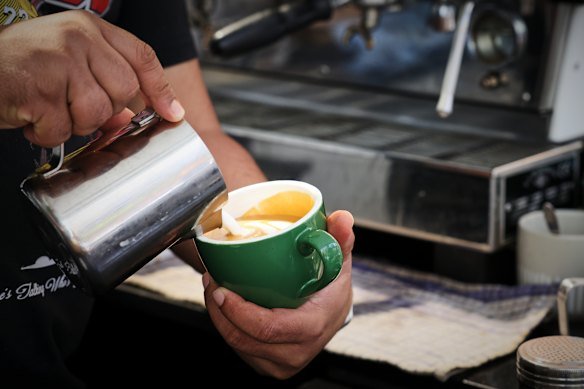
It has always amazed me that coffee beans are grown, harvested, transported then lovingly roasted to perfection only to be destroyed in the last two minutes of the journey by an inexperienced barista. It must break the hearts of not only consumers, but those who brought those beans to us. Greg Baker, Fitzroy Falls
Trump’s latest TACO
So, Trump’s preposterous proposal to control the Hormuz Strait and charge a 20 per cent toll for crossing safely lasted all of 24 hours (“US president’s thought bubble smacks of desperation”, July 16). More’s the pity he does not heed fellow Republican ex-president Ronald Reagan’s sound advice – to surround yourself with the best people, delegate authority and get out of the way. Appointing yes men or loyalists is no way to run foreign policy. Steve Ngeow, Chatswood
While many people are mystified about Trump’s changing decisions around the Iranian war, I’m onto him. I think he’s counting each ceasefire as a war he’s stopped. I reckon he’s up to at least 15 by now. Margaret Grove, Concord
Show respect
Paris Enten, I understand the pain you experienced on your visit to Auschwitz (“‘Tik Tok dances in the car parks of Auschwitz’: Universities slammed at royal commission”, July 16). I am a Christian and witnessed similar behaviour to you in the same carpark. In 2015 as our coach parked alongside numerous other coaches, we were assaulted by a horrifying din coming from a boombox with many Israel Defence Forces conscripts singing and dancing to pop songs. Apparently, Israeli conscripts are taken to concentration camps as part of their military training. We were astounded that the accompanying trainers did not see fit to shut down this revolting behaviour at such a solemn memorial site. My utter discomfort was compounded by the fact I was accompanied by another Australian, whose parents had been prisoners in this notorious camp. Insensitivity can emanate from both sides. Rhonda Seymour, Castle Hill
Look east
The Kiwis are right: it’s a sad truth that we are indeed not like them, and there is just so much about them and their glorious nation to like (“Sam Neill embodied the difference between Aussies and Kiwis”, July 16). Before visiting their beguiling country I, like many blinkered Australians, claimed superiority without proof, linking our ascendant position due to the many New Zealanders who have crossed the ditch to share our shores. It’s the only Kiwi activity I find difficult to understand. Why would you leave a country that in many respects is a world leader? It was the first to give women the right to vote, the first to introduce an eight-hour working day and most significantly, it has the exemplary Treaty of Waitangi, along with a podium position for niceness that is impossible to beat. If we were just a little bit more Kiwi we would be the lucky, lucky, lucky country. Janet Argall, Hurlstone Park
On the nose
I hear you Julie and go one further (“The case for a ban on eating smelly fish in the office”, July 16). It’s not the just smells of food that’s the problem, it’s the consuming of food in inappropriate places. Prepared in a functional kitchen and eaten at an appropriate table, food’s great. On public transport, in an office, walking along a street, the smells, the noises, the sight of half masticated food in open mouths is sickening and is not tolerated in many other cultures. Considering other people’s sensibilities by only eating at an appropriate time and place, rather than when the urge takes you, is not just all about them, it’s also great for digestive health. Good manners is good for everyone. Elisabeth Goodsall, Wahroonga

Sorry Julie, my sympathy was tweaked with your initial focus on the off-putting smell of fish, but when you snuck in other olfactory problems – smelly socks, milk on the turn and stale vase water (all very common in high-pressure newsrooms) – it became obvious the problem is yours and not that of your workmates. What will next upset your sensitive proboscis? The smell of red wine on the breath of the letters editor after another long lunch? David Beckham’s erotic Instinct Eau de Parfum enveloping that young intern at the photocopier? The only solution that can fairly resolve this conundrum is to work from home. Ah, now I see where you are coming from. Good luck. Peter Thomson, Brunswick (Vic)
Julie Power suggests banning canned tuna in offices. Outrageous. Down here in South Australia we call it builders’ caviar. Jeremy Brender, West Richmond (SA)
Short-sighted
It was troubling to read of the pressure optometrists have been under from large employers (“Optometrists punished for putting patients before sales”, July 16). It seems a difficult balance to match eye care with reasonable profit. Over the years, I have attended three independent optometrists who struggled financially and were bought out by larger companies, whose branches subsequently closed because they were unprofitable. In this time, I have received excellent eye care, had many minor repairs to glasses made for free, heard of several cases of optometrists diagnosing macular degeneration and always received polite, friendly and unhurried attention. Maybe we all need to bite the bullet and pay more for this essential service so costs are better met. Heather Johnson, West Pennant Hills
With all due respect and as someone who is not an optometrist but an optical mechanic who has been in the industry for 48 years, your opinion piece (“Optometrists put profit over care”, July 16) is unfair to the vast majority of optometrists I know. Yes, like any industry, there are some people in it for profit, but your headline is only likely to discourage people from having regular eye tests, which are a vital preventative health measure. Brett Jack, Bonnyrigg Heights
Science bugs
It’s a sad day when the only good news story in the paper sings the praises of dung beetles for their role in reducing greenhouse gas emissions across our wide brown land (“Invasive species are a nightmare, so why did CSIRO bring in three more?” July 16). But this item also reminds us of successive governments’ short-sighted lack of support for the CSIRO despite it being our most enduring and successful publicly funded scientific institution. Its scientists’ intelligence, like that of the dung beetle, is real and original, not artificial. Philip Bell, Bronte

Public prescriptions
I stopped using our local pharmacy for prescriptions some years ago because the pharmacist would announce them to the whole shop: “Your suppositories are ready, Mr Smith” or “You can collect your male hormones now, Mrs Jones.” I decided that I didn’t want my ailments broadcast to my neighbours and went elsewhere (“Local chemists? Don’t flip the script”, July 15). Valerie King, Hunters Hill
- To submit a letter to the Sydney Morning Herald, email letters@smh.com.au. Click here for tips on how to submit letters.
- The Opinion newsletter is a weekly wrap of views that will challenge, champion and inform. Sign up here.
Read the full article here