





 Markets
Six months after the Liberal government released draft rules for its new foreign influence registry, Canada still does not have an operational database of agents working on behalf of other states.
Now, civil society organizations and diaspora groups are urging the government to move ahead with the registry that would publicly disclose who is lobbying on behalf of foreign — and sometimes hostile — governments.
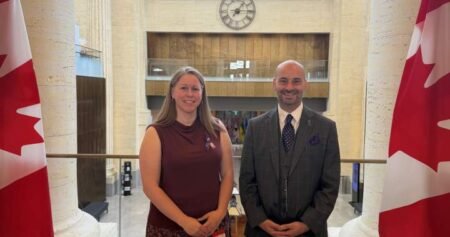
“This has been dragging on for far too long … It’s not like these foreign authoritarian adversaries are pulling back on these operations, they’re only intensifying,” said Marcus Kolga, a human rights advocate and the founder of DisinfoWatch.
“Because right now there really isn’t a consequence to interfering in our democracy. Whether it’s disinformation, transnational repression, (the consequence) just isn’t there.”
Canada is an outlier among its close allies in lacking a public-facing registry for foreign agents. The Foreign Influence Transparency and Accountability Act (FITAA), introduced in 2024, was meant to address that gap in the wake of news reports detailing alleged foreign meddling in Canadian politics.
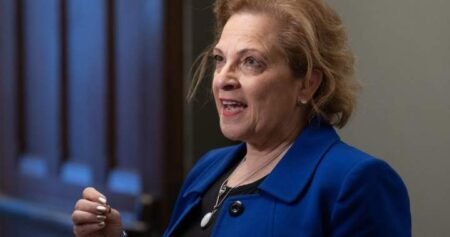
“I think we have to assume at this point it’s about political will,” Sarah Teich, a Toronto-based lawyer and president of the Human Rights Action Group, said of the delay in establishing the registry.
Teich’s and Kolga’s organizations were among the 33 signatories to an open letter to Prime Minister Mark Carney, applauding the government’s progress on foreign influence and interference to date, but urging the government to finish the work.
The letter calls on the Liberals to finalize regulations for the Foreign Influence Transparency and Accountability Act (FITAA), a requirement for the federal government to stand up the registry and finalize the appointment of Anton Boegman as Canada’s first Foreign Influence Transparency Commissioner.

Get breaking National news
Get breaking Canada news delivered to your inbox as it happens so you won’t miss a trending story.
Boegman, B.C.’s former chief electoral officer, was put forward for the position in March after consultations with opposition parties, and with the approval of both the House of Commons and the Senate. But he has yet to officially assume the role, as the regulations have not been finalized.
The issue has fallen out of headlines in recent months, and has drawn little attention from either the government or the opposition parties in the House of Commons — despite warnings from the Canadian intelligence community that foreign influence and interference operations remain a persistent threat.
Neither the Conservatives nor the NDP responded to Global’s request for comment.
A spokesperson for Public Safety Minister Gary Anandasangaree deferred to department bureaucrats to explain the delay, but said in a statement that the government would have “more to share on this matter very soon.”
The spokesperson, Simon Lafortune, said the government has begun setting up Boegman’s office. The department told Global News that the regulations are “in the very final stage of development.”
The civil society groups are also calling on the government to make sure Boegman’s office, along with the newly-formed Office of the National Counter Foreign Interference Coordinator, be adequately funded to ensure they can effectively address the issue.
“If you put China, Russia, Iran together, they are spending billions annually in terms of foreign interference,” Kolga said.
“When we have our adversaries point those kinds of resources … we’re never going to match that, but to have a fighting chance to defend Canadians, our democratic and political environments, against them, we need to make sure the people … have the resources to do that.”
The governments of China and India have been consistently flagged by Canada’s national security community as the most active foreign-interference actors targeting the country, and both are governments that Carney has sought to improve relations with since taking power in 2025. Those two facts have raised concerns that threats of foreign interference could be downplayed to maintain diplomatic and trade ties with two major economies.
The FITAA legislation was introduced in June 2024, part of the government’s response to growing concerns that foreign governments — particularly the People’s Republic of China and the Indian government — were attempting to covertly influence the direction of Canadian politics at the federal, provincial and municipal levels.
Foreign governments attempting to influence Canadian politics is not new, nor is it necessarily a bad thing — Canada advocates for countries to take positions on geopolitical issues all the time.
But the FITAA registry is meant to ensure that when people in Canada are working on behalf of foreign governments, Canadians know whose interests are being advanced.
The registry was part of the government’s response to a series of news articles from Global News and the Globe and Mail that put a spotlight on allegations that Beijing had, for years, attempted to shape Canadian politics, including by allegedly attempting to meddle in political parties’ nominations.
An independent federal inquiry led by Justice Marie-Josée Hogue — now the deputy minister of the Department of Justice — found that foreign actors’ attempts to meddle in Canadian affairs have been largely unsuccessful.
But she nevertheless warned in 2025 that Canadian democracy faced an “existential threat” from disinformation and misinformation campaigns, both foreign and domestic.
Read the full article here