






 Markets
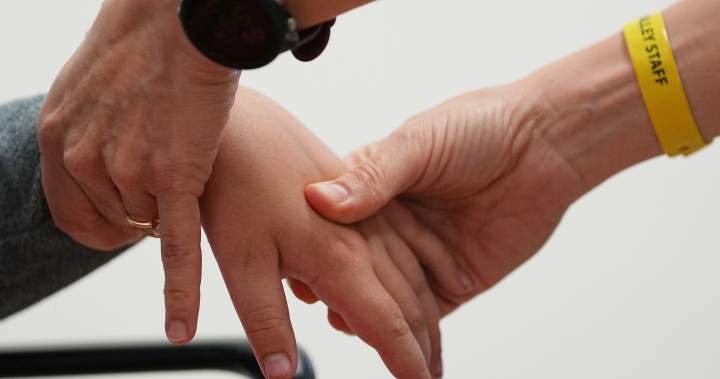
When it comes to how Canada’s provinces and territories are faring at helping Canadians with arthritis, a new report card shows not one has made “meaningful progress” in the past three years.
The 2026 State of Arthritis in Canada Report Card, commissioned by Arthritis Society Canada, shows that since its last report in 2023, not a single jurisdiction has surpassed a “C” grade, with two provinces dropping a level.
“There’s years that people are losing their lives waiting for the right treatment,” said Calgary rheumatologist Dr. Cheryl Barnabe in an interview.
Alberta is one province that saw a drop in its grading, receiving a D from the report card compared to a C in 2023. Newfoundland and Labrador fell from a D to an F.
Alberta was joined by Saskatchewan, Manitoba, New Brunswick and Nova Scotia with D grades. Ontario, Quebec and British Columbia received Cs. The Northwest Territories, Yukon, Nunavut, Newfoundland and Labrador and Prince Edward Island received Fs.
In its key findings, the report card found, despite recommendations made in the 2023 edition, “jurisdictions have made little to no progress.”
The report also noted research into arthritis remains “chronically underfunded” despite its large impact on Canadians.
Arthritis affects more than six million people in Canada and half are under the age of 65. It’s considered the leading cause of disability in the country.

Get weekly health news
Receive the latest medical news and health information delivered to you every Sunday.
“Arthritis is not an older person’s disease,” said Trish Barbato with Arthritis Society Canada. “It is not wear and tear. It’s not inevitable. None of these things are true.”
That’s the case for Lalitha Taylor, who has lived half her life with arthritis after being diagnosed at the age of 19.
She said she was a competitive soccer player when she was first diagnosed and woke up with her toes and fingers “inflamed.”
“It was very isolating because to have that type of pain and to not be able to do the things I was able to do before made me feel like I lost control of my body and I had a total loss of agency,” she said.
Taylor told Global News when she has a flare-up, it impacts her both physically and emotionally, to the point she sometimes cannot even turn a doorknob.
Her time with arthritis has been aided by having support from her medical team and others like Arthritis Society Canada.
But the report notes support is not there for everyone, with access to community programming for patients and wait times for joint replacement surgeries cited as the biggest issues in the 2026 report.
Waiting for that help can have a serious impact on patient health, Barnabe said.
“Some of them can’t dress themselves, brush their teeth, feed themselves, and that goes on for months and months and months before they connect with the right person to help them with their symptoms,” said Barnabe. “Joint damage is accruing in that time period as well.”
This year’s report card notes that in the 2023 edition, a clear warning was given that low and failing grades across provinces and territories exposed “serious gaps” in access to care.
For 2026, the report says progress has been “too limited” and that “incremental change is not delivering meaningful improvement.”
Arthritis Society Canada is urging a national plan and recommends enhancing data quality and accessibility, improving access to arthritis care and increasing investment in arthritis research.
Barbato said other things can be done, too.
“I would love for us to have a way to easily diagnose people sooner,” she said. “I would have to have more prevention strategies.”
For Taylor, she said she’s grateful she has a team to help her through and hopes a little awareness that arthritis doesn’t look the same for everyone goes a long way.
“I wish people would know that you can’t judge a book by its cover,” she said. “Somebody can present and look well, but have a lot of fatigue, inflammation and pain in their body.”
— With files from Global News’ Quinn Ohler
Read the full article here