




 Markets
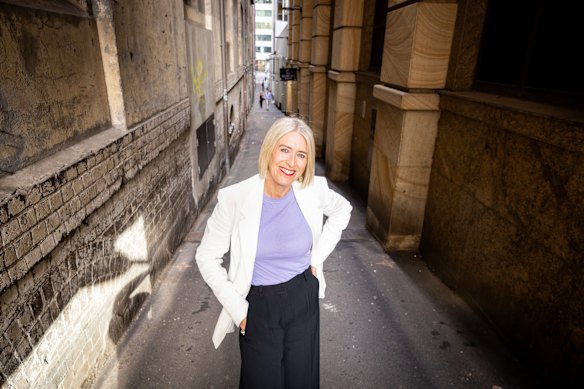
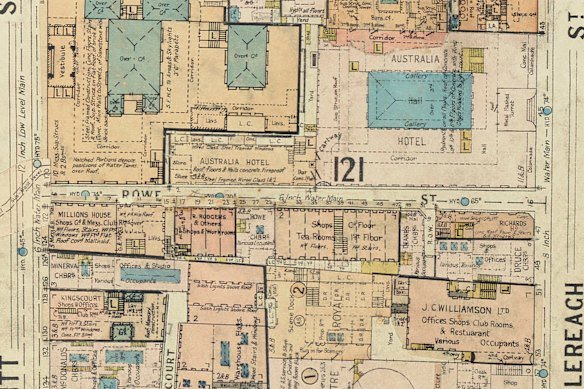
Rowe Street was the closest thing to Paris in Sydney. With tearooms, fashion and art, the laneway linked Castlereagh and Pitt streets and was called the “primrose path of dalliance”.
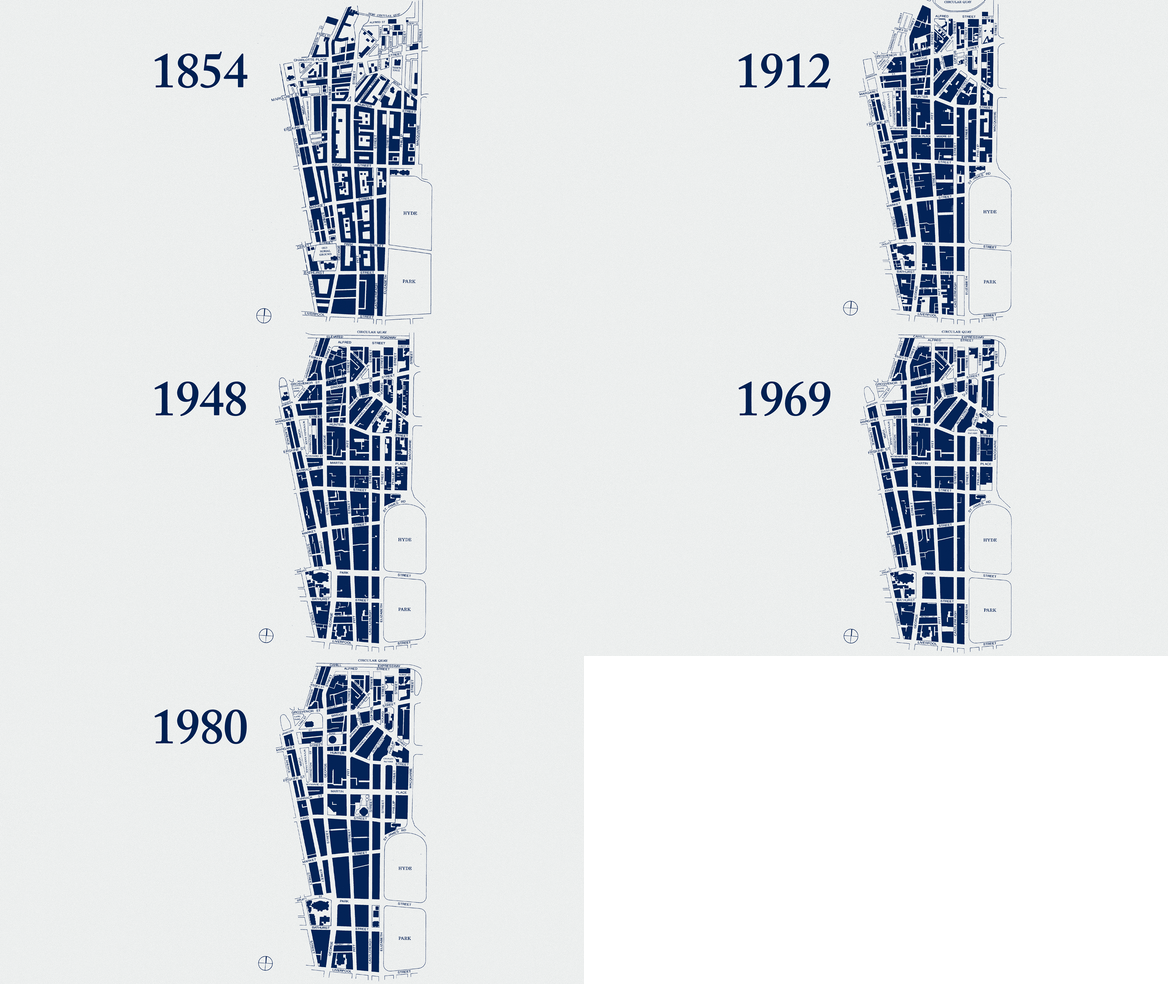
Along with other dead-ends and alleys, including Robin Hood Lane, it was destroyed last century when the City of Sydney sold 20 laneways to developers wanting larger sites for projects such as Mark Foy’s – then the world’s largest department store – and later Australia Square.
The sales generated $57 million in revenue from the 1960s to the late 1980s, but locals complained of “gargantuan developments” destroying neighbourhoods.
Now the City of Sydney is trying to bring back the spirit of what was lost. For the past 20 years, city architect and chief designer Bridget Smyth has been leading Lord Mayor Clover Moore’s program to pump blood through the arteries of the city’s heart by revitalising dozens of laneways, encouraging small bars and installing art underfoot, overhead and on scruffy walls.
1. Angel Place
Angel Place was where the city’s laneway renaissance began, Smyth said on a laneway tour.
She says if you ask a Sydneysider how to turn an old city lane used by trucks delivering goods – and removing garbage and night soil in the past – into a hot spot to visit, they’ll likely say fairy lights.
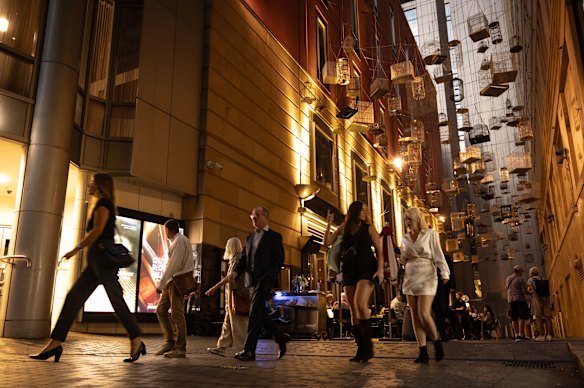
They help, but not enough. Making a place for humans rather than cars takes years of negotiations between property owners, state government, and utilities and artists.
Art, though, was the “catalyst for transformation. Art changes everything.”
Angel Place was once in “disgraceful condition”. Pickpockets loved it.
The installation of Forgotten Songs, a public artwork by Michael Thomas Hill of empty bird cages that play the songs of birds that once lived in the CBD, was meant to be temporary.
Developers were initially unhappy about the transformation because they had to pay for alterations, such as knocking doors through back walls to provide shops and bars. Once they saw Hill’s cages hanging above the bumpy lane, they saw its potential. They are now permanent.
2. Council place
Danish urban planner and architect Jan Gehl advised Moore to turn George Street into a boulevard with light rail, add more public squares, and create laneways and more intimate spaces.
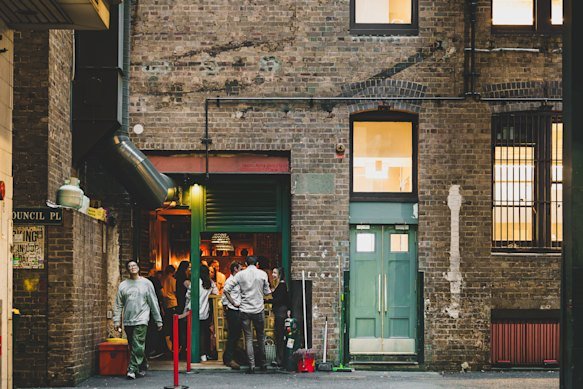
“A good city is like a good party – people stay longer than really necessary because they are enjoying themselves,” he said.
It is always a party in Council Lane. Other than its grungy character, the attraction is Cantina OK! – included in a list by theworlds50best.com.
The “almost literally hole-in-the-wall place is well worth a look”, reviewers say.
There’s not much else in this lane other than grunge. That’s OK with Smyth: “You don’t want to scrub everything and make it new. It is not about making everything the same.”
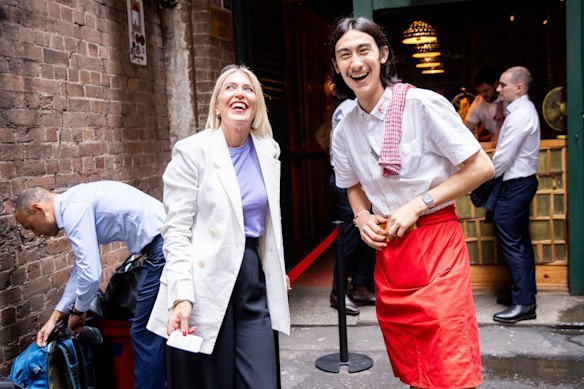
The laneway revival was about adding a human quality “somewhere to sit, eat or drink, something wonderful to experience”.
Something surprising, too. Architect Sam Crawford gravitates to the less public alleys of any city to see the unvarnished face. In Sydney, “you are just as likely to encounter a rat as an illegally parked late model Range Rover”.
3. Kimber Lane
Kimber Lane in Chinatown was a dingy service lane. Now it is home to Jason Wing’s installation, In Between Two Worlds, which represents the artist’s Indigenous and Chinese background.
Reviving these old alleys was a transition from “refuse to re-use”, said architect Philip Vivian, managing director of Bates Smart, an architectural practice integrating laneways into new projects.
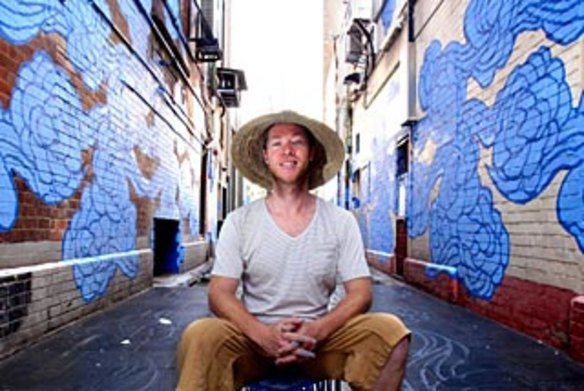
Vivian said the domination of cars had created the need for big streets and blocks. The challenge was how to take back the city, he said.
Smyth said there are plans for more restaurants in Kimber. “If the city thrives, the business community thrives,” Smyth said.
“Our plan was to address congestion, livability, and housing affordability. But the one big thing we heard really loudly was that people wanted a better city. They wanted a human city.”
4. Market Row
Running between Clarence and York streets, behind the QVB and near Town Hall, Market Row is not somewhere anyone, anywhere, would expect art.
That’s the twist. In Through the Out Door by Callum Morton was designed to remind the public that cities are never fully known.
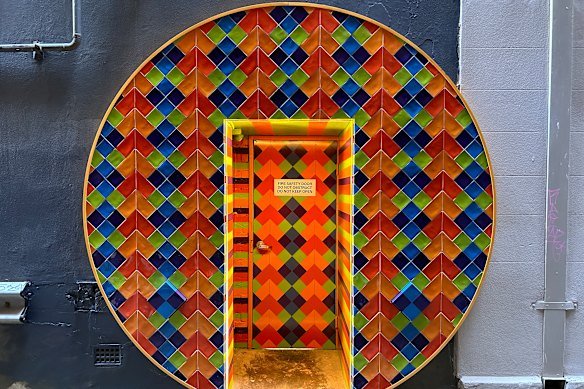
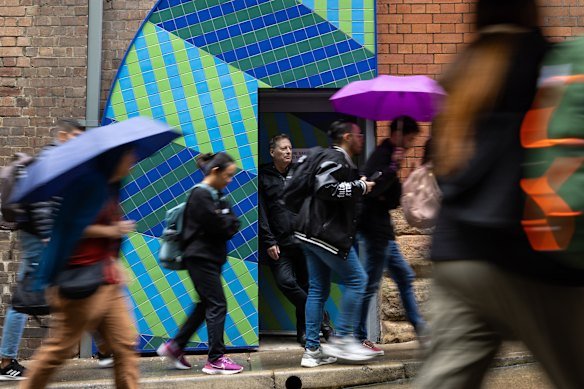
Morton said laneways were places to witness the “unadorned fabric of the city’s life” – fire escapes, the homeless, garbage bins, workers taking breaks, and seemingly outmoded retail outlets.
He didn’t want to change anything, but “make it more mysterious, revelatory and curious”.
5. Reiby Place
Look in your wallet to see a portrait of Mary Reibey (same woman, different spelling) on an Australian $20 note. This is her place.
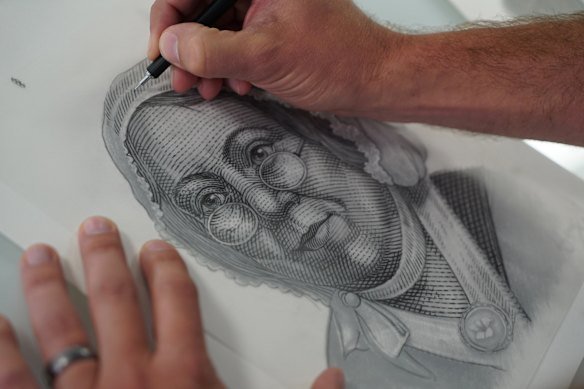
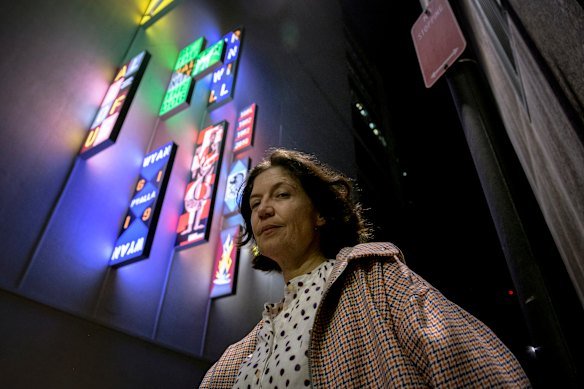
Patchwork of Light (2020) by Lara Schnitger, illuminates 10 feminist heroes in bright light boxes, including Reibey, a business owner who came to Australia as a convict.
The boxes include a fish on bicycle, a play on Gloria Steinem’s famous quote about how little a woman needs a man.
Schnitger said the work was an ode to what it took for women to succeed and make a change: “Iron will.”
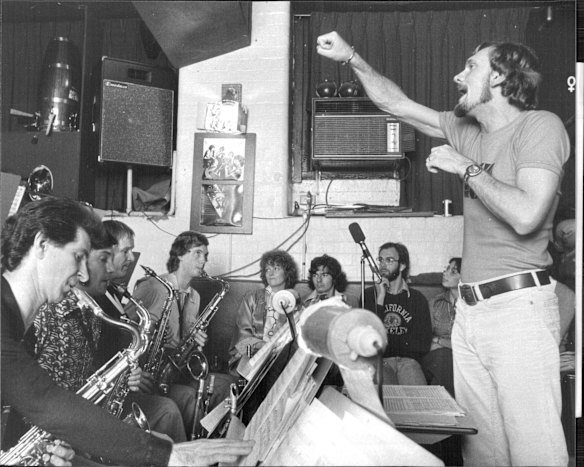
This lane is studded with pit lids and manholes, which prompted Smyth to make a change.
When she came back to work after maternity leave in 2005, a former council chief executive offered her what could be called a pit sandwich (designing manhole covers). “It was utility hatch covers, bespoke design.”
It was a fad going on in the world, but she didn’t want to do it. She agreed, as long as she could do laneways too.
It was a good negotiation, the laneways flourished, the pit lids project didn’t proceed, and that baby boy is now studying architecture.
6. Underwood Street and 180 George Street
Redevelopment turned half of this site into public space, with a large public plaza sheltered by the artwork by Daniel Boyd and Ghanaian-British architect Sir David Adjaye.
It also includes a network of lanes providing new places to eat, including the famous laksa stop.
In Underwood Street, a 35-metre 200-year-old blackbutt tree is suspended, an installation by the large artwork by Michael McIntyre. It has also been home to other major installations, including the seven-metre bar.
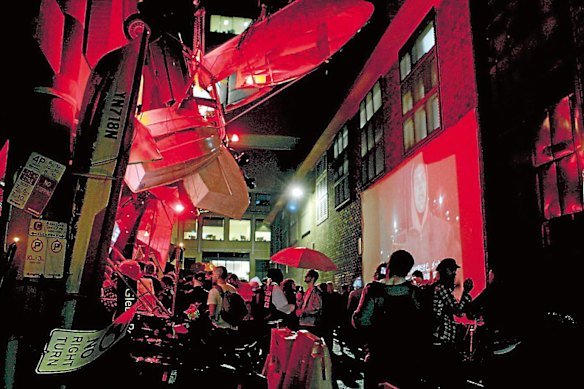
As it has elsewhere, the city gave developers extra floor space if they provided art-filled laneways offering food and retail.
7. Abercrombie Lane
To see how Sydney looked in its earliest days, walk down this narrow laneway that leads to Tankstream Way – named for the city’s earliest water supply – and Bridge Lane, home to Mr Wong restaurant.
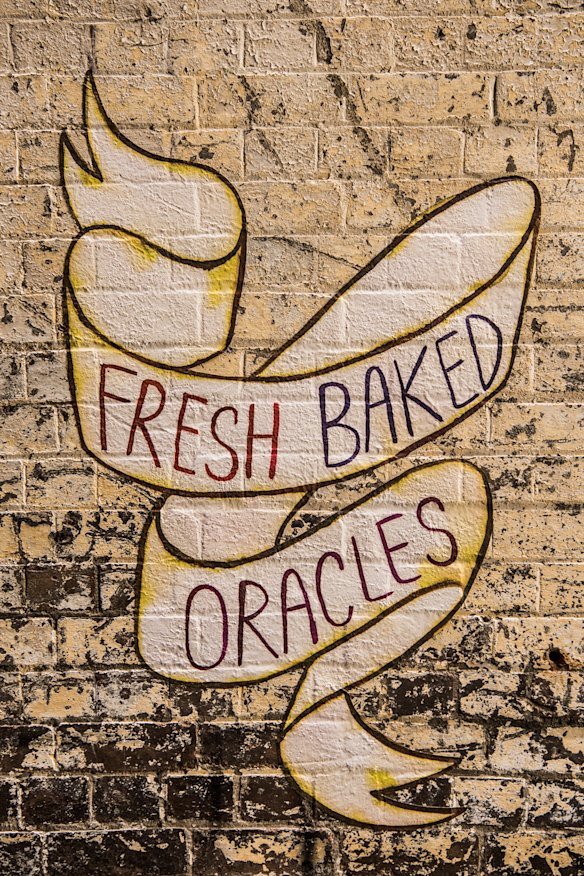
After Sydney was settled, the city grew like bacteria – organically – compared to the planned grid of Melbourne. It was a city of laneways and leftover spaces. Today there are only 110 lanes left in the CBD.
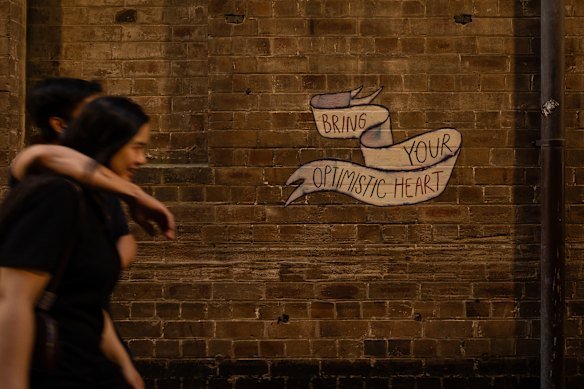
On Abercrombie Street, home to the Grumpy Baker and speakeasy-style bar Palmer & Co, art urges pedestrians: “Bring Your Optimistic Heart.”
“Always do, always,” said one pedestrian, patting his heart.
Another sign on Bridge Lane promises good luck just around the corner.
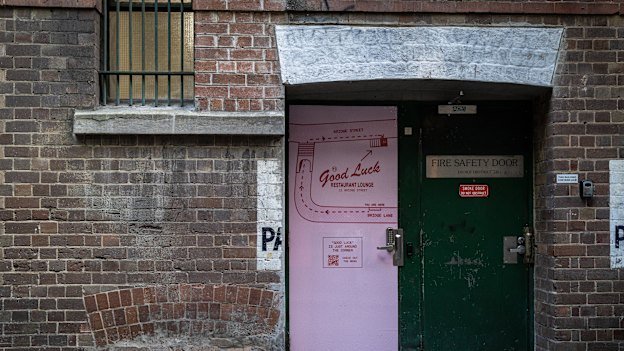
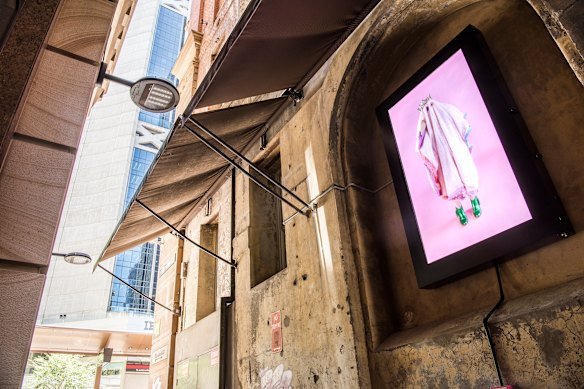
8. Quay Quarter Laneways
The pedestrianised Loftus Street next to Quay Quarter laneways is the newest project.
Landscape architect Sacha Coles, the global design director of ASPECT Studios, said laneways provide a spot to watch the world go by.
“The biggest benefit is that people can walk and spill out, do what we’re doing right now,” Coles said as he sat in Quay Quarter near Circular Quay.
“And be a flâneur,” a person who watches the world go by.
Public spaces can be contested and tribal, Coles said. So he designed a “share way” of 10km/h that put everyone on an equal footing.
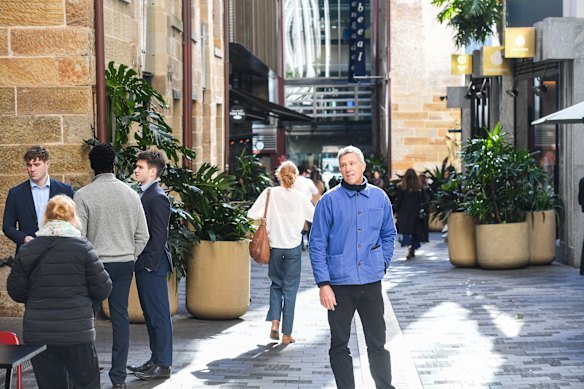
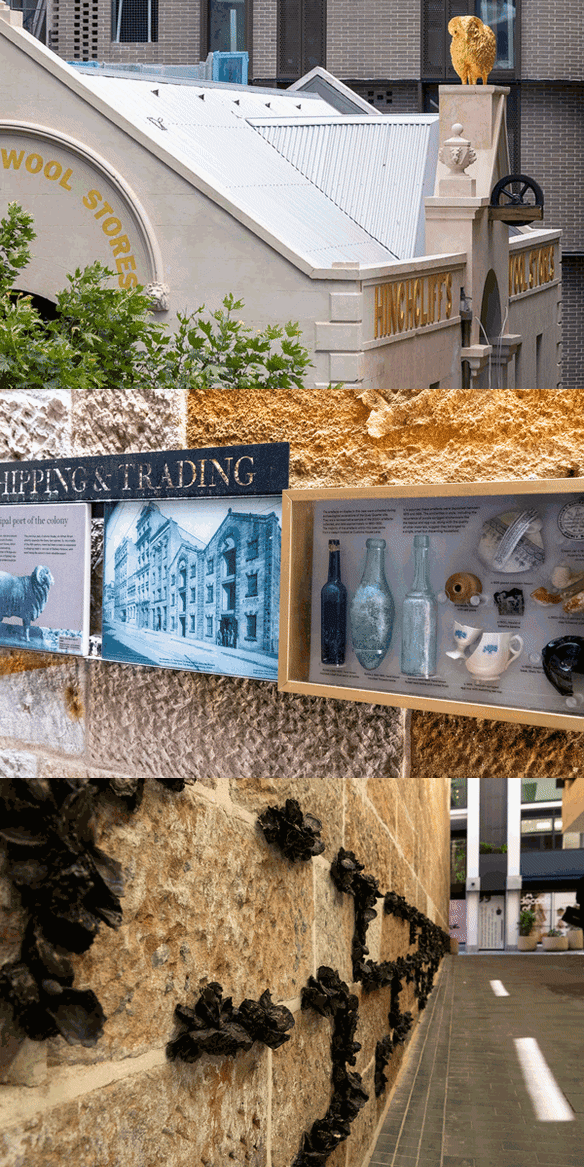
Smyth said the area, with new apartments above, was part of Moore’s push to bring people back to the city. “The minute you start getting mixed use, with apartments, the laneways become more relevant. If it’s just a city for workers and businesses, you get lumpy buildings.”
9. Temperance Lane
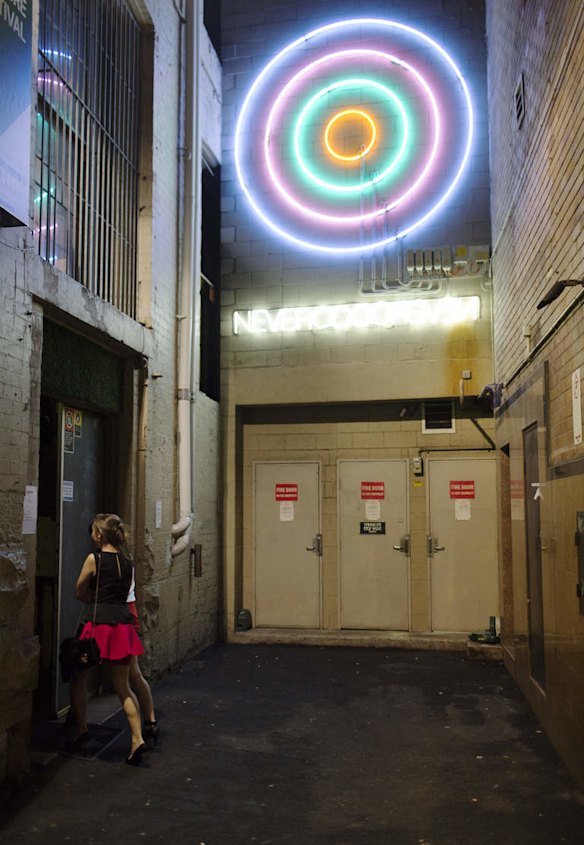
This lane defies its name. It is lit up with a huge neon sculpture by Newell Harry. Moore said laneways with small bars provide an alternative to the big venues with poker machines and sports screens. Many were less expensive to rent, too.
Barbara Flynn, a public art curatorial consultant, said Sydney had sought to create a city that looks like no other.
“Every work of art commissioned is so particular to place that it couldn’t be anywhere else,” she said. It brought life to the “throwaway spaces”.
10. Bulletin Place
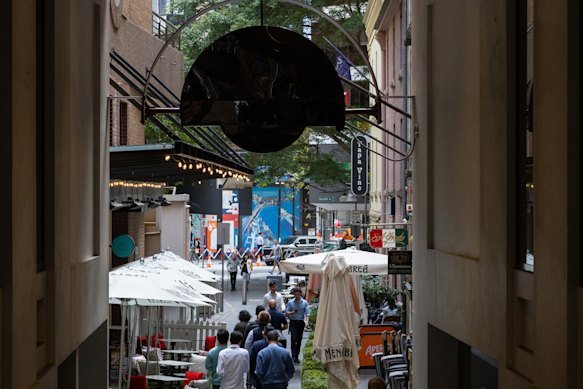
Turned into pedestrian walkways in the 1980s, Bulletin Place became home to restaurants including winemaker Len Evans.
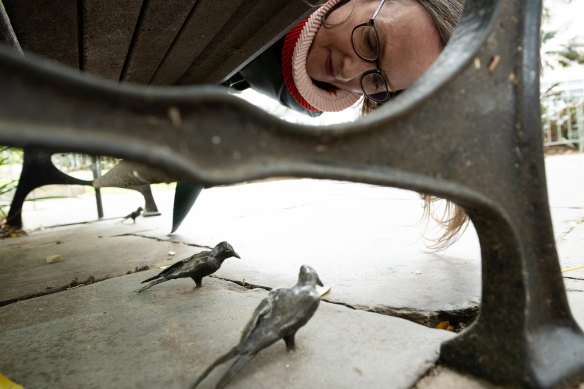
Detour through the city’s best arches from Pitt Street to Macquarie Place opposite Quay Quarter to see internationally recognised artist Tracey Emin’s installation of birds, The Distance of Your Heart.
Download one of the City’s apps, maps or go on a walk being held during the Heritage Festival until mid-May.
Start the day with a summary of the day’s most important and interesting stories, analysis and insights. Sign up for our Morning Edition newsletter.
Read the full article here