





 Markets
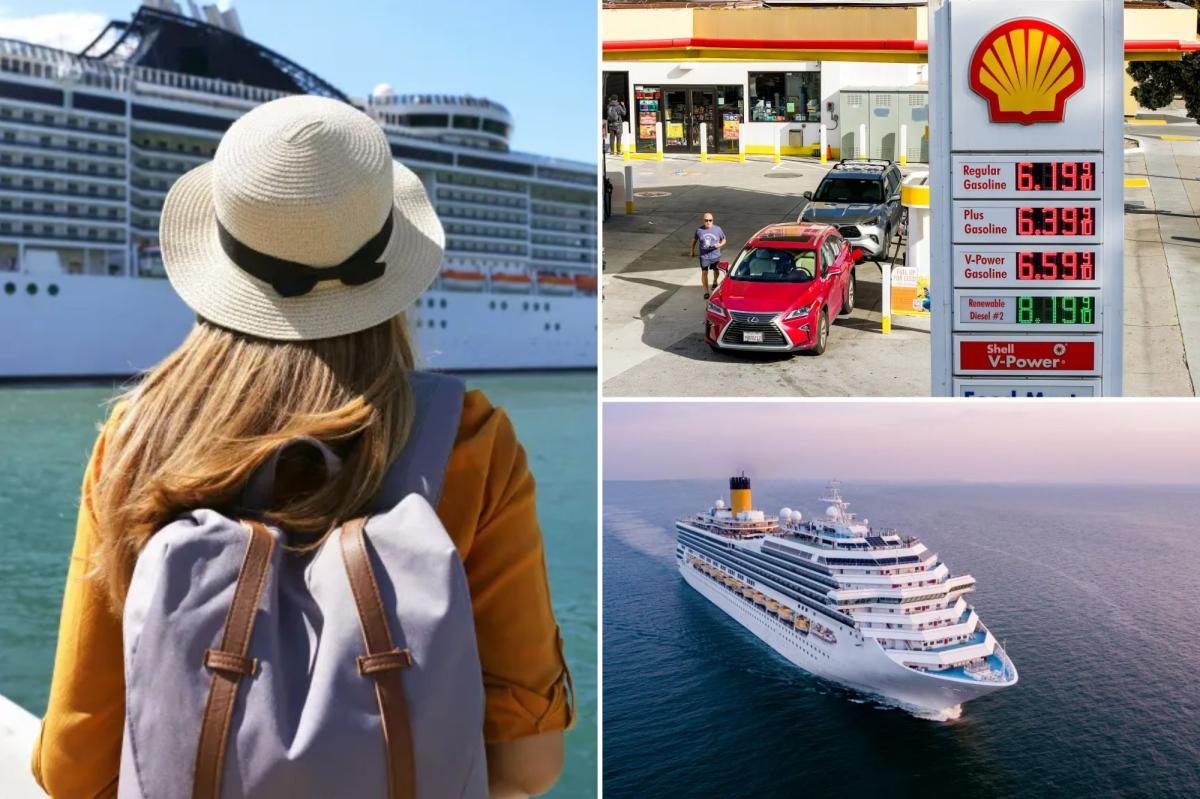
Thanks to war mongering and the rising cost of oil, your high-seas adventure could come with an even higher price tag this year.
Experts warn that if you have a cruise booked in 2026, you could be levied with a hefty fuel surcharge.
Oil prices have risen more than 40% since Operation Epic Fury got underway on Feb. 28.
Prices have been hovering around $100 a barrel since President Trump announced a massive attack on Kharg Island, a critical Iranian oil hub, where some 90% of its crude exports flow through.
As Cruise Radio reports, the majority of cruise lines reserve the right to add a daily surcharge if oil hits a certain threshold, a brink we are now well beyond. This right is written into the fine print of nearly all cruise contracts.
Maritime attorney Michael Winkleman gravely warns, “The cruise contract is a powerful document entirely in favor of the cruise lines.”
He notes that Norwegian Cruise Line reserves the right to charge up to $10 per person, per day if oil prices top $65 a barrel. Carnival can add up to $9 per person, per day if oil reaches $70, while MSC reserves the right to charge customers $12 per day.
Cruise contracts protect cruise lines’ rights to apply these charges even after customers have paid in full for their trip. Translation?
On a pre-paid week-long cruise, a family of four could be hit with a parting fuel bill between $250-280.
Fuel prices have a significant bearing on overall cruise costs. In 2025, Carnival Corporation spent more than $1.8 billion on fuel, and Royal Caribbean Group spent roughly $1.1 billion.
Until now, most major U.S.-based cruise lines have resisted imposing a fuel surcharge, but the combination of rising oil prices and global conflict could lead customers to pay up.
Last month, Resorts World Cruises, which operates Star Cruises and Dream Cruises, began charging holidaymakers up to $25 per guest per day to offset fuel costs.
Meanwhile, since 2024, guests aboard the Margaritaville at Sea Paradise ship have been charged a $15-per-night fuel supplement.
Experts maintain that the likelihood of customers being hit with a fuel charge hinges on a cruise line’s hedging strategy. Hedging refers to the amount of fuel a cruise line pre-purchases at a fixed price.
For 2026, Caribbean has hedged 60% of its fuel needs while Norwegian has hedged approximately 51%.
Meanwhile, Carnival does not hedge its fuel and, as a result, has reportedly taken a $500 million fuel-cost hit this year.
According to Carnival Corporation CEO Josh Weinstein, the company is using “efficiency measures” rather than fuel surcharges to offset costs.
“Whatever the price is, if we use less, we do better,” he said, noting that the company is dedicated to consumption savings.
However, experts warn that the strategy could change and customers could be charged as fuel prices continue to rise.
To avoid an unexpected fuel bill, experts advise cruisers to choose cruise lines with fuel hedging or book on exempt ships, such as the Margaritaville at Sea Islander.
For seafarers with deep pockets and nary a care for a world on fire, bookings are open for Royal Caribbean’s Hero of the Seas Treehouse Suite, a three-story accommodation that can cost upwards of six figures for a week-long stay.
Read the full article here