





 Markets
The married couple were at home when the emergency call arrived last November.
Their elderly neighbour, who lived two doors down in their quiet street, had collapsed from a suspected cardiac arrest.
The pair, who are health professionals, instinctively sprang into action. They grabbed one of their two new portable defibrillators and raced to their neighbour’s side.
The couple did not know the device had been yanked from the UK market more than a year earlier, after that nation’s regulator became concerned the CellAED was unsafe and ineffective.
The couple performed a few rounds of chest compressions before snapping open the CellAED unit, and placing the two pads on the woman’s chest.
“Nothing happened for what felt like an incredibly long period of time,” said Thomas, who did not want his last name published for privacy reasons. “It was an uncomfortable amount of time when someone is facing death.”
In a cardiac arrest, every second is crucial for survival. In an ideal scenario, a defibrillator zaps the heart within seconds of a shockable rhythm being identified.
Thomas and his wife waited 30 seconds for the device to shock. Then 40. Assuming the device had failed, they resumed compressions. About 10 seconds later, with no warning, the CellAED discharged a shock that travelled through the patient and into Thomas’ wife, who was 23 weeks pregnant.
Their neighbour briefly regained a pulse, but died shortly after paramedics arrived.
The pair are unsure whether their compressions, the woman’s internal defibrillator, or the delayed CellAED shock restored her pulse.
“It seemed like a great idea,” Thomas said of the CellAED. “But if it doesn’t hold up to what it’s supposed to do, it’s not a lifesaver – it’s a risk.”
‘No confidence’
Approved in 2021, the CellAED seemed like an Australian medtech success story: a revolutionary defibrillator the size of a smartphone, dreamt up by a skydiving entrepreneur who nearly lost his wife to a cardiac arrest.
Instead, the CellAED is a case study for many of the problems with how Australia regulates medical devices.
More than 23,000 units have been sold or donated, including to ambulance services in Victoria and Canberra.
Ambulance Victoria equipped more than 700 community volunteers with the device in the hope they would be able to respond more quickly to a reported heart attack than paramedics.
An exclusive investigation by this masthead and 60 Minutes has analysed 80,000 publicly reported incidents to the regulator to reveal concerning trends about some devices and the approval process under which thousands of medical devices are used in Australia with little to no testing or clinical evidence.
CellAED was approved without human clinical evidence showing it could save a life. It took regulators in Britain to raise the alarm about the device’s safety.
“We had no confidence in the devices,” said Mathew Roth, a former quality officer at Rapid Response Revival, the company behind the CellAED. “If devices functioned correctly, then there was a chance that a patient could be saved. However, of all devices that were used on patients, only a very small number of people were saved.
“There were a number of incidences where [the] devices should have or should not have provided shocks to patients based on their cardiac rhythms and devices failed.”
“I don’t believe there were any instances where the devices alone saved a life.”
Both ambulance services have now pulled them from use.
The Therapeutic Goods Administration (TGA) states all medical devices approved in Australia are backed by clinical evidence proving they are safe and perform as intended – but it never assessed CellAED’s clinical evidence.
Instead, after the device won approval from a private German device assessor, the TGA rubber-stamped it for use in Australia.
The German company approved the CellAED because it was deemed to be similar to an existing defibrillator, despite having far less shock power.
It generates just 85 joules, well below the 200 joules recommended by Australian defibrillation guidelines.
The UK’s national standards body and health regulator became so concerned by the CellAED’s lack of clinical evidence, the former withdrew the device’s certification.
Despite being aware of the UK’s concerns since 2023, and receiving complaints from consumers, the TGA allowed the CellAED to remain licensed for sale until February this year, when Rapid Response Revival itself cancelled the registration.
Australian Resuscitation Council deputy chair Michael Parr said it was troubling that the TGA had approved the device without any clinical evidence supporting its use.
“I think that would concern most people,” said Parr, who works as an intensive care specialist at Liverpool Hospital in Sydney. “I was unaware that was possible.”
He said most defibrillators charged over a matter of seconds, and notified responders when they were going to deliver a shock.
“The fact that someone had hands on a patient at a time when the shock was delivered … is a problem as well.”
Parr said 50 seconds sounded like an “awfully long” time for a defibrillator to charge and deliver a shock.
This masthead’s analysis of the TGA’s database found it had received 22 adverse event reports about the device, including six complaints starting in 2023 about the device failing to shock people having heart attacks, where the patient died.
“Device did not deliver any shocks,” reads one complaint. The reported event outcome: “Death”. In other cases, the device deployed in a mode meant for shocking infants.
Britain’s medical regulator became concerned about the device’s lack of clinical data soon after the CellAED launched in that country in 2022.
The regulator raised this with the British Standards Institution, which launched a review.
It found “major safety failures such as sparking and burning”, and that “the clinical evaluation of the device did not follow ‘commonly accepted scientific methods’”.
When asked for clinical evaluation data, the manufacturer referred to a study on pigs, but did not provide the full study.
The review found a study on pigs might provide pre-clinical evidence to show that the device could work on humans, but it could not amount to “clinical data”. And there was no clinical data from using the device on humans.
“The clinical data collected did not support the clinical safety and performance of the device,” the review found.
In 2024, the British Standards Institution withdrew the CellAED’s conformity certificate.
RRR Manufacturing then issued a statement, saying it had “provided clinical trial data and real-world use cases demonstrating no safety issues and that it performs as expected”.
Despite that, it took what it described as a “commercial decision” to withdraw the CellAED from sale in the UK.
In France, CellAED was struggling with a different problem. Some of the devices sold there still contained English instructions, rather than being translated. “A man had an accident on a motorcycle, and they deployed the device, couldn’t understand the prompts, and he passed away,” said Roth.
The TGA told this masthead it became aware of the UK regulator’s concerns in 2023. Yet it allowed the device to remain registered in Australia until earlier this year.
“Under Australia’s risk-based framework, manufacturers are responsible for holding appropriate clinical evidence, and the TGA conducts targeted pre-market reviews and post‑market monitoring,” a spokesman for the agency said.
“The suspension of a conformity assessment certificate in another country does not automatically apply in Australia.”
A 2024 review in the journal Resuscitation Plus of published data for ultra-portable defibrillators, including the CellAED, concluded there was “no evidence” if they worked or not.
The CellAED has been the subject of four Australian class I recalls (the highest risk level) since 2023. One recall concerned devices that failed to shock during testing, but were sent to customers anyway.
Associate Professor Elizabeth Paratz, a cardiologist at St Vincent’s Hospital in Melbourne, said that while the device was imperfect, it was better than nothing.
“Sudden cardiac arrest is a terrible thing, with a 90 per cent mortality rate,” she said. “You’re not always going to have the big, bulky defibrillators on hand. If you have this on hand and nothing else, you absolutely still would give it a go and see if there’s any chance.”
And they have helped at least one person.
Ambulance officer Lee Ridsdale received a CellAED as part of Ambulance Victoria’s trial. She used it to successfully shock a woman in 2023.
“I must admit, I was sceptical about them,” she said. “With the ambulance, we use big bangs when we’re saving someone. I couldn’t quite wrap my head around how is this little thing is going to deliver what we need it to deliver. I think this is something that should be available.”
From tragedy to opportunity
The CellAED was dreamt up by entrepreneur Donovan “Donno” Casey, after his wife Sarah suffered a cardiac arrest at home. Casey had to do CPR until the paramedics arrived with a defibrillator.
As his wife lay in hospital recovering, Casey thought: why aren’t there defibrillators in every home and car?
“She was a customer for a product that did not exist,” Casey told Nine News in 2021. “So we invented it.”
Casey’s background was in skydiving, as both an instructor and entrepreneur. “You might not think there’s a lot in common between that business and a medtech start-up – but you’d be surprised,” he told an interviewer in 2022. “Every day brings a new leap of faith.”
Casey declined repeated requests over several weeks to answer detailed questions. Via text message, he described the issues around CellAED as “very nuanced and technical and complex”.
“This IS NOT a story that can be done to a deadline, so if it is, I cannot participate.”
Standard defibrillators are bulky and expensive: the cheapest models cost at least $1400.
The CellAED is the size of a smartphone, and costs just $599.
Casey’s company raised more than $60 million from investors and had ambitious plans to ship 1.5 million devices in 2025. An analyst’s report, paid for by the company, in 2024 pegged the company’s valuation at up to $345 million.
The device’s size required a key compromise. Philips’ best-selling public defibrillator delivers up to 150 joules of energy. The CellAED can generate no more than 85 joules.
That energy is delivered via a patented and unique “waveform” based on research done 25 years ago. “Nobody had looked into it,” said a company insider, speaking anonymously to discuss confidential information. The waveforms were then modified “to human beings”.
The company tested the device on pigs, and it appeared to work.
Regulatory loopholes
Medical devices such as defibrillators cannot be sold in Australia or Europe without the approval of regulators.
Despite being based in Sydney and initially targeting the Australian market, the company opted to aim for registration in Europe.
This is a common practice. More than 85 per cent of medical device approvals in Australia are based on EU certification, according to a 2024 TGA presentation.
European certificates are recognised in Australia – but unlike here, they are handed out by private certification businesses, which are in competition with one another and are paid by the companies they assess. It is a system that has had high-profile problems.
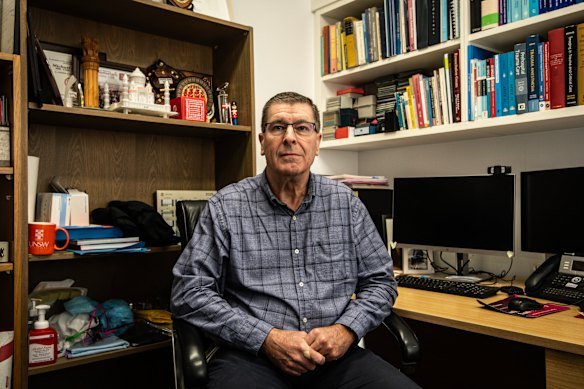
“The PIP breast implant, metal-on-metal hip and transvaginal mesh scandals all came through this system,” said Dr Christopher Rudge, deputy director of Sydney Health Law and an expert on medical device regulation. “The commercial marketisation of conformity assessment means there is no independent, unconflicted oversight of standards.”
The first assessor at the German company CellAED’s manufacturer contracted had major questions about the device, said another former company insider directly involved in the process, speaking anonymously to discuss confidential information.
“So they raise a complaint. And then the regulator agent, of course they are trying to maintain the client. They claim to be not-for-profit, but in the end they still want a client because they maintain the revenue,” they said.
“They change the assessor. And this assessor seems very, very co-operative. The hottest sticking point, something the previous assessor really did not want to give in. The last assessor was buying all the responses.” (The German company said it was reviewing the matter.)
To win approval without human clinical data, CellAED’s manufacturer used what is known as the “equivalence pathway”.
This rule lets manufacturers claim their device is so similar to an existing one on the market, it can use the existing device’s clinical data, rather than running a new clinical trial.
This approval pathway was also used for pelvic mesh, with disastrous results, Rudge said.
According to UK court documents, CellAED’s manufacturer claimed the tiny device was equivalent to a defibrillator manufactured by Phillips.
“That’s how it happens,” said the first insider. “You basically say, ‘Our device is equivalent to that device.’”
Philips’ device generates almost twice the energy of the CellAED, and shocks within just eight seconds. The CellAED’s manual notes it shocks in “less than 50 seconds”.
The CellAED was registered as a Class IIb device, meaning the TGA and other regulators did not require clinical evidence proving it could save a life. “So it did not require human trials,” said the first company insider.
“The international standard for defibrillators does not require you to specify whether it will save a life or not.
“As far as clinical efficaciousness is concerned, that’s really up to the regulator themselves.”
The TGA reclassified defibrillators as high-risk devices requiring clinical evidence just two months after the CellAED was approved. But rather than re-audit the CellAED, the TGA ruled it would have to meet the new higher standards by 2029.
CellAED’s backers approvingly noted the tougher new rules for forming a “protective moat” around the company. To compete with their device, their competitors would now require actual clinical trials.
It was the lack of clinical data, picked up on by the UK regulator, that eventually led to the homegrown company’s collapse.
Issues with the regulator led to lawsuits and audits, taking resources away from running the company.
In June 2025, CellAED’s manufacturer appointed administrators; it has now collapsed into liquidation.
The company has $20 in the bank and owes creditors up to $18 million.
A report from administrators Hall Chadwick in October said they intend to pursue Casey over allegations the company was trading while insolvent.
For more, watch 60 Minutes on Channel Nine at 8.30pm on Sunday.
The Examine newsletter explains and analyses science with a rigorous focus on the evidence. Sign up to get it each week.
Read the full article here