




 Markets
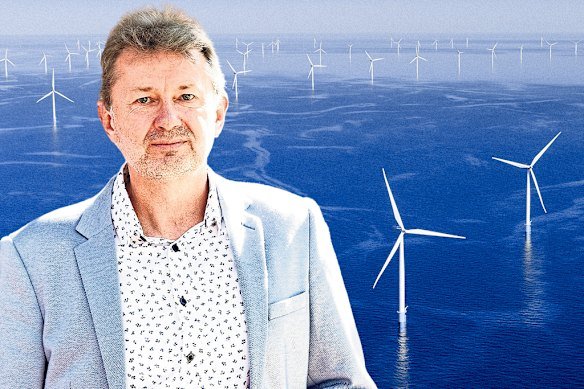
Professor Ty Christopher, an electrical engineer with four decades of experience in the power industry, is director of the Energy Futures Network within the faculty of engineering at the University of Wollongong. I spoke to him on Thursday.
Fitz: Professor, good to chat again after two years. Last time we talked, you were celebrated for your remark to me that “When people ask me, am I anti-nuclear, I look them in the eye and I say ‘no, I’m anti-bullshit’.” What I want to do now is go “around the grounds” for the many energy issues Australia has at the moment, and apply the same cut-through approach, by giving us the good oil, even if it is sunshine and wind. Are you ready to play?
TC: Yes. And let’s see if we can top that for a headline.
Fitz: OK, right now, there is widespread panic over the lack of fuel in Australia and petrol stations running out. Energy Minister Chris Bowen, however, says: “We have as much fuel in Australia today as we had on the day Iran was attacked”. Is that true?
TC: Yes. According to all the publicly available figures, that is a correct statement.
Fitz: Why, then, are there hundreds of service stations across the country with signs up saying: “Crunchie Bars only, no fuel, and particularly no diesel, you bastards?”
TC: Because diesel is the new bog roll. The problem that we have with fuel in Australia at the moment is fundamentally that Darren and Karen are filling up every jerrycan, every pot and pan with fuel and panic buying, just as people did with toilet paper during the pandemic. This is fundamentally a demand problem. If people calmed themselves down, then we would have sufficient fuel supply. And the bit that worries me is the areas that are running out first are in our rural areas, and that starts to affect our food supplies and our food supply chain, and that is an area of real concern. We need people in the cities to calm their farm.
Fitz: Boom-boom! But I get it. As a matter of national resilience, we people in urban environments need to stop buying petrol and more particularly diesel – which powers a lot of farm machinery and long-haul trucking – unless we need it. But when Darren and Karen do put their nozzle in their tank, what is the origin of most of that fuel?
TC: About 20 per cent comes from Australia, particularly Bass Strait. The rest comes from the Middle East and across the Asia Pacific region.
Fitz: And how much of the fuel coming out of our nozzle used to come through the Strait of Hormuz, before Iran closed it?
TC: Around a fifth. And the other problem is that a lot of the refineries in the Middle East have been damaged by “unauthorised engineering modifications” from neighbouring nations, right?
Fitz: As in bombs. Which means that even though we may have as much fuel in the country now as we did three weeks ago, there are shortages coming. In the face of that instability of supply, the call has gone up this week for there to be an Australian version of Trump’s infamous policy of “drill, baby, drill”.
TC: Bullshit. The solution for this problem is to turn the dial up further on the pathway we’re already on, to relying on renewables and electrify everything we use. In the last quarter of 2025, we hit 51 per cent of our electricity coming from renewable sources. We are already well on our way to that, so why on earth would we go back to expensive fossil fuels? Nobody is going to war over sunshine and wind, which we have in abundance.
Fitz: But is there oil there, waiting to be tapped, if a future government did it?
TC: Australia actually does have oil, if you have a look through the centre of Australia and other areas, substantial oil resources. The problem is that the oil is trapped in a geological system where they can only be extracted through what’s called “fracking”, where you actually fracture the rocks, pressurise it to try and extract the shale oil. It’s expensive and potentially environmentally catastrophic.
Fitz: So the last time we talked, you were gung-ho on offshore wind turbines off Wollongong. Am I right in saying that’s not going to happen right now?
TC: You are correct, tragically. And the reason is because of global events, and in particular the remonstrations of Donald Trump. He has railed in any public forum you could imagine against all forms of wind energy in particular.
Fitz: What the ruck do we care what Trump says in Washington?
TC: The ruck we care is that his campaign scares off global capital, not just here in Australia but everywhere in the world, except China, and they are going flat out on renewables. Trump is going so hard against renewables because a massive proportion of the funding base that paid for his election campaign and put him in the Oval Office came from the fossil fuel industry, and he is delivering to them their dues.
Fitz: That’s not just you being – and I quote from the tweets when this is published – “An ivory tower lefty dickhead, on the take from the renewables industry, who wouldn’t know his arse from his elbow” is it?
TC: [Laughing.] No, that is me looking at facts that are easily findable from anyone who looks at the campaign contributions that went into the US election.
Fitz: But you also said to me that, as ever more cheap renewable energy comes online – produced at a quarter the price of coal power – the more the electricity prices will come down. And yet people point out, not unreasonably, “Hang on, my electricity bills keep going up!”. So – without using any big words like “marmalade jam” or “corrugated iron” – why, when we’ve got 51 per cent renewables in Australia and rising, are people’s electricity prices not coming down?
TC: The reason is because in Australia, at the moment, there are three big companies who own nearly all the large-scale generation, or a large proportion of it. They control the wholesale price just like OPEC controls the wholesale price of oil by operating as a cartel.
Fitz: And yet, at least the government recently said to the three big energy companies: “From July 1 this year, you bastards are going to give three hours of free power for everybody”, yes?
TC: Yes, they have. And I think that’s a fantastic initiative, and it’s really forcing these companies to put their money where their mouth is. The brilliance of the “Solar Sharer Offer” is [that] it calls the Big Three out on what they’ve actually been saying for years now. On the one hand, they’re saying energy is worthless during the middle of the day, so they’ll only pay people selling to the grid three to five cents a kilowatt-hour. But the flipside is, if at that same time of the day, they’re saying if someone wants to buy energy from the grid, “Oh, well, that’s going to cost you 40 cents a kilowatt-hour”. How is it that at the same instant in time, energy can be both worthless for them to buy, but worth a king’s ransom for them to sell?
Fitz: Which brings us to the sudden proliferation of home batteries. Last time we talked, in June 2024, Australia had something like 40,000 residential batteries. As we speak, because of the Cheaper Home Batteries Program, there’s something like 300,000! So the game has changed, yes?
TC: My hope is that it will completely transform the market because the more storage that we get in homes, the more people are able to store their excess solar and use it in the evening, they can avoid having to purchase any of their energy from the retailers, which reduces demand, and lowers costs. But with enough storage in the grid, it’ll actually mean that energy will start to become valuable during the middle of the day.
Fitz: But this is what truly interests me. I had somebody telling me the other day that the revolution to come will be everybody with batteries can join up and become a fourth force in the Australian market. We, the people, can say: “We don’t need your fossil fuel generation at all. We can trade between ourselves!” Is that realistic?
TC: Yes, it is realistic. Think of it this way. At the moment, we have this completely imaginary thing called the wholesale market, a huge lake into which all of the kilowatt hours are poured. And then every retailer comes along, and every consumer, and they have to pay to dip their cup into the lake to get their drink of energy. But it’s really the three big companies, and maybe a couple more, who have control over that lake, and the price going in and the price going out. So why can’t we have lots and lots of small ponds in each suburb, and each little pond is there, and it operates at sort of the postcode level, and the energy is bought, sold and traded in and out of that pond on a daily basis?
The way it works now, we have abundant, cheap energy being produced, but once we wash it through this market structure, and out the other side, it becomes expensive energy.
Fitz: And the solution?
TC: Empower the smaller producers. Our entire energy grid was originally designed with 1000 pages of rules and market structures, on the premise that there was less than 50 really big-arse generators across the grid. But that same system today has 4.3 million generators connected to it, all of them very small on the roofs of homes, but by the end of this year, there will be at least half-a-million batteries with them. We have a system that has transformed completely how it operates, and yet, the rules, the regulations, the economics have not changed a bit since day one. And that’s the problem.
Fitz: What can the government do?
TC: Allow people power to step up. We need community energy co-operatives to start to be established. In order to do that, we need the government to direct the regulators to make it easy for new community groups to buy, sell and trade energy.
Fitz: Have the prime minister and Energy Minister [Chris] Bowen purred happily at this prospect of these rules changing, or do their brows darken?
TC: I think our political masters, at both state and federal level, our elected officials, are very concerned about changing the status quo because as soon as the lights go out, people will point to the change as being the cause of the lights going out. And no politician wants to be the one that boldly enacted transformational change and then had responsibility for there being negative consequences. So I believe, in my conversations in the corridors of power, there is candid agreement with an understanding of what I’ve been saying to you now, but there is caution, driven by political fear that if they change things and there’s a blackout, it will reflect badly on whomever made the change.
Fitz: Bowen’s critics call him “Blackout Bowen”. Is that fair? Have there been major blackouts on his watch?
TC: Not fair. Not true. There have not been any major blackouts on his watch, and the reliability of our electricity system is still consistently running at four nines (99.99 per cent), with some minor variances depending on which part of the grid you’re operating in.
Fitz: Could this be done rapidly? In which case, could this be our last fuel crisis?
TC: This must be done rapidly, and in the spirit of “never wasting a good crisis”, we should, as a nation, be looking at what’s happened here. We should be saying, “never again”, and the tools for us to build our way into “never again” are already there in front of us. We’ve just got to run along the board we have in front of us and turn all the dials up to 11: buy electric vehicles; electrify our homes; put in more solar; more wind; tonnes more batteries; and change the rules to allow the nation to develop the platforms for those batteries to unite into a fourth force.
The Opinion newsletter is a weekly wrap of views that will challenge, champion and inform. Sign up here.
 Peter FitzSimons is a journalist and columnist with The Sydney Morning Herald.Connect via X.
From our partners
Read the full article here