




 Markets
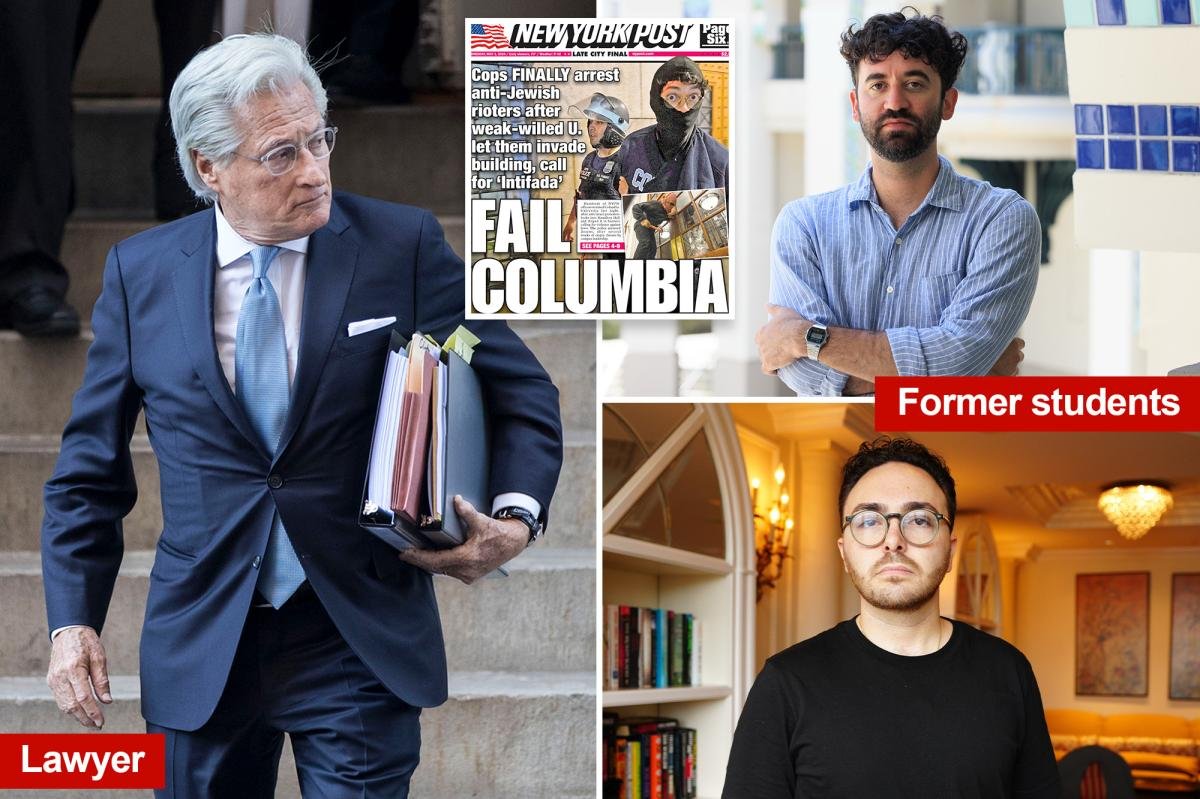
A high-profile lawyer who became one of the nation’s most prominent advocates for Jewish college students after Oct. 7 netted a whopping $6.4 million payday from a settlement with Columbia University — by preying on his own clients, a shocking new lawsuit claims.
Marc Kasowitz’s firm had represented 43 Jewish and Israeli students who alleged Columbia failed to protect them during the violent anti-Israel protests and encampments that engulfed the Ivy League campus in Manhattan after the Oct. 7, 2023, terror attacks on Israel.
The plaintiffs said that at first, they were thrilled to be repped by Kasowitz, a veteran Manhattan litigator who was the legal face of a national campaign against campus antisemitism.
“When Kasowitz rode in on his white horse and was like, ‘Hey, we’re gonna fix this and make this right,’ I was like, ‘Hell, yeah,’ ” said Miles Rubin, a 31-year-old Columbia graduate and former Israel Defense Force reservist whose friends were killed during Hamas’ Oct. 7 assault, to The Post.
Kasowitz’s firm eventually reached a confidential mega-settlement with Columbia over the students’ accusations earlier this year, according to the new lawsuit, which was filed in Manhattan Supreme Court on Sunday.
But Kasowitz then allegedly refused to give the plaintiffs his firm’s billing records from their case, while his cut totaled more than $6.4 million — well over half the settlement’s total payout, court documents claimed.
The top lawyer also allegedly distributed the remaining settlement proceeds through a secretive non-appealable process and threatened that students who refused to sign the deal would have to proceed without his firm’s representation, according to the complaint.
“Plaintiffs, all young students, had already endured harrowing antisemitic harassment on campus during the historic unrest following the Oct. 7 Hamas attacks, but never expected to be taken advantage of by the very lawyers they trusted to protect them,” the new suit alleges.
A disgusted Rubin told The Post, “Little did I know he was lining his own pockets while touting himself as a hero.
“He’s claiming to be the one defending the Jews, and he’s just using it as his own personal piggy bank. … It’s insane. You can’t even make it up.”
According to the new lawsuit, the student plaintiffs were told a third party would cover their legal fees, then were given just five days over the Christmas holiday to sign sweeping releases of their claims.
Only after signing did many learn how much they would actually receive — awards that ultimately ranged from $34,000 to $300,000 — leaving them with no opportunity to reject the settlement or challenge the firm’s allocation of the money, their suit alleges.
The complaint alleges that the remaining settlement funds were divided through a secretive, non-appealable process that offered no explanation for why one student received nearly nine times as much as another.
The lawsuit also challenges the firm’s billing records, alleging Kasowitz refused repeated requests for detailed invoices before eventually producing only a summary claiming more than 7,700 hours of legal work and listing his own billing rate at $2,500 an hour.
The plaintiffs contend in their suit that the firm never produced the underlying bills supporting its more than $6.4 million fee.
They allege in their suit that the firm’s related work hours and fees were “inflated and false,” noting the Columbia case settled before depositions or formal discovery.
Noah Miller, a plaintiff who graduated from Columbia’s Graduate School of Architecture, Planning and Preservation in 2025, said he trusted the firm’s assurances that someone else would pay the legal bills.
“I signed a retainer that said that a third party was paying for everything,” Miller, 28, claimed to The Post.
“I realized that I was a pawn to Kasowitz rather than an actual plaintiff. … The entire time I was deceived throughout the entire process.”
Lawyer Susan Chana Lask, who filed the new lawsuit against Kasowitz and his firm on behalf of the students, said the case boils down to a simple proposition.
“These students got suckered in,” Lask told The Post. “The retainer said there would be no legal fees. Then they signed away all of their claims before they even knew what they were getting.”
Lask also blasted the firm’s claimed billing records, claiming no court overseeing a civil rights case would approve rates as high as those claimed by Kasowitz.
“If any court sees this, and they will, there is no court that I believe would allow $2,500 an hour,” said Lask, a veteran civil rights litigator who has argued landmark civil rights cases in both the US Supreme Court and the Second Circuit.
Kasowitz emerged as one of the country’s most recognizable lawyers representing Jewish students after the Oct. 7 attacks, filing headline-grabbing lawsuits against Columbia, Harvard, Penn and NYU while accusing the elite universities of allowing antisemitism to flourish.
The veteran Manhattan litigator also served for years as one of President Trump’s outside lawyers and has frequently appeared alongside administration officials and Jewish advocacy groups as the legal face of the campaign against campus antisemitism.
His law firm claimed the new suit is full of falsities and “gross misrepresentations.”
“The settlement that Kasowitz LLP achieved at Columbia University secured historic gains and protections for Jewish and Israeli students including, among many other things, the appointment of a Title VI coordinator and consideration of the International Holocaust Remembrance Alliance (IHRA) definition of antisemitism,” a spokesperson for Kasowitz LLP said in a statement.
“It is a shame that a small handful of students who signed releases and fully accepted all the benefits and protections of that historic settlement are now signing onto a public filing prepared by other counsel which is riddled with gross misrepresentations and false claims.”
The lawsuit is not the first time Kasowitz and his firm have faced accusations over their legal practices.
Former Kasowitz partner Eric Herschmann sued the firm last year, accusing Kasowitz of concealing the company’s financial condition, breaching fiduciary duties and misleading partners about its finances —allegations he says cost him millions of dollars.
Years earlier, insurance company Patriot National sued Kasowitz in Florida, accusing the firm of malpractice and fraudulent billing practices, including excessive and duplicative legal fees.
Kasowitz denied those allegations and separately sued Patriot in New York seeking more than $1 million in allegedly unpaid legal bills.
Read the full article here