





 Markets
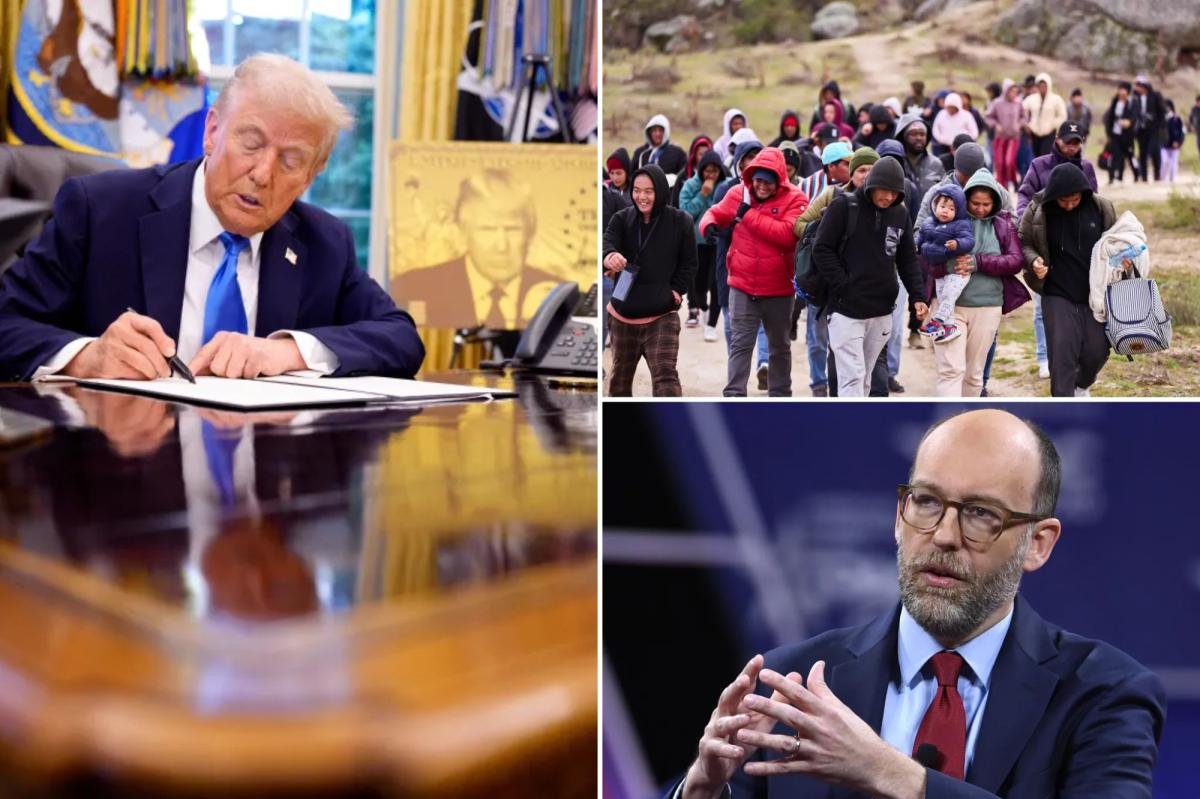
WASHINGTON — President Trump on Friday ordered the cancellation of $810 million in congressionally appropriated funding, including large sums meant for illegal immigrants and race-focused programs, in the second “pocket” rescission in 49 years, The Post has learned.
The action eliminates 11 pools of unspent money at seven federal departments and agencies as part of a drive by fiscal hawks to whittle down executive-branch expenses.
“In accordance with… the Congressional Budget and Impoundment Control Act of 1974, I herewith report 11 rescissions of budget authority, totaling $810 million,” Trump wrote in a notice to House Speaker Mike Johnson (R-La.).
“The proposed rescissions affect programs of the Departments of Commerce, Education, Health and Human Services, Homeland Security, Housing and Urban Development, and Justice, as well as for International Assistance Programs.”
A pocket rescission is a proposed cancelation of congressionally mandated spending that occurs so late in the federal fiscal year that it takes effect regardless of legislative pushback. It is legally controversial because Congress otherwise has 45 days to consider the action.
With just five days before the fiscal year ends on Sept 30, the White House Office of Management and Budget identified areas where funding arguably is no longer needed or contrary to Trump’s policies.
The largest pot of funds — $567 million appropriated for HHS to provide social services to illegal immigrants, including through grants to non-government organizations — was deemed to be no longer necessary because of the near-elimination of illegal border crossings in the past year.
Some of the organizations that had received funds through the program drew controversy due to their political connections to Democrats and their alleged tolerance of child abuse.
The next-largest sum being eliminated, $70 million, was allocated to fellowships and grants for foreign academics and students in the US. Some of that funding drew conservative qualms when it was discovered to be flowing to transgender-focused projects.
Another $56 million is being yanked from a Department of Housing and Urban Development program to fund outside organizations that provide housing counseling, which instead allegedly fueled “DEI-centric” agendas of Democrat-linked racial advocacy groups such as UnidosUS and the National Urban League.
A sum of $28 million is being withdrawn from HHS grants deemed “wasteful, duplicative, and sometimes outright harmful and blatantly ideological.” The precise grants that are impacted are unclear.
A further $25 million is being yanked from the Department of Education’s subsidies for migrant students initiative, which funded organizations that allegedly encouraged participants to avoid law enforcement.
The rescissions yank $15 million apiece from the Justice Department’s Community Relations Services, an all-but-shuttered office focused on race relations, and from a DHS program that subsidized cultural orientation, healthcare and legal advice for illegal immigrants and asylum seekers.
Smaller amounts being zeroed out include $10 million from the Minority Business Development Agency, which makes grants to business owners based on their race, $10 million from another DHS program funding legal services for illegal immigrants, and $5 million from the HHS Office of Minority Health.
Trump also cut $9 million from the Department of Treasury’s Tropical Forest and Coral Reef Conservation Act Program, which offered debt forgiveness to countries for actions intended to address climate change.
Trump has used rescission powers twice before, including last year requesting that congressional Republicans end federal funding for NPR and PBS and gut USAID programs. Congress approved.
The use of pocket rescissions, however, is controversial and the latest action could spur legal challenges. The legislative Government Accountability Office has deemed the practice illegal, contrary to the opinion of the administration.
Trump last year rescinded nearly $5 billion in foreign aid in the first pocket rescission since 1977 — outraging congressional Democrats and sparking a court battle.
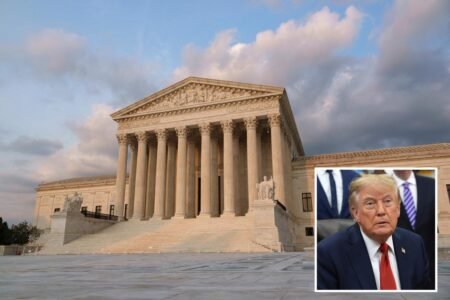
The president won a 6-3 ruling from the Supreme Court last September allowing him to proceed on the grounds that his prerogative to conduct foreign affairs was more important than the alleged procedural issue.
OMB Director Russ Vought and General Counsel Mark Paoletta have pointed to instances where Presidents Gerald Ford and Jimmy Carter arguably made pocket rescissions in the 1970s and the latest action could test — and potentially expand — further use of the practice.
Read the full article here