





 Markets
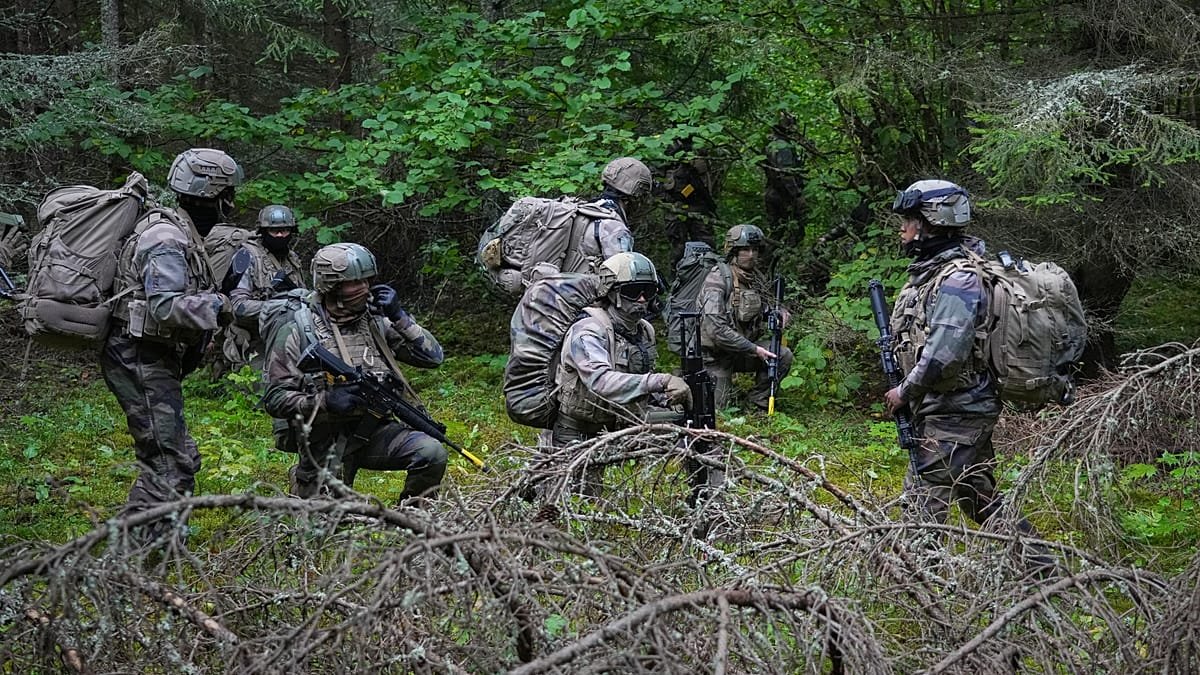
France is set to begin trialling its own artificial intelligence-powered battlefield command during a NATO exercise on Monday, Defense News reports. AI battlefield systems help optimise decision-making and target identification.
Developed with French firms, Arcadia is being positioned as a European alternative to Maven, an AI platform used by NATO that was developed by US defence tech contractor Palantir.
Push for European defence tech sovereignty
The system, known as Arcadia, will be deployed during NATO’s Coalition Warrior Interoperability Exercise in Poland from 8 to 26 June, according to General Patrick Justel, deputy chief of staff of the French Army.
The French firms that helped develop Arcadia include Mistral AI, Safran, Thales, and Airbus.
Arcadia is part of a broader push in Paris to strengthen Europe’s technological sovereignty in defence.
NATO began using Maven Smart System, derived from the Pentagon’s Project Maven, in 2025. It integrates vast amounts of battlefield data to support faster decision-making and target identification. But French officials have raised concerns about relying on non-European systems.
Arcadia “is our response to Maven,” said Justel in a media briefing on Thursday that was cited by Defense News. “The question arises whether we should adopt Maven blindly, or should we look for other solutions.”
Weaning off Palantir
European governments have increasingly sought to reevaluate their agreements with Palantir, which has drawn controversy for, among other things, its use in military operations, mass surveillance, and immigration enforcement.
Derk Boswijk, the Dutch State Secretary for Defence, said in the House of Representatives this week that a “fully fledged alternative” to Palantir must be available within two years.
The Dutch government is working on a “two-track policy to reduce dependency” on the company so they can operate independently “as soon as possible” and find a European alternative.
Meanwhile, Germany has said it will not be contracting any US companies, including Palantir, for its contracts, according to Reuters.
“As much as we are interested in the functionality for our own database, it is simply inconceivable at the moment to grant industry staff access to the national database,” Thomas Daum, the head of Germany’s cyber defence, reportedly said this week.
Interoperability questions within NATO
France has already tested Arcadia in exercises in Romania and domestically, and says the system has been designed to comply with NATO’s Federated Mission Networking (FMN) standards, a key framework for interoperability between allied forces.
Although Palantir says its system aligns with FMN principles and is moving toward full certification, interest in a European-built alternative appears to be growing.
Justel said, “When we talk to our European partners, we get the same reaction of, `well, we’ve kind of gone with Maven because there’s no choice, but if countries in Europe are able to build an alternative, we’ll go for it.’”
Denmark is reportedly looking for local solutions to replace a 7-year deal with Palantir.
A more resilient, decentralised system
Arcadia is designed as a decentralised system, linking command posts to field-based servers in a mesh network, while Maven boasts a more centralised architecture.
French officials say the decentralised approach improves resilience by allowing operations to continue even if parts of the network are disrupted.
Read the full article here