





 Markets

It was nearly Christmas 1986 but for 13-year-old Kane Robinson there was only a sense of dread. His father, John, had headed out for a weekend shift driving a black cab and hadn’t come back.
He woke to be told by his mother Pat: “Dad didn’t come home.”
It had been a long shift, starting on the Saturday morning, and the last job was to fill the tank with petrol for the next driver. It was after 11pm, and he was a few kilometres from his Clayton South home.
Kane remembers detectives and then taxi colleagues arriving: “The house was full of people.”
John Robinson, 42, was the service manager at a Mitsubishi dealership and a part-time taxi driver. He disappeared late on December 20. His car was discovered a day later near Jerilderie in NSW.
There were bloodstains in the boot along with four spent .22 bullet shells. Robinson’s body was later found in a roadside drain near the Newell Highway. He had been shot in the head.
His rectangular gold-rimmed glasses and wallet, containing about $250 and his business cards, were never found.
For Kane, it was a blur. “All I can remember is a sense of sadness and wanting to know why.”
A student at Clayton Technical School, he had aspirations to join the police force, but he now admits that without a male role model he was heading down a dangerous path.
“I was wagging school and hanging out with the wrong crowd.” He wasn’t committing petty crimes but his mates were.
Pat rang Brad Penno, a homicide detective who had investigated John’s murder. Brad was working at the drug squad then and contacted Kane to advise him to start picking better friends.
“He kept in touch with me quite a bit and made sure I stayed on the straight and narrow,” says Kane.
Brad left policing to become a barrister. He recalls: “I did keep in touch with [the Robinsons] – to offer some moral support and guidance.
“There are some murders that stay with you. The violence was unspeakable. [John] was fuelling the taxi at the end of the shift when he was grabbed. All for about 250 bucks.”

The family did not have the satisfaction of seeing the killer tried and convicted.
Sean Downie, 22, was arrested in Cairns on January 13, 1987 and extradited to Melbourne over the murder. He told police he had pulled Robinson over at gunpoint, forced him into the boot then shot him.
Downie was later found hanged in his K Division, Pentridge cell. There was talk he was murdered, but the official finding was suicide.
Kane Robinson fulfilled his desire to be a police officer, taking the long road to get there.
After leaving school he tried to join but was told he was unlikely to be successful. “They thought my background [as the son of a murder victim] could mean I was joining for the wrong reasons.”
After a stint in the navy, he was chatting to a next-door neighbour who was a sergeant. Kane told him about the knockback and the sergeant said: “I’ll make a couple calls.”
Any obstacles were quickly removed.
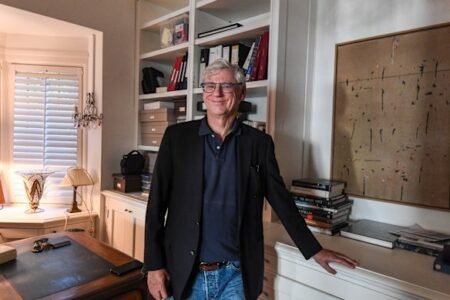
Kane is now a Public Order Response Team (PORT) inspector and has decided to tell his story for the first time. It was never a secret as such, but he wanted to be judged in the police force on his merits and not as a victim of crime.

“I just kept it to myself. I didn’t want to be known as the son of a murder victim.”
When he graduated in 2001 his family were there to celebrate. In the group were Brad Penno and fellow homicide detective Gary Landy.
A surprising number of police have similar stories; childhood victims of family violence, sexual assault, losing relatives to murder. Most keep their stories to themselves.
Kane’s decision is an interesting one. A dedicated leader, he preaches honesty to the PORT members he supervises. He wants to win their trust so they can come to him with personal and professional challenges.
“My role is to help create good, ethical police officers. If we send them out from a good environment it is likely they will be better on the street.”
By telling his story, he hopes his staff and other police will be comfortable to share their problems.
‘My role is to help create good, ethical police officers. If we send them out from a good environment it is likely they will be better on the street.’
Inspector Kane Robinson
He knows the old police culture was to always put forward a brave face, often with disastrous consequences.
When Kane joined he was seeing the end of the old-school culture where the instructors barked orders and recruits were expected to comply. Asked to jump, the only acceptable question was: “How high?”
With a military background, Kane was comfortable with the structure that has now changed “for the better”.
“Young police are better educated, and they want to know why they are being asked to do things and not just to follow orders without question.”
He says it is the same on the streets, where police no longer rely on unquestioning compliance. “We have to adapt – communication is our greatest tool.”
PORT is the front line in demonstrations where there are risks of violence. “The key is to see both sides and remain calm. It doesn’t matter how loud people get as long as no one gets hurt.”
And while most police find demonstration work a pain in the neck, Kane reminds them that people have the right to protest – peacefully.
There are many personality types that can make good police officers, but they all have one trait in common: empathy. “I don’t need to know their background, but I want to understand the victim, offender and the people I lead.”
The skill is to try and find common ground rather than the point of conflict.
In the early 1970s we saw our first wave of mass demonstrations with anti-conscription protests. Senior police, quite understandably, brought their most experienced street police to the front line, banking that years on the road would build tolerance.
The opposite turned out to be true. Many of the long-term sergeants and senior constables were Korean War veterans. They hated the long-haired protesters who wanted to march the streets but not march off to battle.

Operations assistant commissioner (later chief commissioner) Mick Miller brought his youngest police to the front line. They were about the same age as the protesters and there was, at last, an element of empathy, resulting in a drop in violence.
It was one Anzac Day when Robinson was called to an ugly confrontation at the Young & Jackson Hotel.
There were three SAS members who had been refused entry because they were drunk. “They wanted to fight the bouncers. You could understand this was their day and that’s why they felt aggrieved. They had fought for their country and wanted to be treated with respect.”
He told the bouncers to go inside. Then he talked to the soldiers.
“Is it worth ruining your reputation and the reputation of the unit over this? There are plenty of bars down the street.”
They left. It was by no means a surrender – just a tactical withdrawal.
About five years ago, near Catani Gardens, the rabid right and the hard left were facing off. (They actually need each other to get headlines.) “We had dogs and horses in the middle,” says Robinson.
On the right side was the oh-so-wrong United Patriots Front frontman Blair Cottrell, a neo-Nazi racist with a side interest in steroid use and stalking who was happy to negotiate with Robinson.
“Cottrell put his hand out for me to shake. What would that have looked like? Supporting the right to demonstrate is not the same as supporting a demonstration.
“I said: ‘I will not be shaking your hand. We are not making an agreement.’
“To his credit he said: ‘I totally understand.’”
But while the world is changing, the basic rules of policing don’t. When push comes to shove you need to shove the hardest.
Robinson was in a South Melbourne laneway with a family violence offender who produced a gun. Kane had no choice and drew his.
“It was the closest I came to shooting someone. I was applying pressure to the trigger when I had a tap on the shoulder. It was a dog handler who let his rottweiler off. It was messy,” he says, with diplomatic understatement.
Robinson loves the variety of working at PORT, being at the sharp end.
“We can come into regions to support them to deal with specific crime problems.”
At present, PORT are a presence in the CBD as part of Operation Harmony, to ensure the streets are safe, and Operation Park, an effort in the Caulfield area designed to reassure the Jewish community they will be protected.
The threat of terrorism means the specialists, PORT, the Critical Incident Response Team and the Special Operations Group are constantly refining tactics.
After the Bondi massacre, PORT are used to patrol mass crowds openly carrying military-grade semi-automatic rifles.
It is called an open carry and is a clear message: Don’t even think about it.
John Silvester lifts the lid on Australia’s criminal underworld. Subscribers can sign up to receive his Naked City newsletter every Thursday.
Read the full article here