






 Markets
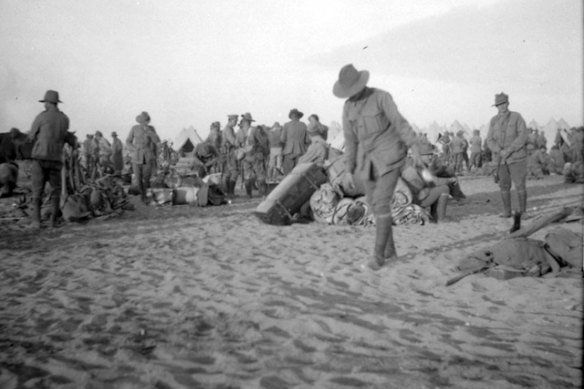
War, as we might ponder on this latest Anzac Day, is a pitiless beast.
It produces heroes, villains and countless innocent victims, and there is often no end to a war for those touched by it.
Physical, mental and moral injuries have no ceasefire date. Healing – if there is to be healing at all – often takes an age without a name.
Arthur Gordon Whitlam, a young officer in the Australian 1st Divisional Ammunition Column, never got to a battlefield during World War I.
Nevertheless, he was a victim of that war, and it took almost three decades before his wounds could begin to heal.
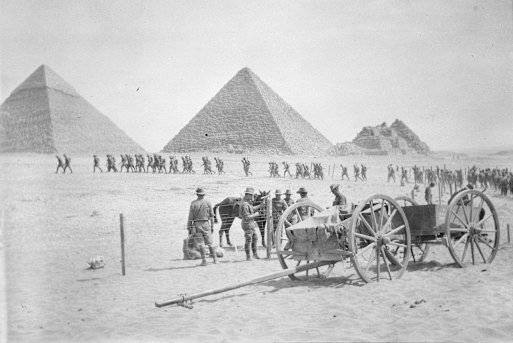
His world began to fall apart in 1915 and 1916 when he was based in Egypt, the stepping-off place to Gallipoli.
A year later, his reputation was wrecked in northern France as World War I raged nearby on the Western Front.
What was later revealed to be false evidence and incompetent and rushed judgment combined to all but ruin Whitlam’s young life, almost as surely as if he had been wounded in the front line.
His downfall came in a hurried court-martial run by British officers in the French village of Sailly-Sur-la-Lys near Armentieres in northern France in 1916.
There, Whitlam, having been held under close arrest for four months and transported from Egypt to France with no opportunity to prepare a proper defence or to call witnesses, was found guilty – despite his protestations that the charges were absurd – of stealing items such as revolvers and field glasses from fellow officers in Egypt and sending them home to Australia.
Whitlam, aged 25, was sentenced to be “cashiered” from the Army.
He was stripped of his rank and sent home in disgrace.
He spent the next 28 years fighting the Australian and British military and political machines to restore his name.
At the end of it all, he was found to be innocent.
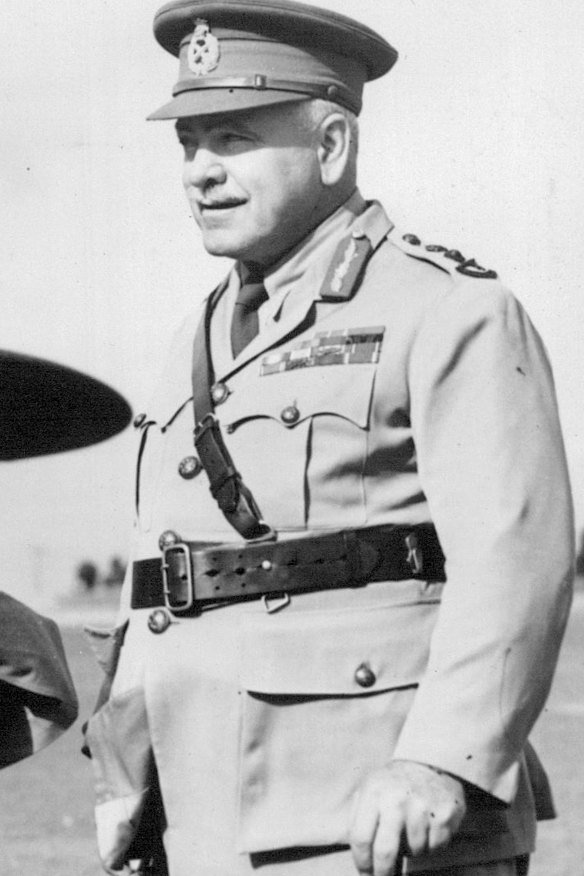
On July 19, 1944, as the Battle of Normandy raged in Europe and Australian troops fought the Japanese in another world war, the governor-general of Australia, Lord Gowrie, officially exonerated Whitlam by quashing his 1916 court-martial conviction.
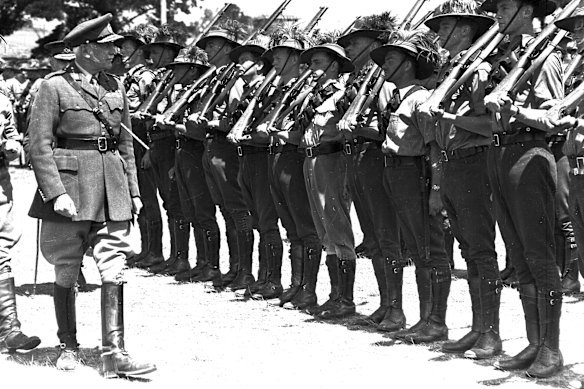
The decision came after Australia’s most senior military and legal authorities –including the commander-in-chief, General Thomas Blamey, the adjutant-general, Lieutenant General V. A. H. Lloyd, and attorney-general Dr H.V. Evatt – unanimously agreed that Whitlam had been innocent all along.
A panel of eminent barristers damned the original court-martial as a travesty of justice.
Blamey’s file on the matter condemned the evidence of the primary witness against Whitlam in furious terms: “No witness has ever given evidence so vulnerable. Cross-examination would have decisively exposed its great weaknesses.”
Attorney-general Evatt compared Whitlam’s experience with the most infamous cashiering in military history, that of French officer Alfred Dreyfus in 1894.
“This case is on all fours in many ways with the Dreyfus case and should be quashed,” Evatt wrote in 1944. (“On all fours” is legal idiom meaning that the facts and circumstances of one case are substantially the same as another.)
Dreyfus, a French Army officer who was found guilty on a cooked-up charge of treason in 1894, was subjected to the cashiering ritual of “degradation” – his sword was broken in two, his rank was physically stripped from his uniform in public and he was sentenced to rot on Devil’s Island off French Guiana.
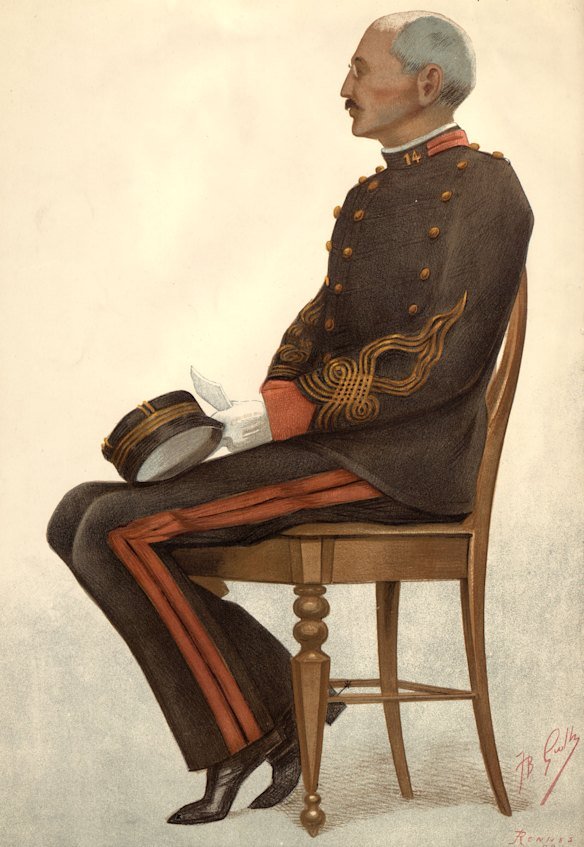
The French writer Emile Zola brought the injustice to a head when he famously wrote a scorching article headed “J’Accuse”.
Dreyfus was brought home to France and eventually exonerated in 1906.
Whitlam was spared the full degradation ritual, but he had no literary champion, and he lived under the cloud of being a dishonourable thief more than twice as long as Dreyfus’ misery.
Yet he prevailed.
In his ruling, the governor-general directed that the original proceedings of the general court-martial be quashed and that Whitlam be “relieved of all the consequences of his conviction”.
Whitlam was retrospectively appointed to his former rank of lieutenant, backdated to June 17, 1916 – the date he was dismissed from the Army – and his medals were returned.
He waived any right to compensation. He just wanted his honour and his good name restored, he said.
If the name Whitlam rings a bell, you are not mistaken.
Arthur Gordon Whitlam – always known as Gordon – was the uncle of Gough Whitlam, who would become Australia’s prime minister in 1972.
Yet the story of Gordon Whitlam’s disgrace and eventual absolution is all but unknown in Australian history. His exoneration was gazetted and reported in newspapers in 1944, but news of the war swamped it.
The whole sorry story resides in hundreds of pages of old documents held in the vast morgue of the National Archives of Australia in North Melbourne.
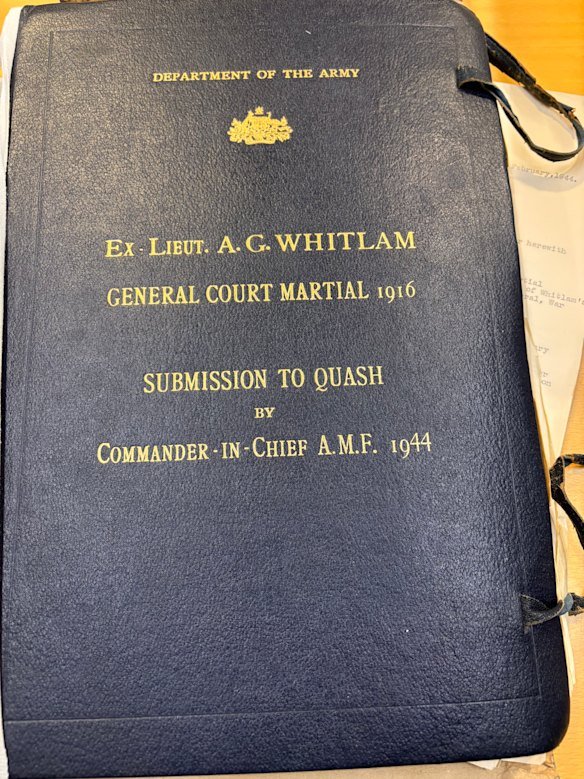
Central to the numerous files is a large blue leather-bound book bearing the title, in gilt, “Ex-Lieut. A.G. Whitlam General Court Martial 1916. Submission to quash by Commander-in-Chief A.M.F. 1944”.
Within that volume, prepared on behalf of the man who led Australia’s military forces in World War II, Blamey, is a devastating timeline of official stonewalling and duckshoving, despite authorities right up to a prime minister knowing or suspecting since the early 1920s that Whitlam should never have been convicted.
It took almost to the end of the next conflagration – World War II – to have it proved beyond doubt that he was the victim of a travesty of justice.
The court in Sailly-Sur-la-Lys accepted the word of Ernest Edward Fowle, Whitlam’s batman (a military servant), that Whitlam had packed a large box in his tent in Egypt that was sent to Whitlam’s father in Australia and found by Customs at Port Melbourne to contain the stolen items.
Whitlam protested at his court-martial that he did not pack the box and had no idea what was in it.
He had simply instructed his batman to pack personal belongings to be sent back to Australia that he would not need in Gallipoli, where he expected to go within days, he declared. (In fact, Whitlam became ill and did not go to Gallipoli.)
He argued it would be absurd for an officer to openly ship a large trunk of stolen property to his father in Australia, knowing it would be inspected closely by Customs.
At the end of two days of hearings, his argument was dismissed.
It was as if, after the Army’s trouble of bringing a large tin trunk loaded with items ranging from saddles, clothing and pistols back from Australia to France, the court needed a conviction. Besides, Whitlam had been under close arrest for four months, as if his guilt was already decided.
He was found guilty on only four of 10 charges – two of stealing (a pistol, an overcoat and items of government equipment valued at £18) and two of receiving stolen binoculars.
Court-martial documents show that the batman changed his evidence several times regarding the number of boxes and their storage during the hearing.
To cap it off, the prosecuting officer mounted the extraordinary and erroneous legal argument that “denial of possession [of stolen goods] is evidence of guilt”.
Few fates could be worse for a young military officer than to be cashiered.
Whitlam’s civilian career as an accountant and auditor was destroyed when he got home to Melbourne.
Before he joined the Army, he was employed as chief clerk, cashier, accountant and assistant secretary by the Commercial Travellers’ Association of Melbourne. He was so valued that when he enlisted, his employer wrote to the minister for defence asking that he be held back as “he could not be spared”.
But when he was dismissed from the Army, the Incorporated Institute of Accountants, informed by the defence department that Whitlam had been cashiered after being found guilty of stealing and receiving, refused his professional licence.
Whitlam appealed to the British Army Council and to the Australian military in 1917 to quash his convictions.
The Army Council denied an appeal on the grounds that the court-martial was properly convened, and the Australian military said the Court of Review had no jurisdiction.
Another appeal to the defence minister in 1923 was denied, despite Whitlam producing a letter he had written to his father from Egypt on September 19, 1915, in which he expressed puzzlement that his revolver, field glasses, compass and other gear was missing. The letter – which had not been available during the court-martial – speculated that the items may have been packed mistakenly into his trunk by Fowle, and he asked his father to send them back to him, as he would need them in Gallipoli.
Years later, legal reviewers declared the letter showed “clearly and beyond all reasonable doubt that Whitlam was ignorant” of the stolen goods being in his trunk, and it alone justified quashing his conviction.
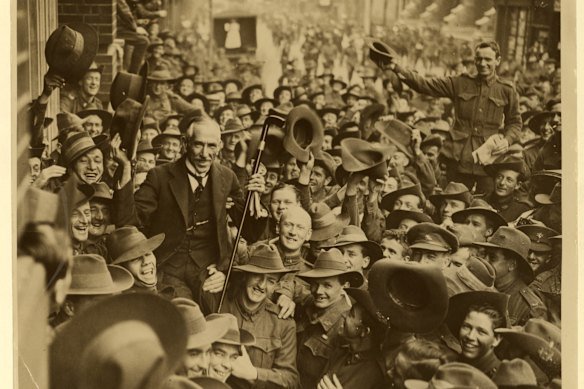
Soon after Whitlam’s appeals in 1917 and 1921 were dismissed, prime minister Billy Hughes, Australia’s solicitor-general Sir Robert Garran and other senior military and legal figures made clear in written notes held by the archives that they knew or suspected Whitlam had been wrongly convicted.
Precisely how Whitlam’s predicament came to the ears of such illustrious figures is not clear.
Historian Greg Pemberton has speculated that Gordon Whitlam’s brother Fred – Gough’s father – may have had influence. Fred Whitlam was a senior figure in Garran’s office, and by 1943 was Crown solicitor and a legal adviser to the attorney-general, H.V. Evatt. The files in the national archives, however, make no mention of Fred Whitlam.
What is clear is that Gordon Whitlam’s campaign to be exonerated was driven for many years by the Melbourne law firm established by the lawyer who had appeared for him in France, Major Frank P. Derham.
Derham, who never wavered in his belief that Whitlam was innocent, was hampered from presenting a strong defence during the court-martial because he was actively commanding an artillery battery in combat at the time.
He could only be spared for “rushed visits” to the court-martial, which was held about 12 kilometres behind the battle front.
Whitlam stated he saw Derham for only 10 minutes before the court-martial began, meaning the lawyer was “completely unprepared” to present the case.
As early as 1921, the head of Australia’s department of prime minister, Percy Deane, wrote to prime minister Hughes saying he had been advised that “evidence of the most conclusive character could be produced to show that Ernest Edward Fowle [the batman whose evidence had sunk Whitlam at the court-martial] was a thief, a liar, and a rogue generally” and “everything pointed to him being the person who committed the offences for which Whitlam was punished”.
Hughes wrote that “prima facie” evidence suggested an inquiry was warranted.
The minister for defence, Senator George Pearce, wanted the Whitlam case buried, arguing that if it was reconsidered, it would open the floodgates to other cases in which Australian soldiers had been convicted by courts-martial.
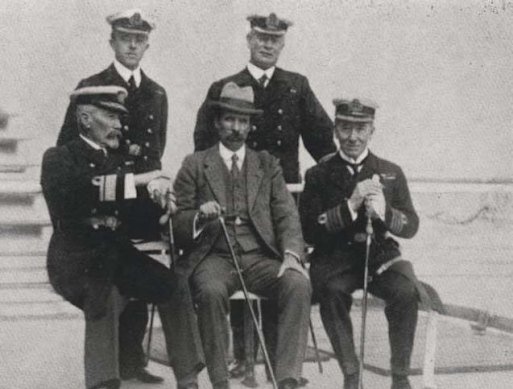
By 1923, however, Garran had studied the file and wrote that in his opinion, the conviction should be quashed.
In 1926 Whitlam, employing a law firm in Durban and a private investigator, found Fowle in South Africa, where he was living under a false name.
Fowle had deserted the Army on his way back to Australia, jumping ship in South Africa with a young woman he had misrepresented to military authorities as his daughter (and who later gave birth).
His wife was left abandoned in Australia. She presented an affidavit portraying him as an abusive drunk.
Fowle, in the presence of South African lawyers and Whitlam, signed a statutory declaration reversing his evidence to the court-martial.
He swore that: “I am convinced that Mr Whitlam did not receive or take the articles in question nor do I believe that he had any knowledge thereof.”
When Whitlam provided this to Australian military authorities and the solicitor-general, he was offered a pardon. He refused on the grounds that a pardon implied he was guilty.
Whitlam was left without resolution for another 18 years until 1944, when Blamey, alerted to Whitlam’s predicament by the adjutant-general, ordered a review of the case.
He appointed three eminent lawyers to look into the voluminous documents generated over 28 years. One of them, H.G. Alderman, KC – one of the most prominent barristers in Australia – wrote in a covering note to his lengthy opinion that “I started off being bored and a doubting Thomas”.
‘It is my training as a barrister which has aroused the anger at this travesty of justice.’
H.G. Alderman, KC
“As I went on I became more and more angry,” he wrote.
“That anger does not influence my opinion as counsel – on the contrary, it is my training as a barrister which has aroused the anger at this travesty of justice.”
Two other KCs, Sir Edmund Herring (later chief justice of Victoria) and Brigadier Eugene Gorman, chief inspector Army, agreed with Alderman that Whitlam was innocent and should be exonerated.
But why had Fowle lied to the court-martial, effectively condemning Whitlam?
Fowle, Whitlam believed, had stolen pistols, binoculars and other items from officers’ tents around the military camp in Egypt, knowing he could get a good price from newly arrived officers who needed to purchase such things before leaving for Gallipoli.
He had hidden them in Whitlam’s large tin trunk before taking the trunk for storage, where it could be expected to sit for several days before being collected by Thomas Cook and Co for shipment, Whitlam believed. He had given Fowle the key to the trunk, asking that it be mailed to his father, though it never arrived.
Fowle had believed Whitlam was leaving for Gallipoli the next day. He would then be free to retrieve the box, remove the stolen items and sell them.
But Whitlam, having fallen ill, did not go to Gallipoli. Fowle was sent there instead, robbing him of his chance to complete his plan.
The box, inscribed with Whitlam’s father’s address and still holding the stolen items, was duly collected and shipped to Australia.
Fowle never confessed to this scheme.
Instead, in his statutory declaration in 1926, he suggested “someone else” could have placed the stolen items in the trunk, declaring “other batmen could very easily obtain access to Mr Whitlam’s tent unobserved”.
Gordon Whitlam never returned to accounting. He married and went into business and academia, becoming Victorian manager for Cadbury-Fry-Pascall Pty Ltd and lecturing in marketing at the University of Melbourne from 1930 to1968.
He died in 1971, the year before his nephew became prime minister, leaving a substantial bequest to Melbourne University for scholarships associated with the School of Commerce and the Melbourne Business School. International students still compete for them.
Read the full article here