





 Markets
WASHINGTON — The leaders of three Republican House committees threatened Monday to hold Democratic fundraising powerhouse ActBlue in contempt of Congress after the firm refused to turn over more than 400 documents, citing attorney-client privilege.
A letter from House Administration Committee Chairman Bryan Steil (R-Wis.), Judiciary Committee Chairman Jim Jordan (R-Ohio), and Oversight Committee Chairman James Comer (R-Ky.) gave ActBlue until Friday to provide the messages, including statements by two members of its legal team indicating the fundraiser was not being forthcoming about overseas donations that were illegally funneled to Democratic campaigns.
“These documents reportedly contain evidence that ActBlue accepted foreign donations, misled Congress, and then retaliated against an employee who spoke up about it,” the lawmakers wrote. “ActBlue appears to be withholding these documents from the Committees in an attempt to cover up the scope and duration of its misconduct.”
ActBlue interim general counsel Aaron Ting resigned his post in February 2025 following a call involving ActBlue leadership and outside counsel, warning the fundraiser was “not fully committed to transparently addressing with the Board the seriousness of our most pressing concerns: the legal compliance of ActBlue’s past practices for screening political donations from abroad and its past representations to Congress regarding foreign donations and related matters.”
Days later, ActBlue’s lone full-time lawyer, Zain Ahmad, claimed in an internal Slack message that “he was retaliated against for blowing the whistle on internal misconduct,” according to the lawmakers.
The drama involving Ting and Ahmad was first reported in April by the New York Times.
“On June 5, ActBlue belatedly produced a log of responsive materials that it deemed privileged, but refused to produce Mr. Ting’s resignation letter or Mr. Ahmad’s message. Instead, ActBlue claimed attorney-client privilege over the entirety of these and 420 other documents,” wrote Steil, Jordan and Comer.
“The Committees struggle to understand how Mr. Ting’s resignation letter or Mr. Ahmad’s internal message could be privileged. Neither document could have been ‘made for the purpose of obtaining or providing legal advice,’” they added.
“Based on available evidence and common sense, the purpose of Mr. Ting’s resignation letter was to terminate his employment with ActBlue, and the purpose of Mr. Ahmad’s message was to make a claim of retaliation against ActBlue. As such, both documents were prepared and transmitted by these attorneys in the context of an employee-employer dispute with ActBlue, and not in an attorney-client context for purpose of providing legal advice.”
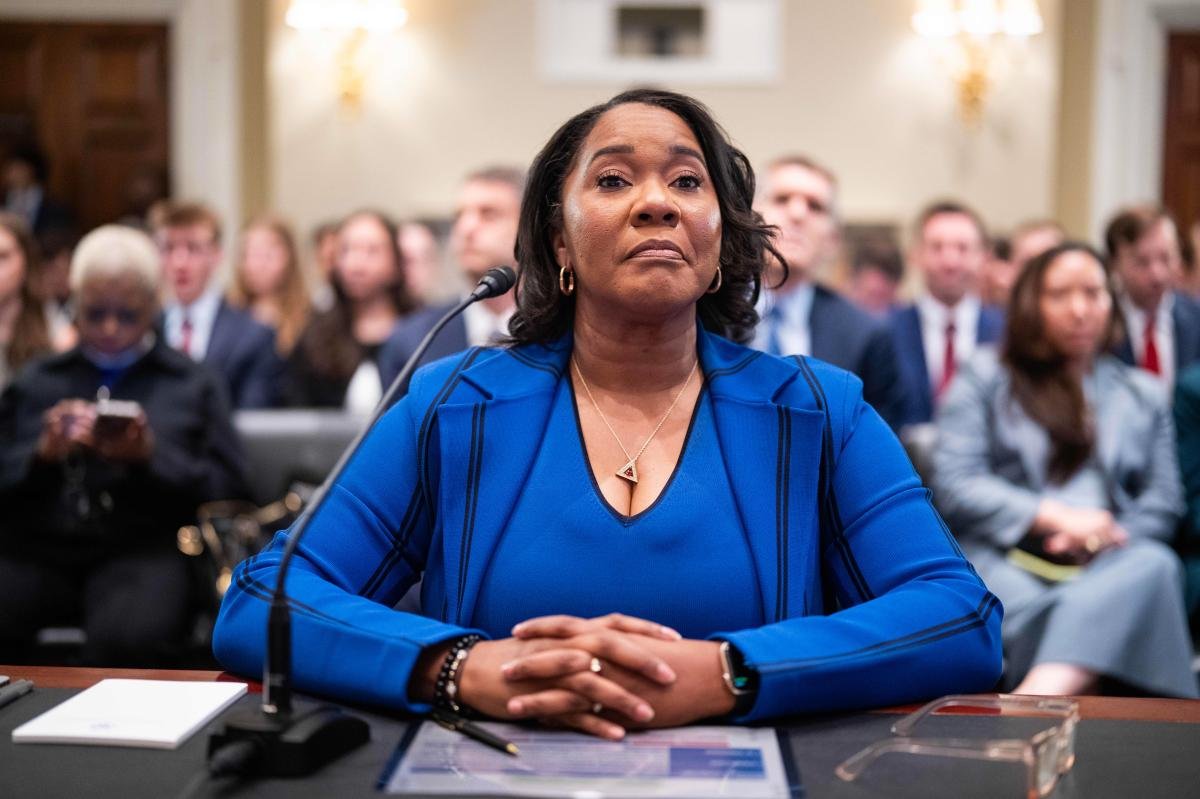
Monday’s letter follows a June 10 appearance before Congress by ActBlue CEO Regina Wallace-Jones, during which she took the Fifth Amendment and declined to answer questions.
In a separate video statement, Wallace-Jones accused the three GOP chairmen of “abusing their power to target ActBlue” and emphasized that taking the Fifth was “not an admission — or even an insinuation — of guilt.”
President Trump has also authorized the Department of Justice to investigate “straw donors” and other illicit funding of federal campaign, she noted.
Ting and Ahmad had already been compelled to appear for depositions with the committees last year but invoked the Fifth Amendment as well, as did another former ActBlue lawyer, its VP of customer service, and a fraud specialist.
Collectively, all five ActBlue employees invoked their right against self-incrimination 146 times.
ActBlue has helped Democratic campaigns and causes raise more than $19 billion since it was founded in 2004.
Nearly $2 billion of those funds flowed to Democrats during the 2024 election cycle, at the same time that internal records, later obtained by The Post, showed ActBlue made its fraud standards “more lenient.”
The Times reported that Ting’s resignation followed a pair of memos from ActBlue’s then-legal firm, Covington & Burling, that warned it could “be alleged that ActBlue accepted and/or facilitated the acceptance of foreign-national contributions into American elections,” in violation of federal law.
Separately, Texas Attorney General Ken Paxton sued the platform for accepting contributions from allegedly fraudulent donors after his investigators were able to use fake identities to submit funds.
A Massachusetts federal judge blocked the lawsuit on June 11, ruling that it was “undoubtedly an adverse action” taken against Paxton’s opponent in the Texas Senate race, former Democratic state lawmaker James Talarico.
Reps for ActBlue did not immediately respond to a request for comment.
Read the full article here