





 Markets
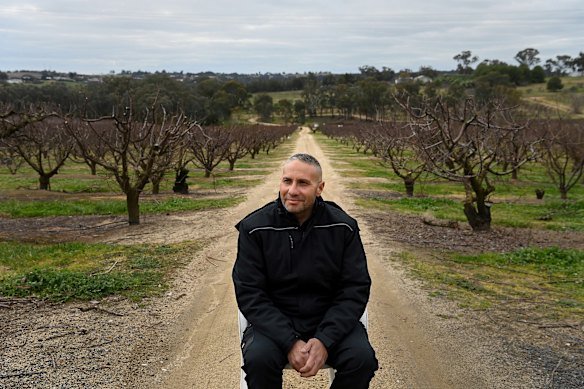
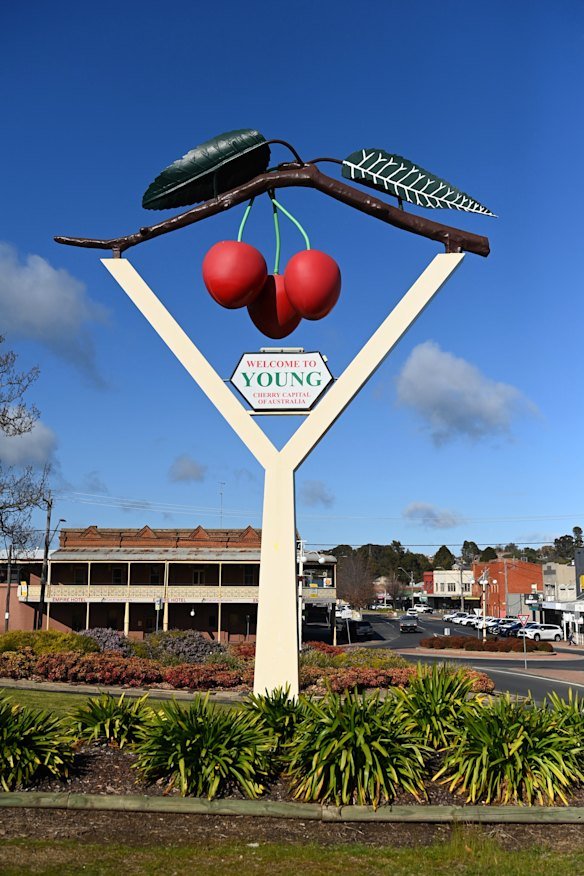
There are three key values that have remained consistent across three generations of the Ali family: they all hate Sydney, they love the town of Young, and they grow cherries.
The late Mostapha Ali, his son Bassam and his grandson Mohammed were and are all cherry farmers in the town of Young on the NSW South-Western Slopes, part of a growing contingent of Lebanese farmers there.
And despite their growing numbers and their work to build a community there, including opening a school and a mosque, it still feels strange to hear Lebanese-tinged Arabic spoken in such a small town.
Young is as far from the migrant centres of Sydney as you can get, physically and spiritually distant from the imaginings of the immigrant dream in Australia, and yet the Lebanese community is thriving there.
The Ali patriarch bought a cherry farm in 1990 and sought to maintain its cherry output while blending in some Lebanese techniques and crops; his work in some ways was a cultural statement as much as it was a farm.
“Dad was an old-school farmer. He used to grow pomegranates and olives in his village. So when he came to Young, he picked farming back up,” the eldest son, Bassam said.
“And we have laid roots here. Young is a special place.”
Along with a clutch of families, they have knitted together a unique community with roots in Lebanon, Sydney and Young itself, their work and lives a living tapestry of the unique opportunities migration can present to families and their long-held traditions.
But why Lebanese families have come to Young is a question with a sprawling answer, touching on the nature of Lebanese migration to Australia, their dormant traditions and the peace they sought.
A history of change
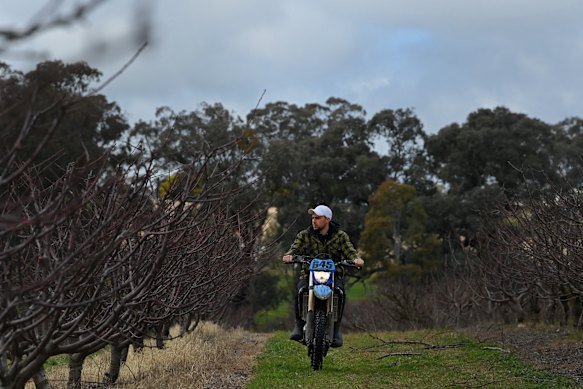
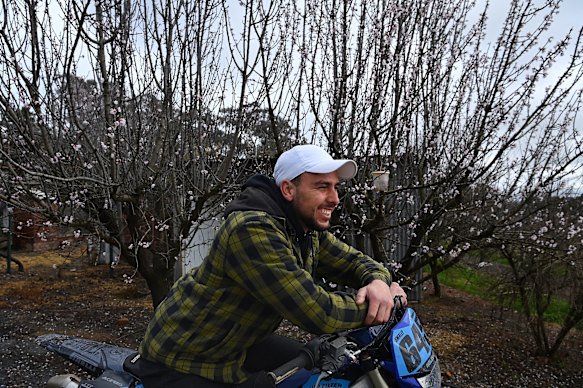
Atop his dirt bike, Mohammed Ali shoots through the orchard his grandfather built, bobbling as his bike flies over mounds and holes in the ground.
“She wants to go, but I am holding her back,” he says after drifting to stop, throwing up plumes of dirt. Mohammed is one of the dozens of grandchildren Moustapha saw born and brought up in Young.
The 25-year-old has seen the orchard transform into a vibrant and busy farm, its cherry trees stretching into the horizon. Much like his uncles and aunties, he was put to work as far back as he can remember, his grandfather organising the crop and the family effort.
“He was a straight shooter,” Mohammed says of his grandfather. “He was a well-respected, hard-working farmer who you’d never want to cross.”
Mostapha Ali arrived in Sydney in 1977, in the wake of a brutal civil war that was shredding his home. He came from a long line of north Lebanese farmers who worked their patches of land with old knowledge.
He had seven children living in western Sydney but he was eventually enticed to return to his roots in Young after several getaways picking fruit in the regions.
And Young presented a perfect opportunity. Its abundant cherry farming provided ready-made infrastructure for the family to step into.
He bought a cherry farm on the outskirts of the town and put his kids to work ploughing the ground and trimming the trees.
And he applied old Lebanese techniques to the Australian land, including digging trenches around the trees and filling them with water. The technique was used for thousands of years in rural Lebanon to ensure a sapling remains hydrated.
“We’d dig the trenches by hand. It’s an old technique, but a good one. It was more natural, no chemicals. My father was a simple but dedicated farmer,” Bassam said. “Its thousands of years of knowledge in stuff like that. They just knew how it worked.”
Despite adopting improvements in technology and technique, the family has held on to its inherited knowledge, tying it to their roots in rural Lebanese villages.
Where are you from?
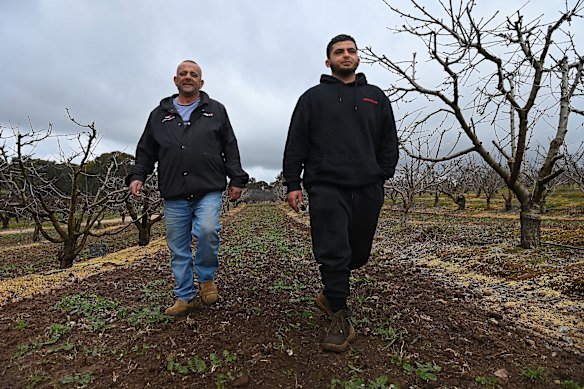
Across town, Mahmoud Khodr explains his own farming philosophy: “If you had a son, wouldn’t you take care of him? A farm is like a baby. You have to feed it and take care of it.”
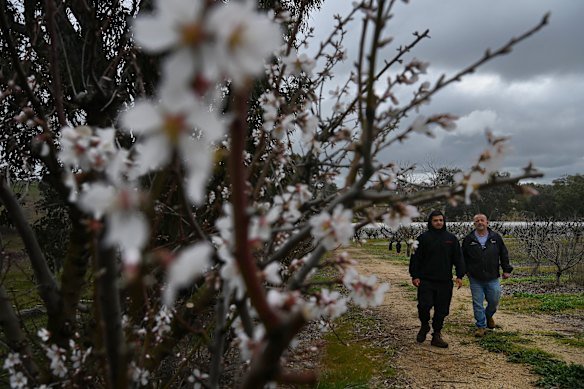
Khodr is standing in the middle of his cherry farm, his son snipping off branches from the trees behind him. He says he bought the farm when it was in disrepair and slowly brought it back to life, moving his family out to the town 17 years ago.
“I came here for the first time with my in-laws and I fell in love with it. It smelt like the village from back home. It has that same energy.”
While data can tell us the country migrants are coming from, it struggles to tell us the culture or lifestyle they’re leaving behind and what they are seeking in Australia.
Lebanese migrants in Australia can be roughly split between rural communities from north Lebanon and metropolitan communities from major cities such as Beirut and Tripoli.
Those who came from the rural communities arrived domino-style, one major family following another. Their unfamiliarity with city living led them to follow their families and their communities, to live with them and near them, unfurling into the migrant hubs we know now in western Sydney.
But for many who left a rich life of farming behind, there was a yearning that remained unquenched by the hectic lifestyle in Sydney. While some adapted, working in fruit markets and opening grocery shops, some looked longingly at Australia’s rural communities.
What hung over them was the country they left behind, forever changed by war, but its energies alive in its diaspora.
And Khodr saw in Young a bridge between his old life and the life he wanted for his family.
“I moved up 17 years ago, and I love it. If you gave me a house worth $2 million in Sydney, I’d still stay here. It’s the calm I was looking for.
“There are no headaches or rushing here.”
Start the day with a summary of the day’s most important and interesting stories, analysis and insights. Sign up for our Morning Edition newsletter.
Read the full article here