




 Markets
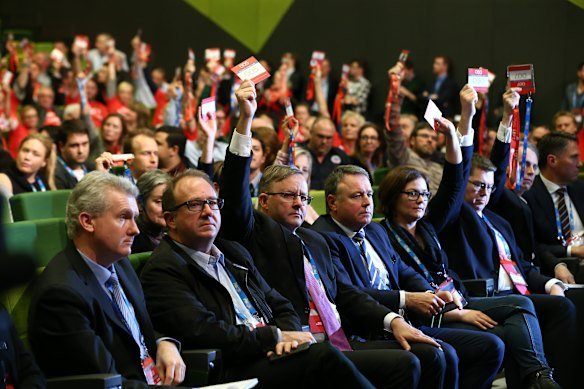
It was described, at the time, as a fiery meeting of Labor delegates. Bringing the heat was then-opposition frontbencher Anthony Albanese.
The debate was taking place behind closed doors, on the sidelines of the 2015 Labor Party national conference – an event that takes place about every three years, bringing MPs, unions, and party faithful together to shape a manifesto.
Then-opposition leader Bill Shorten wanted the Abbott government’s policy of turning back asylum seeker boats embedded in Labor’s platform. Albanese defied the leader.
“Unlike other caucus members I won’t just sit there and do nothing,” he told Left faction members. “This is a red line we cannot cross.” When it came to a vote on the floor of conference, Albanese voted against the policy. It was a vote of no confidence in Shorten that could have blown up his leadership.
But for such a thing to happen at the same forum this year – and for it to come from any member of the Labor caucus, let alone a frontbencher – is unthinkable.
Albanese and his Left faction, for decades the disruptive and activist force within Labor, are now in charge – and his caucus is renowned for its discipline.
MPs have embraced a more pragmatic style as the party has moved from opposition to what it hopes will be one of the longest stretches of Labor government in history.
The prime minister typically begins caucus meetings, held every week when parliament is in session, by thanking them for their solidarity. Although one critic, who does not sit in caucus, sees it differently: “He is effectively thanking colleagues for their f—ing obsequiousness.”
When Labor’s national conference kicks off in Adelaide later this week, there will be no theatrics like those led by Albanese in 2015. The redistributive agenda of Labor’s May budget has helped appease members who have been agitating for more ambitious policy. “There’s not currently any issue that has the same momentum [as previous years],” a party spokesman said on Thursday.
In some ways, that’s the point: most MPs argue this discipline and unity are cementing the government’s electoral success, particularly after the chaos of the Kevin Rudd and Julia Gillard years, and will keep it in poll position amid a messy reckoning between the Coalition and One Nation.
But some figures in the party, such as backbencher Ed Husic and luminary Kim Carr, worry that an ailing culture of ideas and debate might stop Labor from projecting the energy and ideas needed to fend off the populist assault. “If you don’t argue the toss about things, you invariably slip into decline,” Carr tells this masthead.
Yes, prime minister
Labor’s 94 seats in the House of Representatives gives it an overwhelming majority. A bird’s-eye view of the chamber shows government MPs stretching across the aisle, into benches once occupied by the opposition or crossbench.
Many of these seats are occupied by 17 new MPs from last year’s election. This new generation is particularly loyal to Albanese after he won a landslide victory against Peter Dutton.
The Labor Party has always run a tight ship – caucus solidarity has been in its DNA for decades; those who breach it are called “rats”. Unlike in the Coalition, crossing the floor to vote against Labor policy risks expulsion from the party.
Still, there have been times of vociferous debate about what that policy should be. For 125 years the party has met weekly during parliament to talk about Labor’s agenda. In the Bob Hawke and Paul Keating era, those caucus debates could erupt into public view. Historian Frank Bongiorno points to Hawke and Keating openly disagreeing over tax reform in the 1980s, and the caucus revolting over Hawke’s commitment to American missile testing in the Pacific.
“It’s a very different culture from where we are now,” Bongiorno says, describing today’s era as one of professionalised political parties that operate more like companies than debating clubs. “This is a much more controlled caucus.”
It is convention for a senior party representative to give the media a formal background briefing of each closed-door caucus meeting afterwards, covering what topics were discussed and the questions asked.
These days, few questions of government policy are asked in caucus meetings. Even fewer include criticisms or doubts about party direction. Instead, more frank conversations are reserved for caucus committees – smaller meetings on specific portfolio areas – or one-on-one conversations, where there is no requirement for public disclosure.
Asked why that’s the case, one MP says: “Because no one wants to show public dissent.”
“There is discussion, but it happens outside the caucus, and outside the party room. Caucus committees have a fair bit of debate, but one of our strengths is our unity,” they say.
“It’s important to remember no one wants to break that unity. It’s served us very well these last few years, so there’s no one who wants to stand up too strongly – publicly, anyway.”
It might be a different story if Labor’s fortunes turned around, or it was facing a stronger opposition, but the party’s recent electoral dominance has boosted MPs’ confidence in Albanese. “The leadership’s judgment has been pretty good so far,” the MP says. “Success breeds success.”
The discipline has largely continued through some of the government’s down moments: during backlash over its initial refusal to call a royal commission into the Bondi massacre, or as it experienced heat from small businesses and entrepreneurs over the budget. On matters of social conscience – gambling, a controversial refugee deal with Nauru, the rate of JobSeeker – arguments have been muted and rarely public.
The MP says part of that is because members are given pressure valves: ministers take meetings with backbenchers, MPs are appointed to roles on committees and chair positions so they can make a contribution. It’s management that keeps people inside the tent.
Another dynamic is competition: in such a large caucus there are many ambitious MPs but only so many seats around the cabinet table. “If you don’t rock the boat, you’ve got a better chance of being promoted,” the MP says.
There are consequences for those who break ranks. Albanese has made a virtue of running a traditional cabinet government. However, MPs have observed an increasingly centralised decision-making process tied to Albanese, his office, and a group of about half a dozen trusted ministers.
In the weeks after Labor sparked criticism for expanding its CGT changes to assets outside housing, some MPs who worried about small businesses were censured by higher-ups, as were MPs who wondered why the government had cut funding to the Invictus Games, a disabled veterans’ event.
In both cases, Albanese and his cabinet eventually bowed to pressure and reversed course. Dissenters may have received angry stares in the corridors, but their concerns were vindicated.
As Carr points out: “Diversity of opinion on policy options, and questioning the direction of the party, can be of enormous benefit as an early warning.”
The attempts to control the narrative can extend to great lengths. MPs’ first speeches are meant to be something they can hang their hat on later in life. Instead of putting forward new ideas that embody their vision, at least one MP had their speech vetted by government staff.
The only Labor MP to regularly put his head above the parapet is Ed Husic, who has become an irritant for Albanese since he was demoted from cabinet in factional dealings last year. On Gaza, gas tax, artificial intelligence and the AUKUS pact, Husic has challenged the government’s approach.
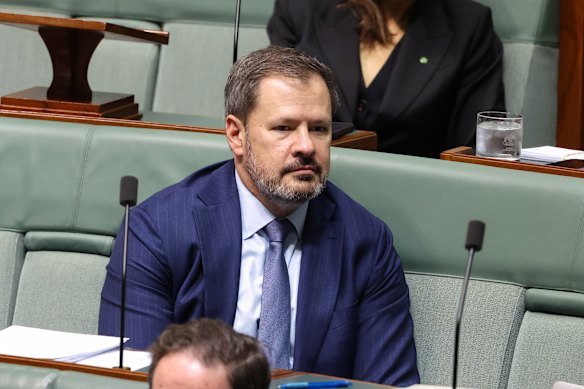
“We’re constantly conditioned about the value of solidarity and unity,” Husic says. “That’s the aftermath of the Rudd-Gillard years. People believe that openly pushing a view that’s different to what the leadership holds is a sign of trouble; that debate suggests division, which is bad for a party in government
“I just don’t buy that. When someone finally does speak up, it’s such a rarity that it becomes news itself. I get a lot of attention for being remarkably unremarkable. In times past, a lot of people spoke like I did. It’s just rare that it happens now, and doesn’t that say something?”
Other colleagues would disagree Husic’s interventions have been unremarkable. Husic says friends have told him about rumours from journalists, suggesting he might defect to the Greens. “I laugh, saying ‘they wish’,” he says. “But now that the hard left runs the show, this is the way they see the world: you’re either with us, or you’re outside.”
The Left faction dominates the leadership and raw numbers. Bongiorno says its role was once dissenting over defence, economic and foreign policy. “I just don’t think they’re divided in significant ways over those policy issues any more,” he says, citing the lack of debate within the parliamentary party over AUKUS. “Factions do seem to be more, now, instruments for managing conflicts and distributing the spoils of office.”
Agree not to disagree
Labor’s national conference – next week will be the 50th in the party’s 135-year history – is pitched as its highest decision-making forum. Bongiorno says it was established as “the sovereign parliament of the Labor Party”. “It was seen to have this enormous authority in its capacity to lay down policy … That’s a long way from where we are today,” he says.
Since the 1980s, he says, there has been a move towards dealing with disagreements in backrooms, before debate reaches the conference proper. Still, Bongiorno recalls protests over nuclear, foreign policy and privatisation that were hashed out – sometimes aggressively – on the conference floor until the 1990s.
“It is much harder to recall really big, robust debates at national conference since then,” he says. “It’s a much more controlled environment, which echoes what happens in caucus itself, and vice versa.”
Several long-time attendees at Labor conferences told this masthead they would not be attending this year because they cannot stand the stage-managed affair. Some are Albanese haters, to be fair, and it’s not the first closed-shop conference: Kevin Rudd didn’t allow any votes in 2009.
But there is a growing sense across the party that conferences and branch meetings are not worth their time as community organisations across society hollow out in the digital era.
One senior party figure said the establishment of the Labor National Policy Forum took the zeal out of conference debates. This is a group of MPs and unionists who meet for months in private to flesh out the draft platform document. That document is released to delegates weeks before the conference. Delegates can put up amendments, but debates are heavily controlled if they even reach the conference floor. Delegates cannot rise to their feet spontaneously, either; speaking lists are tightly controlled.
In the lead-up to the conference, staff who work for ministers exert pressure on activists to keep the platform from becoming too unwieldy. One ministerial office tried to stop a party member from passing on information about a policy motion to this masthead, for example, out of fear of unwanted media attention.
Husic says the risk in not having big debates at the conference is that people feel they’re not being listened to, and drift away from the party.
“I love and respect my party, but I do not love and respect the way these conferences are managed,” he says. “A lot of people join Labor to push for change, they want better, and that sometimes means you’re going to have uncomfortable discussions.
“People in senior positions now benefited … from having conferences that debated ideas. If it was good then, it’s good now.”
But many in Labor think such criticisms are overblown. Emma Dawson, who has been drafted in to revive Labor’s official think tank, the Chifley Research Centre, says complaints come either way.
“If a conference is particularly fiery and lively and full of disagreement, then it’s portrayed as messy. If it’s not, it’s perceived as being locked down. I don’t think either of those things are true,” she says.
“I think people say: ‘We don’t see the kind of dispute we saw in the Rudd-Gillard years’. That’s a good thing. They were more over personnel than policy.”
Dawson says Labor can have both a unified parliamentary party that delivers on decided government policy, and a membership that debates ideas and advocates for policies to go further.
“I don’t see a decline in debate,” she says. “If anything, the membership is growing slightly, we’re seeing more young people come into both the union movement and the party. Those processes exist to give people a voice. I can’t see a better way of doing it.”
Dawson has been organising this year’s “fringe” agenda, which operates on the sidelines of the mainstream conference. “There are a few sessions challenging where the party is currently – Labor Against War doing a session on AUKUS; Labor for Republic still there pushing that barrow. There’s quite a lot on AI and ensuring it’s rolled out safely, with workers’ concerns in mind,” she says. “It really strikes me that it is very much democracy in action.”
But Carr, a leading figure in the Labor left for much of his career, is a delegate to this month’s conference who will not attend. He, like others of his vintage, is not fond of the modern conference system.
It revolves around “centralised control rather than pluralistic competition”, he says.
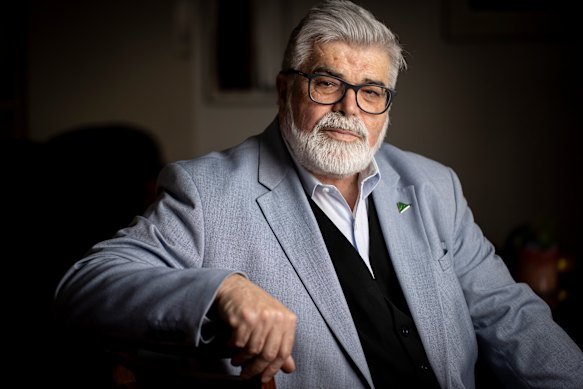
A long-standing rival of Albanese within the left, Carr recalls the last successful Labor era before Albanese’s, that of Hawke and Keating, where “debate was encouraged and national conference actually mattered”.
Carr views the health of the Labor movement as vital to the nation’s future.
He warns the party must not shrink at a moment when the country was facing a “serious threat from an authoritarian, hard-right insurgency”. “Given the collapse of the LNP, only Labor can meet this challenge,” he says.
Albanese’s May budget, which cut tax concessions to investors to give first home buyers a leg up, has more recently emboldened Labor’s base and infuriated conservatives. It proved the prime minister’s progressive credentials, and demonstrated the party’s socialist objective, established in Labor’s platform since 1921, is not a total anachronism.
Still, Carr thinks the party’s culture has deteriorated. Key to that, he says, is a shift in the factional system, from one that engendered creative tension on policy to becoming transactional.
“Vacuous appeals to solidarity and unity leave us with a Potemkin village effect as Labor fights to convince Australians that it is delivering real change at a time of pessimism and populist politics,” he says.
“The outcome is to make people believe that things are better and more substantial than they really are.”
Cut through the noise of federal politics with news, views and expert analysis. Subscribers can sign up to our weekly Inside Politics newsletter.
Read the full article here