





 Markets
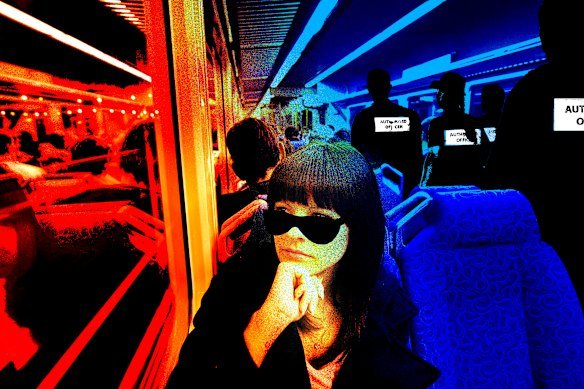
I trundle up the tram steps, look around for a vacant seat. A few sets of eyes avert from phones to me and back to their phones.
The tram eventually empties and I grab a seat.
Then, as if making a last-ditch qualification bid for the Aussie sprint squad at the Glasgow Commonwealth Games, those same people sprint to the door, furtively looking for the next stop.
It’s then I clock the ticket inspectors, known in the bureaucracy as authorised officers, moving in packs.
The fare evaders are a mixed bunch. Some appear to be students, others sharp in business attire.
After two months of free tram travel across April and May, I realise I’ve missed this regular spectacle. My second Melbourne spectator sport, after AFL, is observing people on public transport.
Don’t get me wrong. I get no joy from seeing people interrogated and fined.
I have a complicated relationship with public transport fares. I never got over the axing of the Zone 1 short trip fare circa 2003, which robbed inner-city dwellers who rode just a few stops of a cheaper trip. I cycled to work for the best part of two decades in protest. The upside was that I got to childcare faster than by the tram, avoiding the late pick-up fee.
But these days I’m back using public transport more than ever. Some days I’ve used the tram, train and bus. Apart from V/Line, I’ve rarely had my Myki checked.
When the two-month free tram travel ended on May 31, replaced by half price fares until the end of the year, I pulled the house apart looking for my two Myki cards I put away for safe keeping.
Sure, I’ve been tempted not to pay if I’ve been on a packed tram and it’s a struggle to reach a Myki reader. Free is one of the best words in the English language, but I’m a firm believer in Murphy’s Law. Whatever can go wrong for me will go wrong so I expect the worst, try to plan and tap on.
In any case, these days I just can’t run fast enough to get out the door, and I like to relax and not jump at shadows, looking out for inspectors.
For some budget-stretched younger people who I’ve spent time with recently in an education setting, fare evasion is a game of chance. Paying fares is an affront. One was miffed when the Myki saved on his phone paid the fare without him meaning to. He’d been riding buses free for 12 months. “Had my phone in my chest pocket and I brushed past a reader and it tapped on. The only time I ever tapped on getting to TAFE,” he said. Another told me that when approached by inspectors she becomes irrational and loud, so they back off.
While inspectors are doing their job, fines are disproportionate for the harm caused. The fine for failing to produce a valid Myki or concession jumped from $296 to $314 on July 1. One of my kids was fined last year. While the registered Myki was tapped-on, they weren’t carrying a concession card, left at home in the university backpack. PTV told me that the authorised officer can see the concession status attached to the Myki card when they use a hand held scanner. It seems disproportionate to hit a young concession user with a fine for hundreds of dollars when they’ve actually tapped on. Notwithstanding they should carry valid concession proof. (I know my daughter taps on every time as the money comes out of my credit card.)
Yet, I’ve seen a well-dressed middle-aged woman tell inspectors she left her Myki in her other handbag and seemingly get off.
And don’t get me started on the politically cynical free Youth Myki for under 18s introduced by the state government from January 1. Sold as a cost-of-living exercise, it must be such a relief for the families of kids on some of the lines I use where parents are shelling upwards of $40,000 a year for private schools.
In Queensland, they have a budget-friendly 50¢ fare for most public transport, but reports suggest that it hasn’t stopped fare evasion.
International research has shown there are various behaviours behind fare evasion, including so-called radicals who refuse to pay, strategic travellers who evade if they think they will get away with it, ambivalent evaders who sometimes pay and accidentals who forget or face setbacks trying to pay.
A Monash University research paper from 2016, based on a survey of 1561 Melbourne commuters, found that repeat evaders were a small but overrepresented group among fare dodgers. “Deliberate evaders were the smallest cluster but the most frequent transit users,” the paper says. They were described as “sensation seekers” and happy to bend the rules to save money. Half of commuters were deemed “never evaders”.
In recent developments that will be a relief to confused tourists I encounter and those of us who find ourselves digging into pockets and handbags for errant Myki cards, you can now tap on with a credit or debit card. And, as my hardcore bus riding friend will have recently discovered, tap-and-go contactless payments have been enabled across the bus network since July 26. This is going to make it harder for people like him to get out of fare evasion – it’s surely going to be harder to justify not paying or at least convincing a ticket inspector as to why you haven’t paid.
In a perfect world public transport would be free. I will begrudgingly tap on but if you aren’t tapping on, do you mind getting up and letting us fare-paying travellers have a seat?
Claire Heaney is a Melbourne writer.
The Opinion newsletter is a weekly wrap of views that will challenge, champion and inform your own. Sign up here.
 Claire Heaney is a freelance journalist and communications consultant.
From our partners
Read the full article here