




 Markets
By Giovanni Kessler Chairman of the Scientific Committee of Hermes – Center for European Studies
Published on
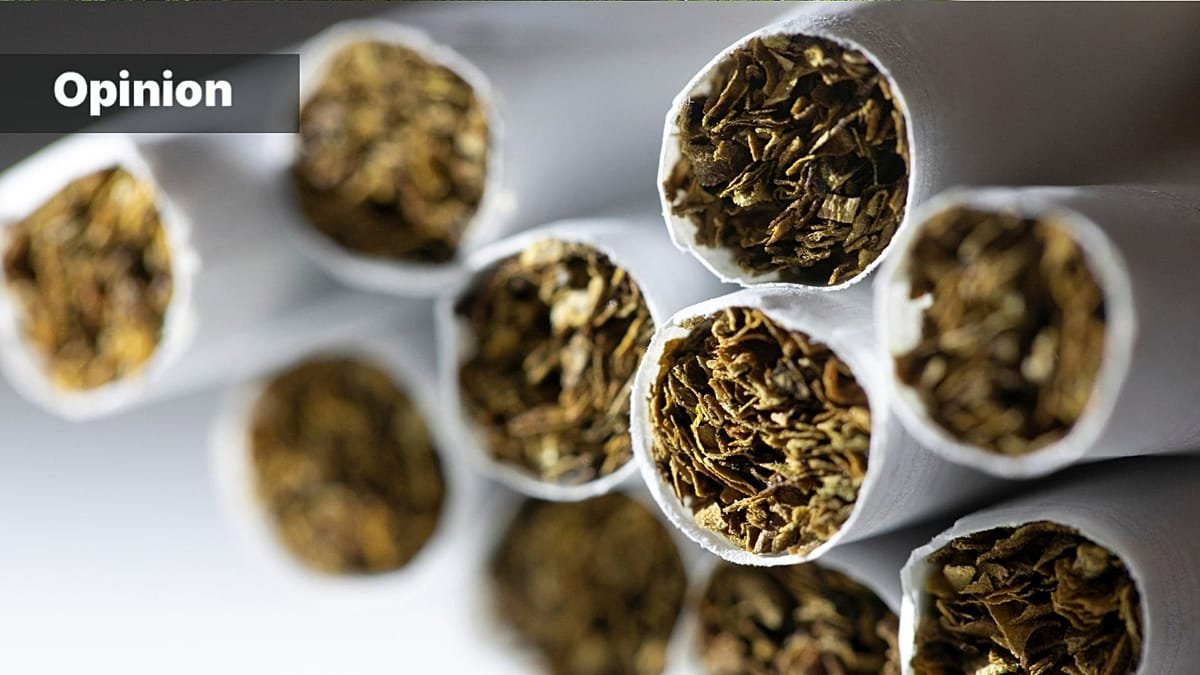
On 9 July, the European Anti-Fraud Office (OLAF) announced that two international organizations based in Spain had been dismantled over the manufacture, distribution and trafficking of counterfeit tobacco. Authorities seized more than 20 million cigarettes, nearly 40 tonnes of tobacco, manufacturing equipment, cash, firearms and 18 vehicles. Fifty people were arrested following searches across six Spanish provinces.
The operation deserves recognition. Having served as OLAF’s Director-General from 2011 to 2017, I know the importance of timely intelligence, close co-operation between national authorities and effective cross-border coordination. Cases of this magnitude require months, even years of investigative work and the ability to follow criminal activity across several jurisdictions.
But this was not an isolated success. Operation NOXIA II, announced in late 2025, resulted in the seizure of 149.5 million cigarettes and more than 105 tonnes of tobacco. Two major operations within a year show both the need for effective enforcement and the existence of a resilient illicit market challenging authorities.
The longer-term comparison is instructive. In 2016, my final full year leading OLAF, KPMG (editor’s note: KPMG is an American-British-Dutch multinational professional services network headquartered in London, UK) estimated that 48.3 billion illicit cigarettes were consumed across the EU28. That represented 9.1 per cent of total consumption and an estimated €10.2 billion in lost tax revenue. Illicit consumption had fallen 8.8 per cent that year. The decline reflected not only stronger enforcement and border controls, but also a stable pricing environment and limited excise increases. It was a reminder that enforcement works best when economic incentives are not pulling in the opposite direction.
Nine years later, the geographic footprint is slightly narrower, covering the EU27 rather than the EU28. Yet KPMG estimates that 41.8 billion illicit cigarettes were consumed in 2025, equal to 10.3 per cent of the market. The estimated tax loss had risen to €16.7 billion. The volume has proved remarkably persistent even as the legal cigarette market has contracted.
The picture at the national level is more striking. France consumed 8.96 billion illicit cigarettes in 2016, equal to about 14.7 per cent of its market. By 2025, that had risen to 20.5 billion and 41.4 per cent. In my home country, Italy, the direction was reversed: illicit consumption fell from 4.43 billion cigarettes, or 5.8 per cent of the market, to 1.26 billion and 2.2 per cent.
Tax policy by itself does not explain these differences. Geography, enforcement capacity, supply routes and consumer behaviour all matter. France also borders several lower-priced markets. But price cannot be dismissed. In 2025, the weighted average price of a pack was €12.54 in France and €5.40 in Italy.
Illicit trade depends on margin. The wider the gap between the legal price and the cost of an illegal substitute, the stronger the commercial incentive. Recent interviews with law enforcement agencies revealed that illicit flows are increasingly driven by price differentials and export demand. Criminal networks are increasingly decentralised, spreading operations across jurisdictions and using smaller shipments and direct-to-consumer channels that are harder to detect and easier to rebuild.
There is a health cost too. OLAF Director-General Petr Klement observed that “while smoking is dangerous, smoking counterfeit cigarettes is even worse”. Counterfeit products sit outside regulated manufacturing and quality-control systems. Their origin and composition are uncertain, while their sale finances organised crime and deprives governments of revenue.
The policy choice is not between public health and enforcement. Both are necessary. The challenge is to pursue health objectives without unnecessarily expanding the opportunity available to criminal networks.
The policy response should be practical: gradual tax increases, proportionate treatment of different products, and illicit-market assessments before major tax rises or bans. OLAF, customs authorities and cross-border intelligence should also target machinery, raw materials, online sales and distribution networks upstream.
OLAF and national authorities can close factories, seize machinery and disrupt supply chains. They cannot, through enforcement alone, close the price gaps that keep rebuilding them.
Giovanni Kessler was Director-General of the European Anti-Fraud Office (OLAF) from 2011 to 2017 and subsequently Head of the Italian Customs Agency (Agenzia delle Dogane).
Read the full article here