



 Markets
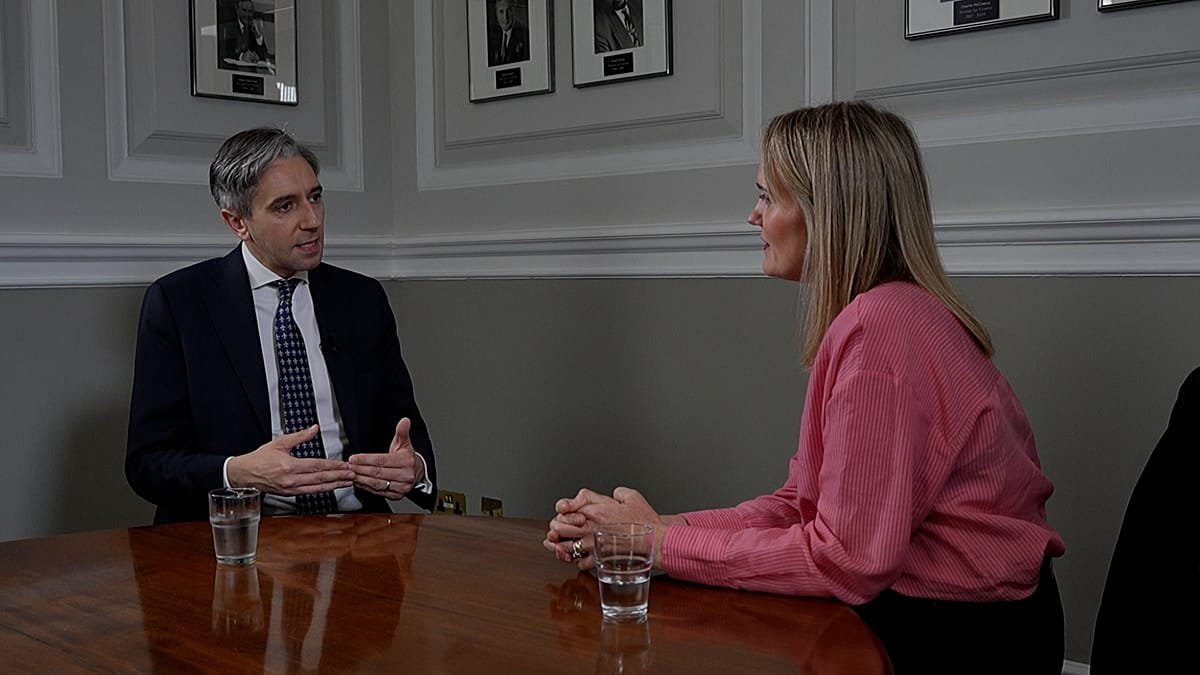
The closure of the Strait of Hormuz and Trump’s war with Iran are causes behind the turmoil in the energy markets, not Ukraine’s attacks on Russian diesel refineries. That is the message Irish Finance Minister and Deputy Prime Minister (Tánaiste), Simon Harris, shared with Euronews in an exclusive interview
Harris pushed back against recent remarks made by US President Donald Trump, who blamed Ukraine’s strikes on Russian diesel refineries for creating a shortage. Oil prices are hovering around $108 per barrel.
“The reason there’s a major energy crisis in the world right now is because the Strait of Hormuz is closed,” Harris said on Euronews’ interview programme 12 Minutes With. “I always make the point, and I would make it again today, that the greatest economic intervention we could see is de-escalation in the Middle East,” he added.
He noted that this became evident during the summer, when there was a brief moment of respite in the conflict. “We saw a very rapid fall in the commodity markets and therefore a benefit at the pump.”
Ukrainian attacks on Russian oil and gas facilities are squeezing Moscow’s oil output and having an impact globally, as Russia is one of the world’s largest oil producers, but experts agree the current energy crisis is primarily caused by the effective closure of the Strait of Hormuz – the transit route for 20% of the world’s oil and gas supplies.
The situation has escalated after Saudi Arabia shut its East-West pipeline, also known as Petroline, following drone attacks earlier this month from Iran-backed allied Houthis and Iraq.
“From an economic perspective, I’m very concerned [after] what we’ve seen on oil markets in recent days,” Harris said. “I’m also very concerned about the fact that we aren’t seeing de-escalation; we’re actually seeing an escalation and indeed more fronts in terms of complications opening up regarding energy.”
Windfall tax on the table
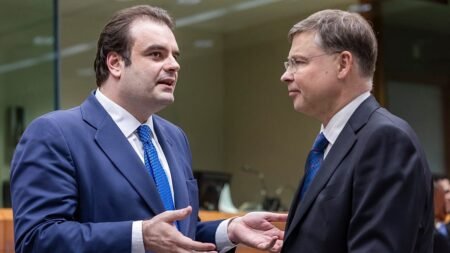
It is against the backdrop of mounting energy costs that finance ministers from eurozone countries gathered in Dublin on Friday, rushing to mitigate the rising prices and discussing measures to mitigate the impact on citizens.
One of the ideas circulating among EU ministers at the meeting is a windfall tax for firms profiting from energy price volatility, following calls from several member states to consider this measure.
“Some energy companies are making extraordinarily large profits on the back of this energy crisis,” Harris said, noting that they are not doing so by “being innovative,” but “because of the chaos that we’re seeing in the energy markets as a result of the Strait of Hormuz being closed.”
Without pre-empting possible outcomes of the talks, Harris said he would be having an initial conversation on such a tax with ministers in Dublin. Ireland currently holds the rotating EU Council presidency, allowing it to set the work programme and Council meeting agenda.
“It’s likely that we will ask the European Commission to further examine this and that we would formally discuss it in Brussels at the next formal [Economic and Finance Council] meeting in October.”
World ‘cannot become numb to loss of life’
Harris stressed that, aside from the economic importance of ending the Middle East conflict, the world can not turn a blind eye to the human toll either.
“I think while I’m obviously speaking in the capacity of a finance minister, we should never become numb to the loss of life in war, whether that’s the loss of life in Ukraine, whether it’s the horrific genocide we’ve seen in Gaza, whether it’s a situation in the Middle East more broadly,” he said. “We need to see a de-escalation of conflict more broadly in the world.”
On settler violence seen in the West Bank against Palestinians, the Tánaiste argued in favour of a tougher stance on Israeli settlements, which are illegal under international law.
“I’m massively pro-European, but I think when it comes to Gaza, it’s been disappointing, to put it mildly, that more hasn’t been done at that coordinated level,” Harris said.
Several European countries, including Ireland and more recently the United Kingdom, have announced national bans on the import of all goods produced in illegal Israeli settlements in the West Bank.
“Member states are listening to their public and are moving ahead, but we would always rather see action at an EU level because we think it’s more impactful.”
The EU’s top diplomat, Kaja Kallas, recently put forward an EU-wide ban on trade with illegal Israeli settlements as a “principled stance” for the bloc, comparing illegal settlements in the West Bank to Russia’s occupation of Crimea.
Read the full article here