





 Markets

Updated ,first published
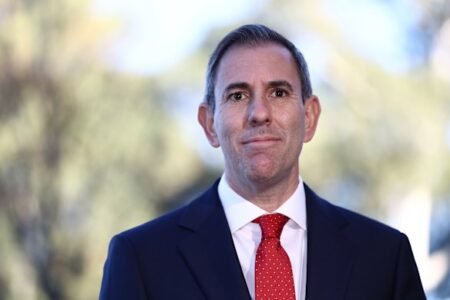
Treasurer Jim Chalmers is not only betting his fifth budget will deliver Millennials and Zoomers a chance at owning a home while delivering a much-needed boost to productivity, but that the war against Iran ends soon.
The war, the response of older investors and the actions of the Reserve Bank are the biggest risks to Chalmers’ outlook, which anticipates a quick rebound in economic activity as it negotiates the next 12 months.
The war against Iran is the dark cloud over this entire budget. Chalmers’ forecasts are predicated on oil gradually falling from $US100 a barrel through the rest of this year.
But if oil spikes to $US200 a barrel – something particularly hawkish analysts believe is possible – then economic trouble ensues. Higher-priced fuel hits the transport of everything, farmers struggle with skyrocketing fertiliser prices while any manufacturer using plastic faces higher costs.
Under that scenario, inflation peaks at 7.25 per cent by year’s end, unemployment reaches 5 per cent next year, while the economy contracts in the September quarter this year.
There’s little the government can do about the war and the actions of Donald Trump and Iran’s Revolutionary Guard Corps.
What Chalmers does control are his budget settings and what government spending and policy will do to the economy.
“No other budget in the 2000s has set out this much responsible budget repair and this much economic reform,” Chalmers declared.
The budget repair is, outwardly, modest.
Cumulative deficits between 2025-26 and 2029-30 were forecast in the mid-year update at $195.4 billion. They are now expected to be about $150.5 billion.
Of that $44.9 billion improvement, the economy is delivering $36.6 billion. All of that occurs by 2028-29 with a drop in commodity prices eating a $7.6 billion hole into the 2029-30 bottom line.
Total spending is courageously forecast to grow just 1.3 per cent this financial year. Even with that small increase, spending as a share of the economy is still expected to reach 26.8 per cent – its highest level since the depths of the pandemic.
Paying for that spending will rely on a higher tax take, which is supposed to hit 23.8 per cent of GDP this coming year. You have to go back to the commodity boom-fuelled budgets of Peter Costello throughout 2004-06 to get to that level.
In dollars and cents, ordinary workers will pay a record $382.4 billion in personal income tax in the coming year, an $18 billion increase on 2025-26. Company tax receipts have been revised up this year to $154 billion from $148.5 billion.
The war has delivered a net $9.5 billion increase in revenue, of which a quarter is largely flowing directly to the states via the GST.
The disaster that is tobacco policy continues to hurt the budget bottom line. Tobacco excise has been written down by another $2.6 billion, or 25 per cent, this year and next.
Inflation may not be an outright disaster but it continues to cause problems. The Reserve Bank is dealing with that problem by lifting interest rates.
When it delivered its latest whack to borrowers last week, the Reserve released its own economic forecasts.
Its outlook is decidedly darker than what the Treasury and Chalmers are expecting.
The RBA believes economic growth will slow to 1.3 per cent by the middle of next year before barely improving to 1.4 per cent for 2027-28.
Treasury believes the economy will expand by 1.75 per cent this coming financial year before bouncing back to 2.25 per cent the following year. Treasury’s forecasts are based upon the same interest rate outlook as the Reserve Bank.
The RBA believes dwelling investment will slow from 3.8 per cent this year to minus 1.1 per cent by 2027-28. By contrast, Treasury is expecting growth to ease slightly from 5 per cent to 3.5 per cent.
The difference is literally tens of thousands of homes. Treasury, which knows just how much the government is throwing at the housing sector, believes there is more momentum in the sector than the RBA.
Both think inflation is a “relative” flash-in-the-pan. The RBA has it at 4.8 per cent by June and then 2.4 per cent 12 months later, while Treasury has it shifting from 5 per cent to 2.5 per cent.
It means real wages will nose-dive by 1.75 per cent this year before bouncing by 1 per cent for the next two years.
While the budget is expected to remain in the red, the longer-term outlook is expected to improve.
The COVID recession killed the Morrison government’s plans to return the budget to surplus. Ever since the 2020 budget, deficits and debt have been key elements of the nation’s fiscal future.
Chalmers, however, has forecast the budget returning to balance in 2034-35 with surpluses after that. Net debt, which Costello famously brought to zero before the global financial crisis, has finally returned to the medium term forecasts.
But to get there will require plenty of tax and extraordinarily low levels of real spending increases. After growth of just 1.3 per cent next year, it is expected to slow to 0.7 per cent. You can count on one hand the number of times such low growth has been achieved over the past 30 years.
Gross debt was first forecast to cross the $1 trillion mark in 2021. A combination of two budget surpluses and smaller-than-expected deficits kept pushing back that unwanted mark.
But no more. Gross debt is expected to end this financial year at $982 billion before hitting the $1 trillion mark a few months later.
The interest billion on that debt is the single fastest-growing expense on the budget. This coming year it will cost taxpayers $31.9 billion, the government’s seventh-largest expense. By 2029-30 it is expected to hit $46.9 billion, overtaking the amount spent on public hospitals and Medicare, and just behind aged care.
Chalmers has set out an ambitious tax policy, tackling both fiscal shibboleths and cashed-up, older investors. But the budget is still predicated on much going right in the Strait of Hormuz and the ability of him and his government to rein in spending.
Get across all our coverage
 Shane Wright is a senior economics correspondent for The Sydney Morning Herald and The Age.Connect via X or email.
From our partners
Read the full article here