



 Markets
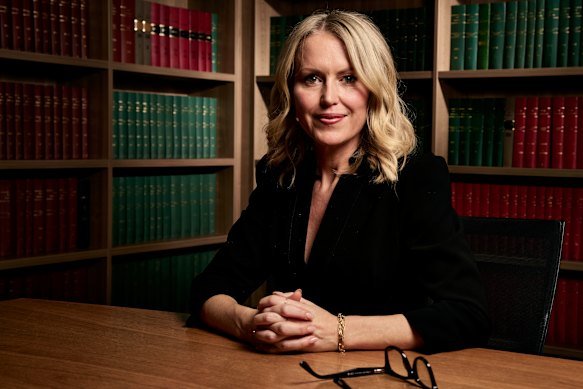
Peter FitzSimons’ story about Jennifer Robinson shows how much difference one determined lawyer can make (“She sued the Pope, defended Julian Assange and just won the Sydney Peace Prize”, May 17). Her work defending human rights and taking on difficult cases demonstrates the impact individuals can have. But reading her story also made me wonder whether we are seeing the end of an era in law. The best lawyers traditionally built careers on mastering huge amounts of information, researching cases and finding arguments others missed. Artificial intelligence is rapidly changing that. AI can already analyse documents, search precedents and process information at a speed no human can match. We are already seeing signs of change, with some major law firms reducing graduate intakes as AI takes over more routine legal work. That does not mean lawyers will disappear. People will still need judgment, trust, negotiation skills and advocates who can connect with clients, juries and courts. Jennifer Robinson’s achievements show how much one lawyer can achieve. Future legal stars may look very different, with AI doing much of the heavy lifting behind the scenes. John Kempler, Rose Bay
Levy logic
The proposed emergency services levy should be based on property usage, not property value (“Property owners face new emergency services levy” May 17). A residential property is less of a fire risk than a manufacturing, industrial or storage facility. Secondly, all property owners should contribute to the provision of emergency services, not only those who have property insurance, who currently pay for 75 per cent of the emergency services budget. Yet, instead of funding this essential service, the NSW government has seen another automatically escalating taxing opportunity, similar to the model used for land tax (based on property value) instead of the cost of providing the service. Tim Platt, Clontarf
People before politics
Poet John Donne’s oft-quoted “No man is an island” is an aphorism that captures the interconnectedness of all peoples. In the 1960s, Canadian Marshall McLuhan coined the term “global village” to describe our communication interconnectedness resulting from the then-dominant media of radio and television, a metaphor that the internet strengthened. Now, Nick O’Malley develops the concept further in reporting how the war on Iran and climate change are interacting to produce the potential for several hundred million people across the world to be threatened with starvation (“Our fragile world is being hammered by one crisis after another. It’s about to get worse”, May 17). Tragically, our oneness with nature and with each other is a concept ignored by many political figures, such as Donald Trump, with his focus on MAGA, and some of our own. For the sake of humanity and the environment, we need to either change the self-focused attitudes of such people or vote them out. Paul Casey, Callala Bay
The future is clean
Mike Foley’s Sunday article highlights Liberal Party leader Angus Taylor’s slide toward flat‑out climate denialism (“Coal comfort: Taylor kicks off a third climate war”, May 17). Propping up dirty, decades‑old, coal‑fired power stations is no plan for Australia’s future. Currently, coal actually only supplies about 45 per cent of our electricity, as renewable energy and battery storage continue their rise and drive down wholesale power prices in the process. Amazingly, rooftop solar capacity exceeds the entire output of Australia’s coal fleet. With abundant sun and wind resources, Australia is uniquely placed to lead the shift to clean energy. The Liberal Party ignores this and the climate reality at its peril. Karen Lamb, Geelong (Vic)
Taxing argument
In her article on Angus Taylor’s budget reply speech, Parnell Palme McGuinness says “Labor regards your money as its own” (“Can you believe it? Our major parties suddenly find their beliefs”, May 17). In fact, the tax we pay goes to fund maintenance of the necessities that only national and state governments can supply, and from that point of view the tax element of incomes is what we owe the government for services rendered. The same would apply if the next government is Liberal – they too will regard your money as their own. John Forrest, Annandale
Parnell Palme McGuinness states, “Treasurer Jim Chalmers delivered a budget that was very literally anti-capitalist.” Absolutely. Can I ask that Parnell review a few basic facts? Facts like the low growth in wages over the past 10 years. Like the boom in the sharemarket over the same period. Like the rise in house prices and the CPI. Can she then explain how people earning their income through labour should not be favoured over those earning their income through investment? Neville Turbit, Russell Lea
McGuinness’ weekly column is often worth the read, but she takes the Liberal Party line on Labor’s 2026 budget. Her rant against axing negative gearing fails to mention it will continue to be available for new builds. Whoops. Michael Britt, MacMasters Beach
Life’s a beach
Luckily for many Sydneysiders, just a further hour drive south offers a wealth of beaches away from major crowds and traffic snarls, where coffee shops, takeaways and restaurants flourish. (“‘Beaches should be free’: Row erupts over council paid parking plan”, May 17). Even the locals are more welcoming and willing to share both the beach, ocean pools and playground areas. Locals have access the rest of the week. Just leave your footprint, though, when you depart. Janice Creenaune, Austinmer
- To submit a letter to the Sydney Morning Herald, email letters@smh.com.au. Click here for tips on how to submit letters.
- The Opinion newsletter is a weekly wrap of views that will challenge, champion and inform. Sign up here.
Read the full article here