




 Markets
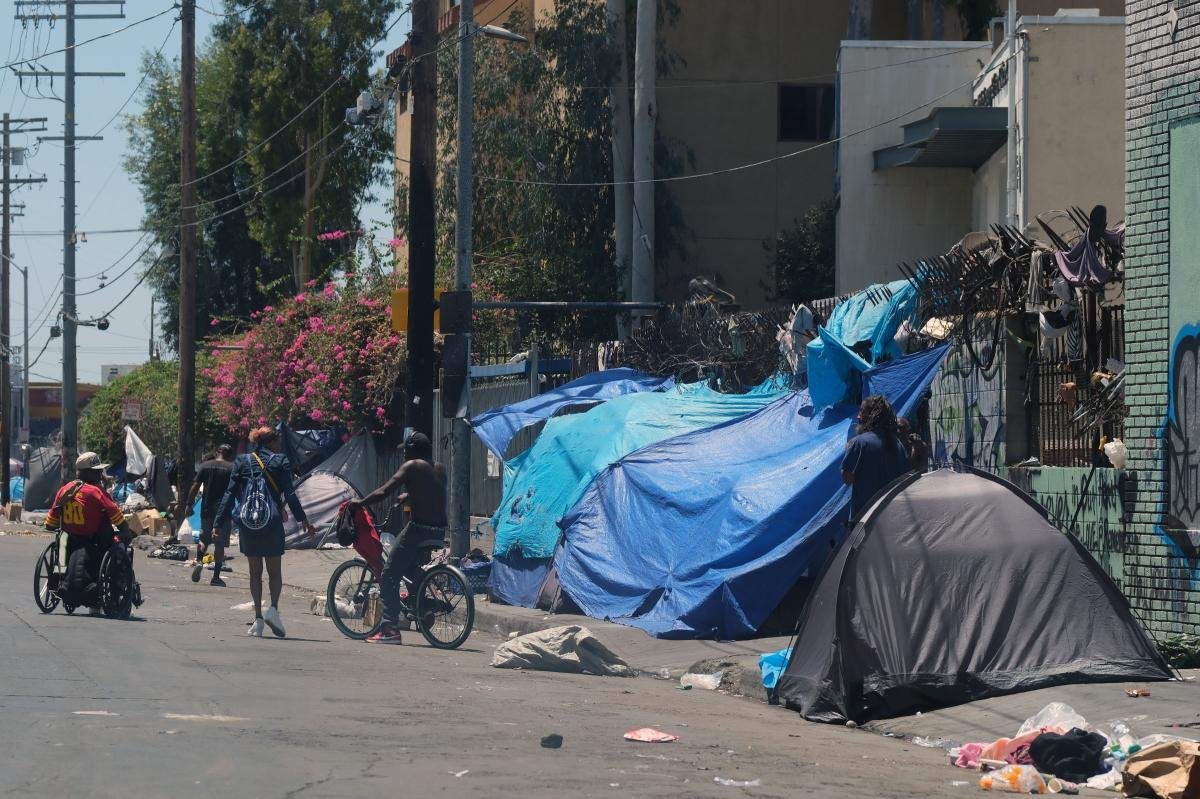
Shocking new homelessness numbers released Friday show Los Angeles lost ground in its fight against the crisis despite pouring nearly $3 billion a year into shelters, housing and homeless programs.
The long-awaited count found 45,194 people are now experiencing homelessness in the City of Los Angeles, a 3.4% increase from last year. Even more alarming, the number of people living unsheltered on streets, sidewalks, in parks and in vehicles jumped 7.9%, reversing two straight years of declines.
Across Los Angeles County, homelessness also increased, with overall homelessness rising 1.2% from 73,040 in 2025 to 72,195 in 2026, according to the annual Point-in-Time Count released Friday.
The numbers deliver a significant political setback to Mayor Karen Bass, who declared a local homelessness emergency on her first day in office in December 2022.
The mayor made reducing street homelessness the defining goal of her administration as she campaigns for a second term.
Much of the region’s homelessness response is coordinated through the Los Angeles Homeless Services Authority, or LAHSA, the joint city-county agency that oversees the annual homeless budget of roughly $845 million.
LAHSA administers federal and local homelessness funding, manages hundreds of contracts with nonprofit service providers, coordinates street outreach teams, maintains the region’s homeless database and conducts the annual Point-in-Time Count.
The results immediately reignited criticism from City Hall leaders who have argued for years that the region’s homelessness response lacks accountability.
Councilwoman Monica Rodriguez, one of the City Council’s most outspoken critics of LAHSA, said the latest figures show the current system is failing despite billions of dollars in public spending.
“These numbers underscore what I’ve been saying for years: we will not solve the homelessness crisis without accountability, transparency and a system that delivers real progress,” Rodriguez said.
Rodriguez said she called for sweeping reforms in 2024 because she believed LAHSA’s structure was failing Angelenos.
She pointed to Housing and Homelessness Committee Chair Nithya Raman – who say said is blocking those reforms “for the preservation of the status quo.”
“Until Los Angeles commits to a homelessness response built on direct oversight, clear accountability and measurable outcomes, we should not expect different results,” Rodriguez said.
Paul Webster, executive director of the LA Alliance for Human Rights, which is suing the city and county over their handling of the homelessness crisis, said the increase was not unexpected and pointed to what he described as a lack of accountability despite years of record spending.
“If there was a competent agency dedicated to outcomes, transparency, and accountability for the billions spent every year, we may have a glimpse at what should be done to solve this humanitarian crisis,” Webster said.
“Instead, we have poor leadership, finger pointing, and endless distractions that prevent getting to the real issues of addiction, mental illness, affordable housing, and public safety.”
The new count reveals. different outcomes depending on where people were counted.
Nowhere was the increase more dramatic than Skid Row.
The downtown neighborhood, long considered the epicenter of Los Angeles’ homelessness crisis, saw its homeless population surge from 3,427 people in 2025 to 4,215 this year, an increase of 788 people, or roughly 23%, in just one year.
Councilmember Nithya Raman highlighted progress in Council District 4, where the count found 135 fewer people living on the streets than last year.
City data, however, shows Mayor Bass’ office carried out five Inside Safe operations and 18 encampment resolution efforts in the district during roughly the same period, bringing 216 people indoors.
That means Bass’ signature program housed 81 more people than the district’s total reduction in street homelessness.
On the Westside, Councilwoman Traci Park reported a very different outcome.
According to the new count, Council District 11 recorded a 33% reduction in overall homelessness, marking the third consecutive year the district has reduced its homeless population.
The district reported significant declines in both tent encampments and people living in vehicles.
“For a third year in a row, the results in CD11 speak for themselves,” Park said. “We saw another 33% reduction overall, with major decreases to both tent and vehicle encampments. We’re done accepting the false choice between compassion and public safety. They are not mutually exclusive. What works is offering alternatives, regulating public spaces, and enforcing the law.”
Friday’s report also arrives as the Los Angeles Homeless Services Authority faces mounting pressure.
Los Angeles County is moving to create its own homelessness department after voting to shift hundreds of millions of dollars away from LAHSA, citing concerns over accountability and oversight.
Federal officials had also suspended the agency from administering roughly $240 million in HUD homelessness grants while an Office of Inspector General investigation into LAHSA’s financial management, internal controls and alleged conflicts of interest continues.
The suspension followed a series of critical city, county and federal audits questioning the agency’s oversight of billions of dollars in homelessness spending.
As previously reported by The California Post, a court-ordered review found LAHSA could account for only about $13.8 million of $50.8 million in cash advances provided to homeless service providers, leaving roughly $37 million unreconciled at the time of the audit.
LAHSA has denied wrongdoing and filed a federal lawsuit seeking to overturn HUD’s suspension, arguing the move threatens critical homelessness programs across Los Angeles.
Read the full article here