



 Markets
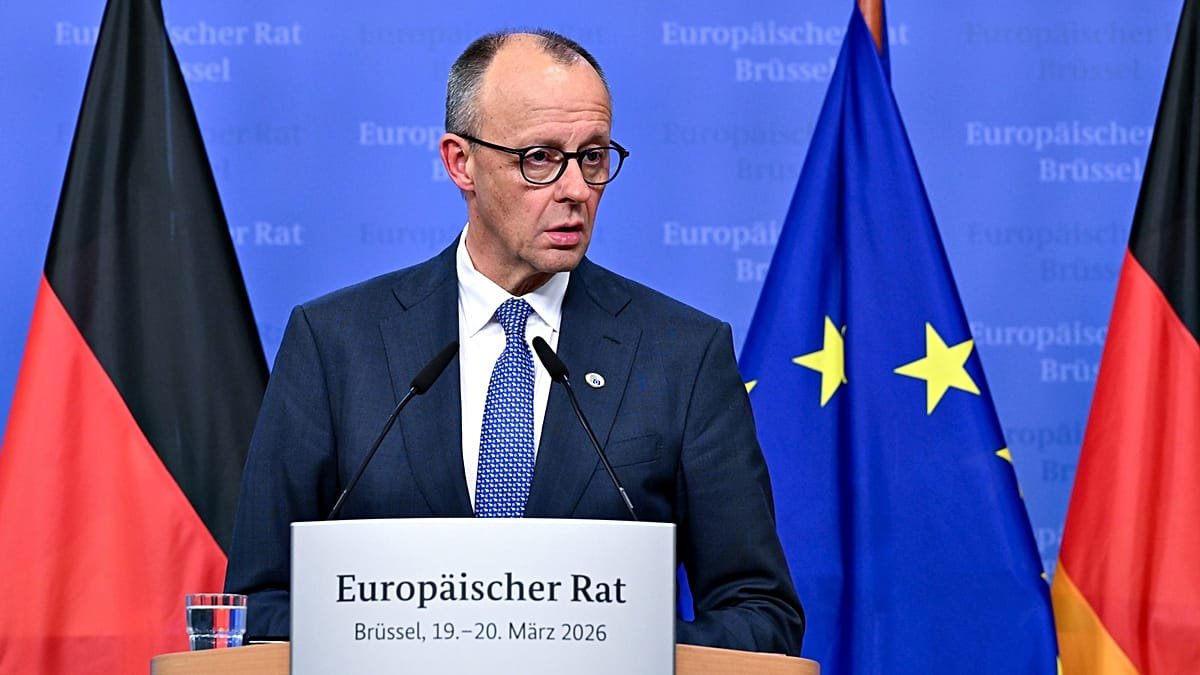
German Chancellor Friedrich Merz has suggested that Ukraine’s path to European Union membership could involve territorial concessions and that both issues could ultimately be decided in parallel referendums.
Around 20% of Ukrainian territory is currently under Russian occupation.
“At some point, Ukraine will sign a ceasefire agreement. At some point, hopefully, a peace treaty with Russia. Then it may be that part of Ukraine’s territory is no longer Ukrainian,” Merz said, speaking to students in North Rhine-Westphalia, according to Reuters.
He added that if Ukrainian President Volodymyr Zelenskyy wanted public backing for such a deal, he might need to hold a referendum. “Then he must at the same time tell the people: ‘I have opened the way to Europe for you’,” Merz said.
The remarks come after an informal EU summit in Cyprus, where Zelenskyy appeared in person to press for Ukraine’s membership bid, which has been effectively blocked by Hungary for nearly two years, causing anger and exasperation.
Zelenskyy flat-out rejected any overtures for “symbolic membership”, arguing his troops were not defending Europe symbolically but rather putting their lives on the line.
“We seek the same full membership that every EU nation has – from Cyprus to Poland,” Ukrainian President Volodymyr Zelenskyy said in his address to EU leaders. “The only thing we ask is speeding up the full membership, with a clear start date for membership.”
Zelenskyy has promoted January 2027 as a possible target date for Ukraine’s accession to the bloc. The timeline has been discussed in the context of US-brokered peace talks between Ukraine and Russia, where territorial issues remain the main point of contention.
Moscow is pushing for Kyiv to cede the remaining parts of the Donbas region it does not control and lobbying Washington to recognise Russian-occupied territories as de facto Russian. Zelenskyy rejects both proposals, arguing that rewarding aggression would run counter to international law and set a dangerous precedent.
The European Commission supports Ukraine’s principles but has not endorsed a fixed accession date, saying the EU enlargement process is “merit-based” and depends on progress made by each candidate country.
‘Not realistic’
Speaking on Monday, German Chancellor Friedrich Merz dismissed 2027 and 2028 as unrealistic timelines for Ukraine’s accession to the European Union, saying membership would not be possible while the country remains at war with Russia.
“Zelenskyy had the idea of joining the EU on January 1, 2027. That will not work. Even January 1, 2028, is not realistic,” he said.
Merz suggested Ukraine could instead be offered observer status, allowing participation in EU institutions without voting rights. He said the idea, which has never been tried before, had gained some support during discussions in Cyprus.
At the end of the informal summit, European Commission President Ursula von der Leyen and European Council President António Costa praised Ukraine’s reform efforts but warned against setting artificial deadlines.
“It’s a two-way contract if you are a candidate country. It’s hard reforms that the candidate countries have to do,” von der Leyen said in Cyprus.
She added that EU accession is ultimately a political decision requiring unanimous approval from member states.
“We need to be creative to solve problems,” Costa said alongside her, “especially with a country with a dimension and in the current situation of Ukraine. But we believe in the future of Ukraine, and we believe that the future is in the European Union.”
After two years of deadlock, Brussels hopes that the electoral defeat of Hungarian Prime Minister Viktor Orbán, an ardent opponent of Ukraine’s membership, will pave the way for the first cluster of negotiations, known as fundamentals, to be opened soon.
The Commission says Kyiv is ready to unlock the remaining five. Opening and closing clusters require the unanimity of all member states, which means vetoes apply.
Read the full article here