




 Markets
When I was a young boy in the 1960s, Cammeray was more like a transit lane than a suburb. It was defined by one main thoroughfare; Miller Street, dotted by a few shops that cars and buses had to drive through to get from the north shore to the eastern suburbs. Nestled on the approaches to the Sydney Harbour Bridge, Cammeray instilled either mystery or trepidation in most people I knew.
My parents’ friends in the east were scared of coming over to see them, always fearful of missing the turn-off and getting lost. One couple were so paranoid they would drive to North Sydney, park their car, then take a taxi to our house. Another would call in sick.
When I got off the school bus on the way home, I felt the condescending glare of my friends follow me as I walked down the hill towards my house while they kept going to the more salubrious suburbs of Northbridge, Castle Cove, Roseville and beyond.
To be fair, if you didn’t live in Cammeray, there wasn’t much to entice anyone to stop. At one end of Miller Street was a brilliant lolly shop, where we would dawdle for supplies for the long walk home. At the other end, a service station that’s still charging top dollar as the last chance for drivers to fill up before approaching the Bridge. And not much in between.
That ordinariness, and its proximity to the city, drew people from all backgrounds after the war. Our Hungarian Jewish family moved there from Bondi, bought a red-brick duplex, installing my grandparents on the top floor. They were lured by good blocks of land, affordable prices and space for kids to run around. Beneath our street, Churchill Crescent, was sprawling Primrose Park, a private playground for young boys in a time before “stranger danger” had been coined.
Our street turned out to be something of a Continental settlement, with 10 Jewish families calling it home at various times. Our immediate neighbours would become notable figures within Sydney and Australian cultural life. Next door was the Zulaikha family from Iraq, whose son Brian became a leading Australian architect. After they moved out, fellow Hungarians the Sumegis moved in. Their daughter, my childhood babysitter, founded a book-publishing house, Brandl & Schlesinger, while up the road lived a rabbi who worked at the Great Synagogue.
Scattered around us was a gallery of families from Croatia, Serbia, Malta, Poland, Italy, China and England, creating a multicultural mosaic that epitomised postwar Australia. To play with other kids, meet their parents and go into their houses gave me an education that equalled anything I learnt at school.
My closest mate was a big bruiser from a Maltese family. One morning at the bus stop he was sobbing like a baby. His grandfather had died overnight. I was six or seven and it was the first time I had seen a child touched by family death. That afternoon after school, it was as if nothing had happened. He was laughing and smiling, the tragedy wiped away by a few hours of life. I was shocked at how he shrugged it off.
One of my other friends lived in a house overlooking the park. He was one of four children in a working-class Catholic family. Their house was big but uncomfortable. It had a toilet in the hallway which didn’t have a door on it. Every time I visited, I kept hoping a door would appear. It never did. The family was cut from a different cloth. They all played hockey. We saw the bruises on their shins. Their mother was no-nonsense but kind. Their father was tough. At dinner time, he screamed down the road for my friend to come home.
As our gang grew up and moved out into the buzz of the inner city, a new generation of families moved into Cammeray. Red brick houses were gradually knocked down and replaced by architect-designed trophy homes, owned by an array of high-profile entertainers and business leaders.
The suburb that had gone under the radar for a generation started to shine like a beacon. House prices went through the roof and Cammeray became a magnet for families who recognised its rare combination of space, public transport and city proximity.
Today it’s a hotspot. Miller Street boasts upmarket apartments, bars and fancy restaurants. The crown jewel is Maggio’s, an Italian bakery and cafe that has redefined the suburb. On any morning, drivers see a stream of people lining up patiently for breakfast or its mouthwatering pastries. Its reputation even lured Nigella Lawson to drop in during a recent Sydney visit.
Inner-city eateries have started suburban offshoots here. There’s quiet Asian fusion and noisy Portuguese chicken. The horizon is filled with cranes putting up boutique apartments and down on the water, twisting avenues with sweeping views of Middle Harbour are bringing in serious developers.
At night, it’s pleasant to walk around and take in the buzz. I didn’t see it coming. The suburb that everyone drove through is now a destination – it’s actually hard to find somewhere to park at the shops.
Yet although Cammeray has been discovered, it has not lost its soul. It’s gentrified, sure. But it’s not too fancy. It’s certainly not grand. You only have to walk 100 metres to find streets of solid, modest cottages that stood there when I was a child. If only that lolly shop hadn’t been turned into a filtrated water business.
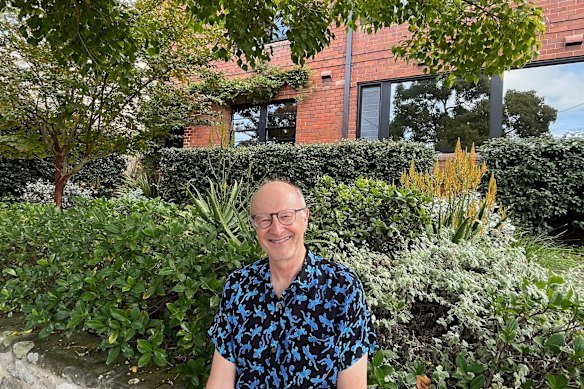
Michael Visontay is a Sydney writer. His most recent book is Noble Fragments.
Get a weekly wrap of views that will challenge, champion and inform your own. Sign up for our Opinion newsletter.
From our partners
Read the full article here