





 Markets
Published on
The urgent need for NATO allies to ramp up weapons production in light of the war in Iran is high on the agenda for Tuesday’s meeting of military chiefs at NATO HQ in Brussels.
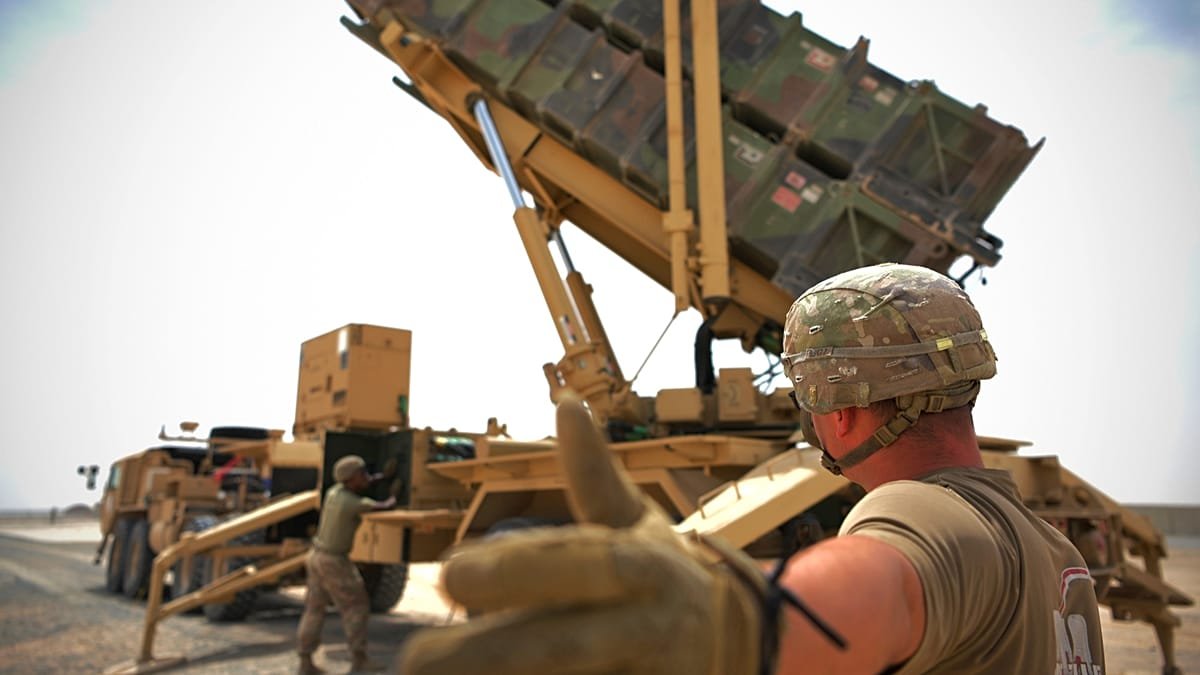
The US army is expending vast quantities of high-quality munitions including significant portions of its highly expensive air and missile Patriot defence systems. Figures released from the Pentagon on 12 May show that the Iran war has cost the US military more than $29 billion so far, with no end to the conflict in sight.
NATO allies are concerned that the complex military hardware that bolsters the alliance’s security guarantees cannot be replenished in time to keep pace with the US military’s consumption of its own supplies.
At this week’s summit, military chiefs from all 32 member states will examine the impact that consistent rapid consumption may have on NATO’s collective capabilities and deterrent power as Russia continues to threaten allies.
On 15 May an air raid warning was issued in Finland after the military detected drones entering Finnish airspace. Helsinki Airport was temporarily closed, leading to the cancellation and rerouting of many flights.
Tuesday’s meeting will be led by Supreme Allied Commander Europe (SACEUR) General Alexus G. Grynkewich, with NATO Secretary General Mark Rutte also attending.
Ramping up fast
The knock-on effect of weapons depletion for Europe is the likelihood US weapons and defence systems purchased by European NATO countries for use by the Ukrainian military won’t be delivered on time, or in some cases at all.
“We’ve been saying for years that military production needed to be ramped up exponentially because of the war in Ukraine, but the Iran war has shown us it’s even more important we do this now,” a senior NATO military source told Euronews ahead of the meeting.
“We need a lot of resources and munitions and the ability to ramp up production quickly. And we just don’t have that, and we need it very fast.”
The source said the ongoing war in Iran, which has choked global supply chains of oil, gas and other commodities from the Gulf as a resultant closure of the Strait of Hormuz, is a prime example of why NATO should have increased its weapons output some time ago.
“Indeed, this is about Iran, but in fact it’s also a realisation that we need to be prepared for simultaneous conflicts,” they said.
“We need this at scale, and that’s certainly one of the points SACEUR will be making to allied military chiefs.”
‘Time is of the essence’
Efforts to end the war through a resolution have floundered in recent weeks. On Sunday, US President Donald Trump warned Tehran the “clock is ticking” as talks continue to drag.
In a post on his Truth Social account, he wrote: “They better get moving, FAST, or there won’t be anything left of them. TIME IS OF THE ESSENCE!”
On Monday he then said he’d hold off on the attack after an appeal by Gulf States who informed him “serious negotiations are now taking place” in an effort to resolve the war.
He appeared to be convinced to do so as a deal that is “very acceptable” to the US was possible.
“This Deal will include, importantly, NO NUCLEAR WEAPONS FOR IRAN!” he wrote on his Truth Social platform.
Another key aspect of Tuesday’s meeting will be the delivery of SACEUR’s military assessment of NATO’s overall current capabilities, including the impact of the recent decision by Washington to cancel a force brigade of over 4,000 troops to Poland.
The decision was unexpected, and was taken abruptly even as some of the soldiers and equipment were already in transit.
“SACUER will need to look at this both from a US and European perspective to decide whether to adjust force posture on the continent,” the source told Euronews.
Read the full article here