





 Markets
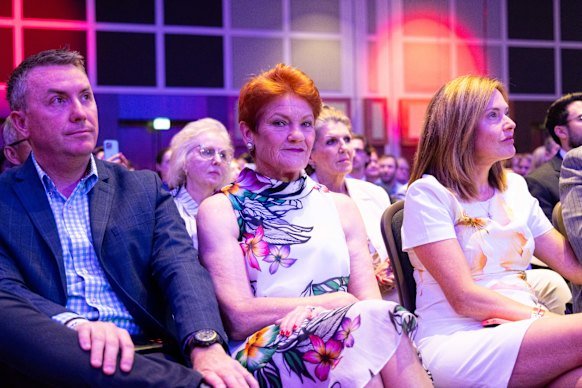
One Nation and its supporters say that they are appealing to ordinary people, but reading the opinions of those in this article (“Not Neanderthals or rednecks’: Inside the rise of One Nation in Sydney”, July 25), all I see is a grab- bag of conspiracy theories and far-right weirdness. The country was “turning into communist China”, the Labor government is “importing people” into Australia that “utilise our public resources for their own benefit, all on Centrelink benefits”. Reportedly, overheard at a meeting, some wish “there was a Donald Trump in Australia”. Only in my most despondent view of the future do I think that those views are shared widely. Of course, these people all state that they are not racist. I think that if you feel the need to say that then you very much are racist. Nicholas Triggs, Katoomba
Soon after I read the angry words of the newly minted and rusted-on One Nation members, I reread Carl Sagan’s passionate paean to our planet in Pale Blue Dot. Sagan pleads with us for perspective to understand the unlikely privilege of our existence here on this “mote of dust suspended in a sunbeam”. That we spend our limited time on this pale blue dot hating, fighting and resenting the “other” is a tragedy. I wish One Nation supporters could see us as Sagan saw us, from his spaceship Voyager as it was 6.4 billion kilometres away from earth, and realise that this planet is all we have. We are all we have. Judy Hungerford, Narraweena
It seems to be the common thinking of One Nation members, “I am not a racist”. The movie Hidden Figures depicts the racism Afro-American mathematicians faced while working for NASA when preparing for the moon landing in the 1960s. In the movie, after a successful mission, the white supervisor says to the Afro-American that she wasn’t a racist. The reply said it all: “If that is what you want to believe”. John Cotterill, Kingsford
One Nation candidate Tony Nikolic was adamant people turning up to One Nation meetings were not, as he said, “Neanderthals” or “rednecks”. As Neanderthals were highly intelligent, if they were still around, would they be voting for Pauline or any of her candidates? Ingrid Haydon, Long Jetty
Husic for PM
Post the Labor conference, I vote Ed Husic for prime minister (“Husic pushes for Labor to take harder line on Israel”, July 25). As a member and activist I agree with him on Palestine/Israel, AUKUS and gas changes. Judy Nicholas, Kambah (ACT)
As expected, the Labor Party conference appears to show party unity. However, the politicians haven’t listened to the electorate. The people want less expenditure on the questionable AUKUS submarines and more income from flogging our gas off overseas to deal effectively with the current crises. The opposite came out of the conference. The party will have a lot of convincing to do that either decision is good for our country. Ute Mueller, Lapoinya (Tas)
With the largest majority in the lower house, one would expect Labor to allow debate on a range of issues that gave us reason to vote Labor. Instead, the unions are silenced and factional leaders are said to be fearful. What a disgrace. When the polls showed a rise in One Nation, it looked as if the government would make bold decisions. Since Pauline Hanson’s disastrous overseas trip, the prime minister feels he doesn’t have to be brave. What a disappointment. Carole Hayes, Newtown
As an ALP member watching from the sidelines, I am bemused by the strictly orchestrated goings-on at the 50th national conference. Debate is gagged, and differing opinions are only discussed and decided in backrooms. I think the Carmelite nuns from Deniliquin (“Ley, alleged Lib branch stacking and silent nuns”, July 25) are a much better fit in the modern-day and sterile ALP. Paul Taylor, Murwillumbah
Guns for cash

The gun buyback scheme is a ridiculous waste of money given the alternative (“National gun buyback scheme must proceed”, July 25). We end up with a cycle of the government funding something repulsive – in this case converting old and unwanted guns to cash. We should require all privately held guns and ammunition be stored in registered commercial deposits under live police video surveillance. The number of guns a person or company owns will not matter. An appropriately licensed person should only be allowed to have one gun in their possession at a time and under parliament approved conditions. The cost of storage will lead to old guns being sold for scrap value. Farmers are likely most affected by this measure due to distance to a commercial deposit. However, rural communities will be pleased that far fewer guns will be easily accessible. Peter Egan, Adelaide (SA)
Revisit the commission
Plus ça change (“Doctors revolt against NSW Health”, July 25). In his 2008 Special Commission of Inquiry into Acute Care Services in NSW Public Hospitals, Commissioner Peter Garling reported that the breakdown in relations between frontline medical staff and health administrators had placed the NSW hospital system “on the brink” due to the disengagement of the best and brightest of the profession who were prepared to provide world’s best care without cost to the patient.
I was appointed to the committee charged with implementing Garling’s 139 “bottom-up” reforms with hope that clinicians would be given the level of authority over the services they provided that matched their level of responsibility, a basic tenet of good management. For a brief time that was so but, slowly, authority was dragged back to central control and command. The time seems right for another commission of inquiry. Graeme Stewart, Avalon
No place for fear
It was a normal Saturday morning, our usual cafe was abuzz when I spotted our local federal member, yet none of us then imagined how the sense of relative peace we as Australians enjoy would be shattered some 33 hours later (“Leeser tells of son’s antisemitism fears”, July 25). Julian Leeser is a man of principle with the capacity to embrace a community diverse in culture, tradition and faith. No Australian, whatever their station in life, should be living in fear because of the faith they practise. Allan Gibson, Cherrybrook
Rethink the games
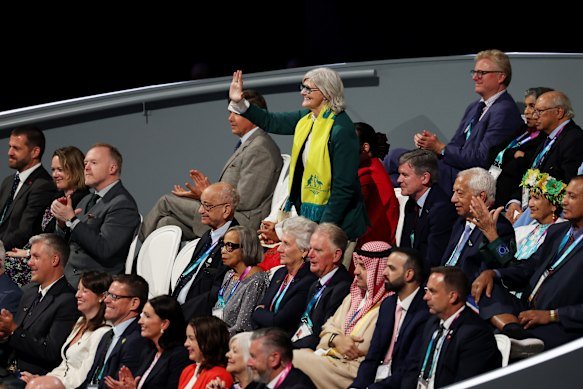
Congratulations to all the athletes involved in the Commonwealth Games. It should not be all about medals, but inevitably Australia, England and Canada will win a disproportionate number. When Victoria pulled out of hosting the Games, surely it was an opportunity to have a rethink about the games and what they should be about.
Are they an anachronistic symbol of pre-20th century colonialism or are they an opportunity for nations with a partially shared history to get together on a smaller stage than the world Olympics, with a greater opportunity for smaller nations? No athlete these days competes in the 100 metres running and turns around and jumps in the pool to swim in the 200m breaststroke event, so why can’t the different Games events be hosted simultaneously around the Commonwealth? Even small nations could host lawn bowls. Alternatively, the Games could always be held in Britain which is, after all, the nation linking the Commonwealth. Or just abandon them. The Commonwealth Games needs a rethink. Neil Reckord, Gordon (ACT)
Museum ‘vision’ far from splendid
The confusion is palpable (“Treasury to review $70m surge in Powerhouse Museum set-up costs”, July 25). There is no Powerhouse Museum, there is a Powerhouse Parramatta, whose focus is unknown, and then there is Powerhouse Ultimo, supposedly to become a revitalised version of what was once a world-class applied arts and sciences museum. Both sites have received and will keep receiving millions from Treasury. The one thing is for sure, that by sending the Wran Building and the Galleria into landfill, the soul of the Powerhouse Museum has been destroyed. Not a good start for the revitalisation process. Garry Horvai, Pennant Hills
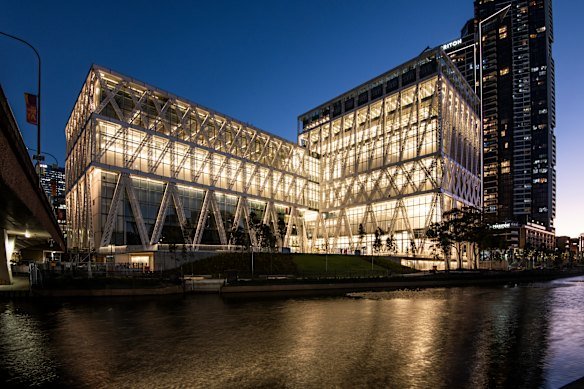
As a financial supporter of the Powerhouse Museum in its former life as an actual museum of applied arts and sciences, I have looked on in horror as design loveys have been let loose with all the financial nous and self-control of a three-year-old in a chocolate shop and no respect for the remit of the museum. Eye-watering sums of public money are spent on their latest design “vision”, while treasures of our art, design and science collections are sidelined or mothballed. What a financial, scientific and artistic disaster. Elisabeth Goodsall, Wahroonga
Classic journeys
Tony Wright’s entertaining piece on classic cars (“From Holdens to algorithms: Are we losing our love for cars with great character?” , July 25) brought back the memory of my grey 1968 Mini van with windows and mag wheels, bought in Canberra in 1971. I took it to Wagga and then to Bathurst as we moved around. I gave it to the local wreckers in 2000 but a few weeks later I saw it being driven in Blayney. The biggest disadvantage of such a classic car was that everyone knew where I was when it was parked in town. Robyn Lewis, Raglan
Tony Wright’s lament regarding cars with personality rings so true. Motoring, for pure fun, I fear, has almost no future. Already we have cars that want to countermand the driver who wants to change direction: sold as a safety feature. Almost every car sold today has an enormous screen demanding the attention of the hapless driver. There is generally a great array of buttons, all with tiny lettering to explain their purpose, impossible to read while driving, taking attention away from the job at hand. My wife and I own a ’62 roadster, no extraneous distractions, just us, the steering wheel and the road. People love it. Wherever we go in it, folks come and want to talk about it. And driving it, you just drop into ‴the zone” and wish you were driving to Perth. We own an SUV, a few years old. A pleasant enough thing to drive, but not for pure enjoyment? Hell, no. And driverless? What? I can think of nothing worse. Tom Boorer, Dungog
I enjoyed reading and could certainly relate to Tony Wright’s article about the character of old cars. The only cars I have owned, over 50 years of driving, have been a Mark 3 Zephyr, a Humber 80, a VW Beetle (for 34 years) and for the past few years, a Tesla. As much as I appreciate the convenience of a modern EV, I enjoyed the eccentricities of my older cars, having to poke a crank handle through the grille to get it started on a cold morning, sticking windscreen wipers that required a passenger to reach out and flick back into action, headlights that were less illuminating than an old battery torch. Bench seats, column shift, boiling radiators and no seatbelts. Frustrating at times, but so much fun in retrospect. Richard Tainsh, Potts Point
Stand on laurels
Julia Baird, with her usual eloquence, makes an excellent case for retirement (“Slow down, Odysseus. Smell the roses”. July 25). For those of us who have “worked hard our whole lives and cared immensely”, now is our time to rest on our laurels, guilt free. In retirement, I can pour a second cup of tea and settle in to read the Herald instead of dashing off to catch the train. I no longer hang out the washing in the cold and dark at 10pm, instead I can stand in the mid-morning sunshine and listen to the birds as I do it. There’s time to chat with friends, pursue hobbies or sit and read a book, all luxuries that were out of reach during a long and busy career. Resting on one’s laurels has much to recommend it, the only catch is you usually can’t do it until you get old. Merona Martin, Meroo Meadow
Speaking to a colleague this week, we discussed, of course, how busy we were; it was the usual end of week conclusion, Friday lunchtime, cup of tea, stopping for a moment. Unusually, we stayed longer, moved on to the beautiful winter sun with a few funny stories of joy at work and at home. The extra few minutes, sitting, still, really made my day. Julia Baird always makes sense to me. Ulysses’ “unquiet soul” is something to ponder. My Friday friend and I concluded, as Julia has, the simple and small things quietened our souls. We must stop and celebrate them more often. Lisa Williams, Dulwich Hill
After absorbing Julia Baird’s gentle guidance, I was really pleased that I had left over bay leaves from a recent soup recipe. Judith Fleming, Sawtell
Puss, booted
It’s great to see that Kangaroo Island is a step closer to eradicating cats (“Kangaroo Island nears world-first feral cat eradication”, July 25), given that the risk of feral cats increases when there are cats in the community. It’s really great that we live in the 21st century because robot pets, and in particular robot dogs and cats, have been able to provide camaraderie and companionship to many people out in the community and the elderly in aged care and medical facilities. The robotic pets use artificial intelligence to interact and make life-like movements. Maybe the end of cats is closer than we think. Sue Casiglia, North Ryde
Hard copy lesson
Gary Nunn’s loss of his book proposal moved me (“Words of Comfort”, July 25). I pecked out my debut novel on an electric typewriter and took the steadily growing manuscript everywhere with me. Sitting on it in restaurants wasn’t exactly how I “hatched” my plot, but at least the finished book bought me a mortgage-free home – and, thank goodness, my first computer. Not that I totally trusted the “gadget”. I printed out my finished pages each day. I still do. Jennifer Bacia, Newstead (Qld)
- To submit a letter to the Sydney Morning Herald, email letters@smh.com.au. Click here for tips on how to submit letters.
- The Opinion newsletter is a weekly wrap of views that will challenge, champion and inform. Sign up here.
Read the full article here