





 Markets
In the summer of 2017-18, a bushfire burning just a few kilometres north of our home suddenly intensified. When the ash drifting down from the darkened sky grew thicker and began to glow, we knew it was time to leave.
While my partner loaded the car, I ran back upstairs to take one last series of photographs. It felt both practical and emotional: documenting the possessions we might later need to claim through insurance, while allowing me one final moment to say goodbye to a home I was sure I would never see again.
Standing alone in the living room, my body awash with adrenaline, I experienced a moment of profound clarity. We had packed everything emergency planners tell us to save: passports, laptops, medication, important documents, a change of clothes, and I had grabbed a handful of family photographs and a few pieces of artwork. Yet almost all the belongings that I truly cared about, and that made our house a home, were still inside.
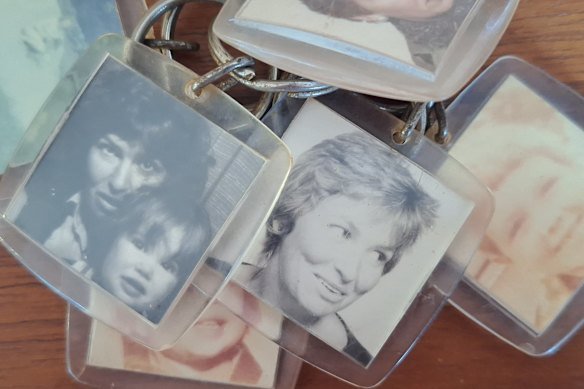
The folder of family archives my dad spent more than a decade compiling, printing and posting to me a few pages at a time. My daughter’s first drawings carefully tucked away in her bedroom cupboard. The hand-knitted baby jumpers from each grandmother, sealed in a plastic container to protect them from moths. The old family key ring holding black-and-white photographs of my family, hanging from the spice rack in the pantry to remind me to call my mum every time I reached for the garlic. Ordinary objects that are extraordinary to me. They hold the story of my life and our family. They are priceless.
We were fortunate that year. The wind changed direction and the fire never reached us, and while we were able to return home, the feeling has never left me.
My partner and I live with our two children, aged three and 11, in a quirky 1970s timber house nestled in the bush on the edge of a national park. As one architect friend put it, it is a tinderbox. We are far from alone. A recent report by the Climate Council found that at least 6.9 million Australians now live on the expanding fringes of capital cities that could be at risk from bushfires, an increase of more than 65 per cent since 2000. Many, like ours, were built long before modern bushfire-resilient standards were introduced.
Every summer, as temperatures rise and forecasts darken, I find myself mentally walking through our house again, asking the same impossible questions. What are our family’s most cherished possessions? Which losses would be hardest to bear? And how do we protect the belongings that matter most as climate disasters become more frequent?
Those questions have shaped my current research. Over the past year, I have led a collaborative project with colleagues and flood-affected communities in the Northern Rivers, developing a deeper understanding of what happens when people lose and recover their most meaningful possessions. These are losses no insurance payout can replace.
Participants shared stories of losing mundane yet extraordinary objects that held together their memories, relationships and sense of self.
They also described the significant risks they took to save, or later recover, these objects. Their stories reveal a profound disconnect between what emergency planning tells us to value and what people, in moments of crisis, actually treasure most.
Most of these stories came from women. This reflects a broader body of research showing that women and girls often undertake the largely invisible work of preserving the material archive of family life. Yet this dimension of disaster experience remains almost entirely absent from disaster planning and recovery policy.
I used to joke that I was a bowerbird, embarrassed by my attachment to mementos and keepsakes. But through listening to the stories of others, I’ve come to realise how certain objects can play an important role in uncertain times, anchoring people in the present while holding memories of the past and hope for the future.
One interview has stayed with me. A participant described standing in her flood-damaged home after the waters had receded and seeing, half-buried in the mud, the kitchen knife that her refugee grandmother had carried with her to Australia. Amid the devastation, that small, unremarkable object became a source of strength. “I knew,” she told me, “I could get through it.” It was more than a knife. It carried a family story of survival across generations.
Emergency advice is unequivocal, and rightly so: lives always come first. But when preparing our homes, we should also ask ourselves which belongings are truly priceless before disaster makes that decision for us.
Dr Charlotte Feakins is a heritage researcher, a practitioner and a lecturer whose work sits at the intersection of heritage studies, historical and contemporary archaeology, and mental health, at the University of Sydney.
From our partners
Read the full article here