



 Markets

In the first encyclical of his papacy, Magnifica Humanitas, Pope Leo XIV singled out artificial intelligence as a defining moral challenge of our age. The rapidly advancing technology, he warned in a 42,000-word treatise released in May, must be regulated to ensure it serves, rather than undermines, humanity.
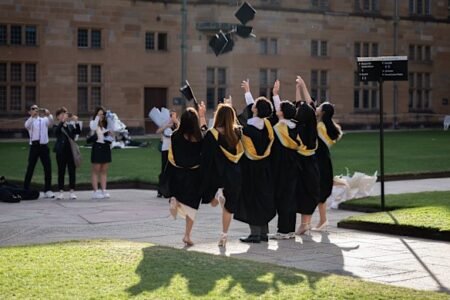
Anthony Albanese, who grew up in the Catholic Church and has reconnected with his faith later in life, briefly referenced the papal encyclical in his first major speech on AI on Wednesday. The setting for the event also had a decidedly religious feel: the University of Sydney’s sandstone Great Hall, which resembles a cathedral with its vaulting stained-glass windows and pipe organ.
The prime minister, however, made no pretence of aiming for such lofty philosophical heights as the Pope in his 20-minute address. He is a political leader, not a religious one, after all. And the timing of the speech was inherently political – a week before Labor’s national conference, where unions and activists are pushing to embed greater regulation of AI into the party’s policy platform.
From melting our capacity for independent thought to mass unemployment to self-directed weapons of war, there’s plenty to worry about when it comes to AI. Artificial intelligence utilises cutting-edge computing, but its ways are as mysterious as miracles to most people, and to discuss it is to invoke uncanny forces.
Albanese knows that. Rather than hype up these fears, he came with a message of reassurance and calm, on a mission to lower the collective heart rate. To tell the public, and the Labor faithful, essentially: We know you’re freaking out a little bit, but trust us, we’re onto it.
Projecting a confident tone, Albanese used the word opportunity, or opportunities, nine times.
AI, he said, is a “generational opportunity” that Australia must seize or be left behind. Threat was used once, but only in a decidedly upbeat way: “Now, we should not treat AI as a threat to good jobs – we must use it as an instrument to help create them.” Albanese mentioned risk six times, but again he avoided doom and gloom. “It is not our goal to try and legislate for every possible eventuality or risk,” he said. “That only creates the risk of Australia missing out on investment altogether.”
Referencing Labor’s creation of Medicare, compulsory superannuation and his own government’s social media ban for under 16-year-olds, Albanese said Australia “can set a standard that changes the way the world looks at an issue and deals with it”. The same can happen with AI, he insisted.
The great danger, he argued, was inaction rather than action. “If we hang back, or stand still, this will run right over the top of us.”
Albanese announced the government aims to introduce legislation to parliament early next year to create a regulatory framework for large AI data centres. Part of this will be a legal obligation to ensure these centres are net-generators of electricity rather than net-users, meaning they will not drive up power prices for homes and businesses. He will also establish a new office in the Department of the Prime Minister and Cabinet to handle AI policy.
A passionate supporter of Australian music, Albanese was especially bolshie on the need to protect the work of local artists and journalists, vowing to put in place “the strongest possible protection” to ensure machine learning models cannot hoover up and profit from existing work without permission or compensation.
Overall, though, the speech was vague on detail and offered a bit of something for everyone.
The purpose was to make the case for future government intervention without freaking out the private sector. As short-term stakeholder management, it was a master class, reflected in the fact both unions (who want tough AI regulation) and big business (who want a more hands-off approach) praised the speech.
While hardly an encyclical, it still had the feel of a sermon. As we enter a new, and in many ways terrifying, technological era, Albanese delivered an admonition not to surrender to despair. The policy nitty-gritty could wait for another day.
Cut through the noise of federal politics with news, views and expert analysis. Subscribers can sign up to our weekly Inside Politics newsletter.
 Matthew Knott is the foreign affairs and national security correspondent for The Sydney Morning Herald and The Age.Connect via X, Facebook or email.
From our partners
Read the full article here