




 Markets
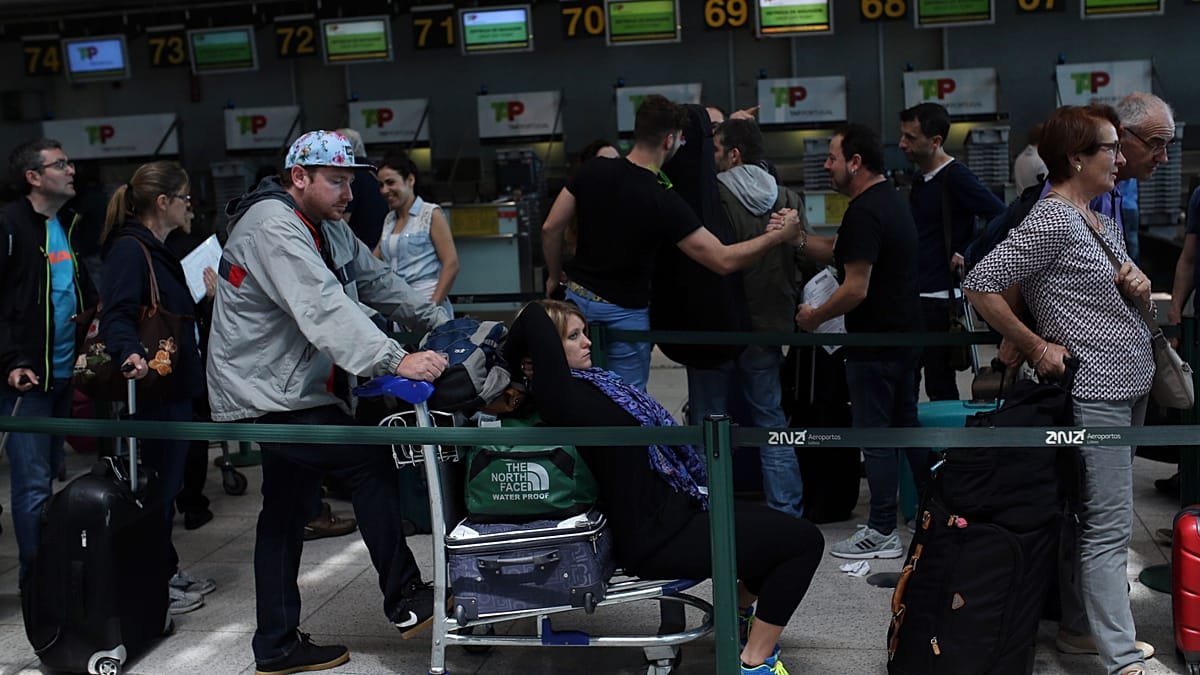
The Portuguese are among the Europeans with the greatest desire to travel in 2026, even amidst geopolitical tensions and economic pressures.
According to the 25th edition of Europ Assistance’s Annual Summer Holiday Barometer (source in Portuguese), carried out in partnership with IPSOS, 82% of Portuguese people plan to go on holiday this year, a figure only surpassed by the population of the UK, which stands at 84%.
The study, which analysed holiday plans in 26 countries, 11 of them European, shows that holidays continue to be perceived as a need associated with well-being and personal balance.
This need is also reflected in the average budget for a big holiday. In Portugal it rose by €147 to €1,662 euros. A 10% increase on the 2025 figure, this still leaves Portugal below the European average of €2,089.
Among the European countries, Portugal remains in ninth place in the table in terms of expected holiday spending, with Switzerland leading the way with €3,100. Switzerland also leads the ranking globally, followed by the US with €3,049 and Australia with €3,035.
A trend towards domestic tourism
Despite the unstable geopolitical context, there are still those who choose foreign destinations.
On the list of Portuguese people’s favourite destinations abroad are Spain (21%), Italy (8%) and Brazil (9%). Italy, Spain and France stand out as the most desirable destinations worldwide.
However, the Portuguese show a greater preference for travelling within the country (47%), with a slight decrease in international travel from 43% in 2025 to 42% in 2026.
Despite the enthusiasm for travelling, safety is increasingly becoming a factor in the choice of destination and in decisions not to travel. Across Europe, 30% of respondents consider security to be a determining criterion when choosing a destination, reflecting an upward trend compared to 2025.
In Portugal, armed conflicts and the risk of terrorist attacks, at 70% and 67% respectively, are considered factors of concern when deciding where to travel – figures well above the European average (59% and 53%).
The war in the Middle East and geopolitical tensions also seem to have affected some travellers’ interest in certain destinations. The United Arab Emirates, for example, has made it onto the list of countries that travellers say they can avoid due to the political climate, along with the US, the Europ Assistance barometer shows.
High costs are the main obstacle to holiday plans
In addition to security issues, financial limitations continue to be the main reason for not travelling. Among the Portuguese who don’t plan to travel, 49% suggest the need to save as the main reason.
Inflation remains a concern for families when it comes to making plans. Portugal is the European country where this fear is most pronounced (90%, up 5% compared to 2025), and it is also the country in Europe where high prices have the greatest impact on the budget dedicated to leisure.
Even so, according to the study, 78% of Portuguese people plan to take at least one trip this summer, a stable figure compared to previous years and above the European average of 77%.
As in 2025, Germany and Belgium are the countries where the intention to plan a summer holiday is lowest, with only 70% and 72% respectively of the population considering it.
Jet fuel reserves threaten summer
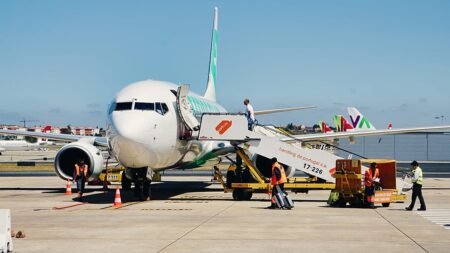
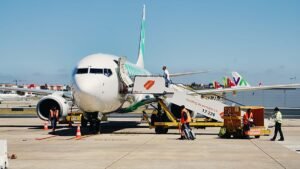
With summer approaching, aviation is under severe pressure due to the significant disruption in jet fuel supplies, a scenario associated with geopolitical instability in the Middle East, with particular attention to the Strait of Hormuz, through which a substantial part of the oil and oil products pass.
The International Energy Agency (IEA) has warned of the vulnerability of the available reserves for airlines, forecasting possible flight cancellations in the near future if oil supplies continue to be blocked. According to the international organisation, Europe may only have jet fuel reserves for a few weeks.
The prospect is that airline ticket prices will rise and supply will be reduced because of the very significant increase in the price of aviation paraffin, which will penalise demand in the summer. For the time being, the percentage of flights cancelled across Europe due to lack of jet fuel is less than 1%.
Among the European carriers that have cancelled flights are Turkish Airlines, Lufthansa, British Airways and KLM.
Here, the impact this scenario could have on the tourism sector, which is one of the main drivers of the Portuguese economy, remains to be seen.
According to the Minister for the Environment and Energy, Maria da Graça Carvalho, Portugal has reserves of jet fuel until August, according to information gathered from Galp, which produces the fuel at the Sines refinery.
The Minister for Infrastructure, Miguel Pinto Luz, has also assured that the government has been in contact with the oil companies about the limits on aviation fuel stocks at national airports, but does not anticipate any flight cancellations at TAP for the time being.
“This is an international and Europe-wide problem, which we are monitoring closely and we want to ensure that nothing fails in this regard in the coming months,” he said in mid-April.
For his part, Finance Minister Joaquim Miranda Sarmento said that any problems with the supply of paraffin for aeroplanes could result in a “very significant economic shock” because of the drop in tourism.
“If this happens, and bearing in mind that if it does, it could happen in the summer, it will have a very significant negative impact on the Portuguese economy,” admitted the minister, speaking to journalists at the end of a meeting with his European Union counterparts in Brussels on Tuesday 5 May.
“More than 90% of the tourists who arrive in Portugal come by plane, and so if there is no jet fuel at European level, even if there is at Portuguese airports, the planes won’t arrive in Portugal and so the tourists won’t arrive in Portugal,” the minister explained.
Faced with this uncertainty, the European Commission will issue guidelines (source in Portuguese) for airlines, with the aim of optimising the use of jet fuel and supply logistics.
Read the full article here