






 Markets
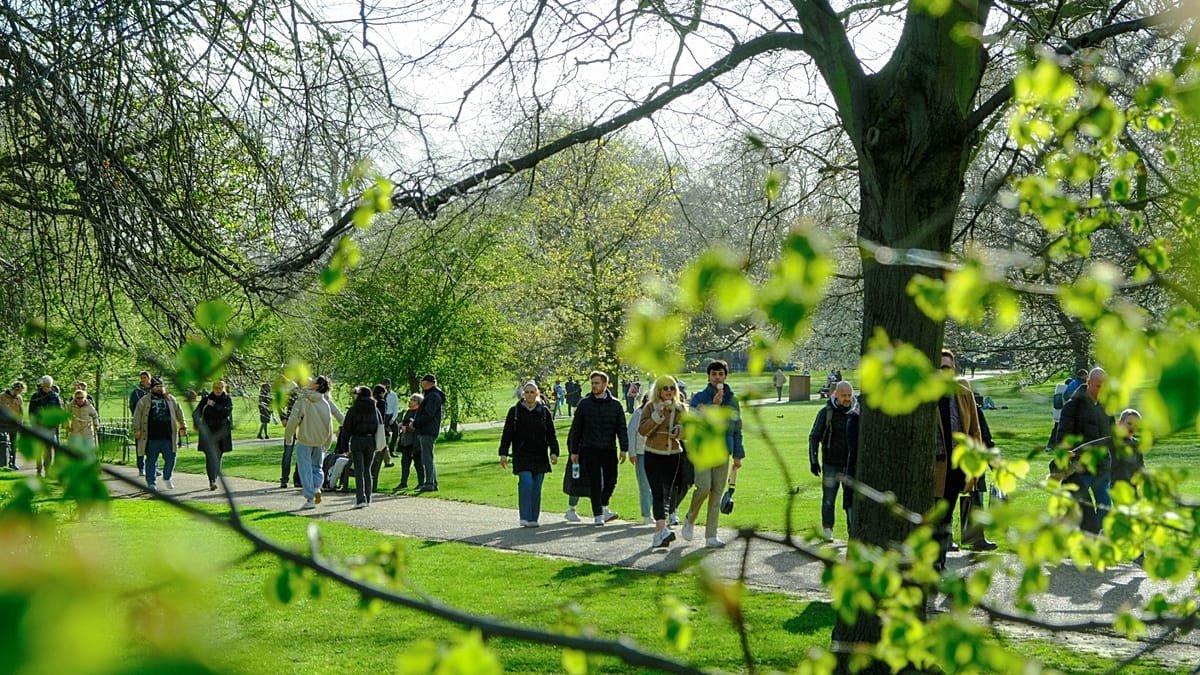
Europe remains the world’s top destination for exploring on foot, taking all 10 spots in a new ranking of the best walking cities for 2026.
From Rome and Madrid to Prague and Lisbon, the list – based on hundreds of thousands of traveller reviews – shows visits to European cities with excellent walkability are still leading the way, even as destinations across Asia and Latin America rapidly rise in popularity.
New research from walking tours company GuruWalk has revealed the 100 best walking cities worldwide, using real traveller data. Its list shows where tourists actually go, and how they rate their experience of walking a city with a local guide.
The third annual Best 100 Walking Cities list drew on data from real activity on its platforms over the twelve months up to April this year, looking at more than 467,000 verified reviews from 3,600 tours across more than 800 cities worldwide.
It decided on a final score by combining traveller volume, with a 65% rating and satisfaction rating with 35% and ranked the top 100.
These are the top 10 most walkable cities.
Rome, Italy
Rome has been captivating visitors for nearly 2,800 years, thanks to its rich historical legacy.
Walking through its cobblestone alleyways, must-sees include the ancient Colosseum, once home to sparring gladiators, the Pantheon and its unreinforced concrete dome, the largest in the world and, of course, Vatican City.
Madrid, Spain
While Spain’s capital is less visited than Barcelona, it’s very much worth a visit – especially if you explore it on foot.
Retiro Park offers some 125 hectares of historic parks and gardens, while the Gran Vía avenue is bustling and lively. Don’t miss a visit to the iconic Prado Museum, home to one of the most important collections of European painting.
Budapest, Hungary
The “Pearl of the Danube” dates back to the Roman Empire and is still drawing countless tourists – 8 million visited in 2025.
Budapest offers countless historical spots, best seen on foot, including its striking parliament and the Fisherman’s Bastion with its seven towers.
No visit to the city is complete without a visit to one of its thermal baths – the Széchenyi Baths are a particular favourite.
Prague, Czechia
The Czech capital is perhaps most famous for its Astronomical Clock, which has kept time since 1410, but there’s so much more to see.
Take in the rest of the Old Town Square when you’ve seen the clock, before heading to St. Vitus Cathedral and the Charles Bridge, iconic for its Gothic statues watching over the pretty Vltava River.
Lisbon, Portugal
Despite its hills, Lisbon is still ideal for those who like to explore a city on foot.
Walk the centuries-old streets of Alfama, lined with shops selling traditional crafts and cafes, before visiting the history-lover’s dreams of Jerónimos Monastery and São Jorge Castle.
Even if you’re too busy enjoying the local cuisine to do much sightseeing, nearly every street boasts traditional Portuguese tiles, which are well worth seeing.
Amsterdam, Netherlands
Amsterdam may be known for its bikes and canals, but it’s also one of Europe’s best cities to explore on foot.
Wander along the UNESCO-listed waterways, crossing some of the city’s almost 1,200 bridges as you move between independent cafés, flower markets and world-famous museums, including the renowned Rijksmuseum
Be sure to visit the Jordaan district, packed with narrow streets, waterside bars and boutique shops.
Porto, Portugal
Set along the Douro River, Porto is one of Portugal’s most picturesque cities, with colourful houses flanking the waterfront.
Walking through the steep streets of the Ribeira district reveals tiled churches, family-run wine bars and historic buildings, while crossing the Gothic Dom Luís I Bridge offers some of the best views in the city.
Barcelona, Spain
Barcelona combines beaches, historic streets and some of Europe’s most famous architecture, making it ideal for exploring on foot.
The recently finished Sagrada Família remains the city’s most famous landmark, while Park Güell and the Gothic Quarter are must-sees. A stroll down Las Ramblas is also a must, especially for first-time visitors.
London, United Kingdom
London’s history stretches back nearly 2,000 years and, luckily, many of its best-known landmarks are within walking distance of each other.
Take in Westminster Abbey, Big Ben and Buckingham Palace before heading along the Thames towards Borough Market or Tower Bridge. Neighbourhoods like Soho, Camden and Notting Hill each offer a completely different side of the capital.
Berlin, Germany
Berlin blends its complex history with a modern creative scene that’s best explored on foot.
Walk between major landmarks including the Brandenburg Gate, the Reichstag and remnants of the Berlin Wall, before exploring the galleries, cafés and street art that now define districts like Kreuzberg-Friedrichshain.
The city’s parks, like Tiergarten, and museums, including Neues Museum, also make it easy to spend hours wandering.
Where else globally has excellent walkability?
Asia has shot up the ranking like never before.
Japan has done especially well, with Tokyo leaping 16 positions to 20th place, while Kyoto is ranked 35th and Hiroshima, a new entry, is in 81st.
Elsewhere on the continent, Ho Chi Minh City climbed 22 spots to 38th, and Hanoi, a new entry for this year, is in 35th.
In Latin America, Santiago de Chile shot up 23 places to 25th, and Mexico City reached its best-ever position, at 33rd.
Ever-popular New York City showed itself to be an unstoppable force, having risen a cumulative 30 positions from 53rd in 2024 to 23rd this year.
Interestingly, despite Europe’s overall success, it’s a top tourist destination on the continent which has experienced the biggest drop.
Venice, plagued by overtourism, fell 76 places from 15th to 91st – something that should please the disgruntled locals.
Read the full article here