





 Markets
Australia’s inflation problem is painful and persistent and it won’t truly improve until we address its root cause: privatisation.
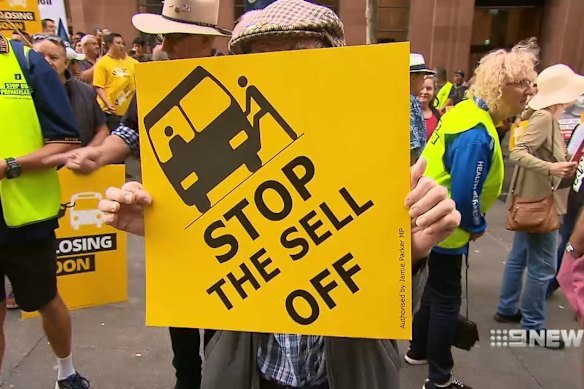
Despite impassioned arguments from both sides of politics since the 1980s, polling shows Australians hate privatisation with a passion. And that’s even before we’ve woken up to the fact that it’s driving inflation.
You can hardly blame the average person for being unaware. Our inflation scapegoats tend to be limited to whoever is governor of the Reserve Bank of Australia, and pesky workers and their obsession with getting paid.
Privatisation manages to slink away in the shadows with nary a rock thrown in its direction. It’s time that ends.
So why is privatisation to blame? Well, let’s look at what’s driving price increases.
The fastest-rising costs in the CPI basket over the past two decades have been utilities (gas 5.9 per cent per year), electricity (5.7 per cent), medical and hospital services (5.5 per cent), insurance (5.3 per cent), schools and childcare (secondary 5.2 per cent, preschool and primary 3.9 per cent) water and sewerage (4.6 per cent) and housing (3.9 per cent). Other items have fallen: electronics, household appliances, clothing and footwear have got much cheaper, courtesy of the Chinese manufacturing boom.
Notice anything? Every single item eating away at household budgets was once a public good made available by government for free or at affordable rates. Or it’s a privatised service operating alongside struggling universal public options like schools and Medicare.
Now of course, big inflation shocks are triggered by major events. Global energy price shocks are a big inflationary force. But what makes that contagion spread easily and amplify is the fact that Australia has handed the provision of essential services to for-profit actors.
When an energy price shock hits, firms scramble to protect profit margins by lifting fees. And with little transparent competition, why wouldn’t they?
Consider the scope of what has changed. There were the huge sell-offs in the 1990s: Qantas, Telstra, the Commonwealth Employment Service, prisons and more. Then add in the explosion in government-funded human services contracted to for-profit providers since the 2010s in vocational education and training, schools, healthcare, childcare, disability care and aged care. There are tens of thousands of disparate businesses like GPs, NDIS firms, colleges and private hospitals whose aggregated profit-seeking activities raises economy-wide prices.
Selling off assets or sharing establishment costs for new services with business made government balance sheets look better in the short run. But we’re paying dearly for it now.
Workers pay many times over. Expensive public contracts, higher fees, higher interest rates from resulting inflation, and unemployment when RBA’s hikes contract the economy. Over $20 billion in public money goes to private schools every year, for instance, without any control on their inflationary fee schedules. We foot the bill for systems that work to make us poorer.
We’re told to “shop around” on government websites to get the best electricity plan and not get ripped off. But isn’t it the government’s job to protect its citizens from unscrupulous purveyors of life’s necessities?
At the heart of the angst and anxiety driving interest in parties like One Nation is a sense that working people are losing control – over incomes, living standards and their future.
So what should the government do in response?
The quickest measure would be to bring in price controls. From the post-war period, the 1970s oil crisis and the 1980s Prices and Incomes Accord, Australia has a long history of legally capping what companies can charge for essentials prices to control inflation and protect citizens from profiteering.
By heavily taxing sudden unearned profit spikes, a windfall profits tax could remove the incentive for big oil and gas, supermarkets and banks to raise prices excessively, reducing inflation. Wealth taxes can stop excess cash chasing a limited stock of resources like housing, reducing inflation.
But the only long-term structural solution is public provision. We must repair the “leaks” created through underfunding and limiting expansion of our universal public education and Medicare systems. We should add childcare into the public education “stack” and dissolve markets for fee-charging schools, GPs, dentists and specialists with expanded public coverage. This means weaning privatised parallel systems off the public teat.
Public ownership and control should be prioritised in energy where exposure to global supply shocks is most painful, by establishing a new Commonwealth entity to build, own and deliver cheap renewable energy.
All of this, I confidently predict, would be hugely popular (despite the wailing and gnashing of teeth from the business sector and its various mouthpieces.)
The RBA’s “sticky” domestic inflation is the macroeconomic legacy of a failed neoliberal project of outsourcing, privatisation and weakening regulation of self-interested actors. With geopolitical inflation risks all over the horizon, the only solution is for government to step up and reclaim the field.
Alison Pennington is chief economist at the McKell Institute.
Get a weekly wrap of views that will challenge, champion and inform your own. Sign up for our Opinion newsletter.
From our partners
Read the full article here