



 Markets
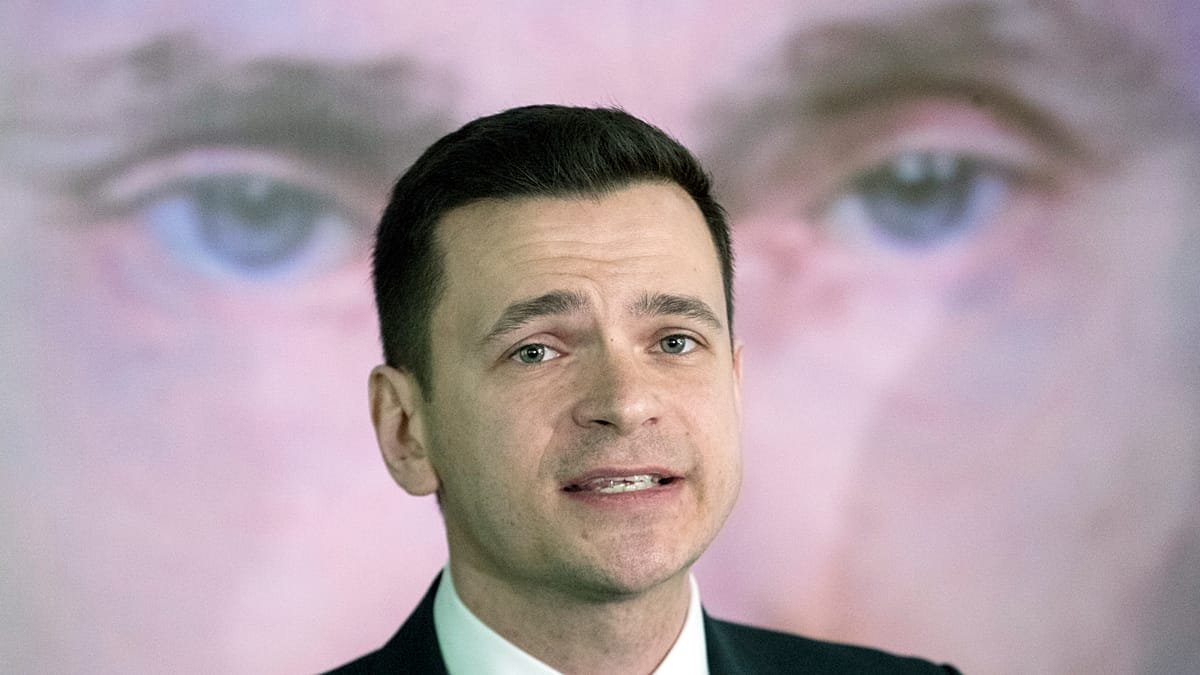
As Russia tightens domestic restrictions and public discontent grows, opposition groups in exile are seeking to lay the groundwork for Russia’s democratic future.
Members of a newly founded political party led by Kremlin critic and former political prisoner Ilya Yashin met in Berlin on Friday to elect their leadership and outline the party’s agenda. The movement, called “The Peaceful Forces of Russia”, says it aims to promote a peaceful future for the country.
“Putin leads the party of war, and we lead the party of peace,” Yashin wrote on the messaging app Telegram.
Meanwhile, Russian President Vladimir Putin continues to enjoy high approval ratings at home. According to the state-run polling agency VCIOM, around 71% of Russians approve of his performance. Against that backdrop, it remains unclear how much influence opposition groups operating from exile can exert inside the country.
Does Yashin have the potential to become a Russian “Nelson Mandela”?
“The big problem is that the Russian opposition is highly fragmented and struggles to accept leadership,” Russia expert Andreas Heinemann-Grüder, a professor at the University of Bonn, told Euronews.
“In the past, I had the impression that everyone in the opposition wanted to be a little Lenin. This personal rivalry played a very big role,” Heinemann-Grüder adds. He argues that the Russian opposition’s only realistic path forward is to form a government-in-exile.
Such a government-in-exile would be the opposite of what Heinemann-Grüder describes as a Leninist party structure. “In that model, a small group around a leader makes the decisions and views the wider public merely as followers,” he says, referring to the concept Lenin called “democratic centralism”. In practice, he argues, the system involved a high degree of centralisation and little genuine democracy.
According to the expert, similar patterns can be seen among many opposition figures today, with a strong emphasis on centralised leadership.
But a government-in-exile would have to be far broader and more decentralised than a Leninist cadre party and reflect Russia’s multiethnic character, the professor adds, arguing that the opposition would also need a single person who clearly represents it.
For Heinemann-Grüder, Iran offers a useful comparison. Much of the country’s opposition has rallied around Reza Pahlavi, the son of Iran’s last shah, providing the movement with a clear figurehead. Russia’s opposition, by contrast, has yet to unite behind a similarly prominent leader.
“If you ask who is actually identified with the resistance of the opposition in Russia, names like Kasparov, Khodorkovsky, Kara-Murza or Yashin come up. If a foreign ministry were to ask which phone number to call and which email address to write to, they would come up with dozens,” Heinemann-Grüder says.
According to the expert, the problem is compounded by the large number of opposition groups and organisations operating across different countries, often without a single coordinating structure or recognised leadership.
The key question is if “Yashin is a figure who can bring together many different currents and at the same time command authority. Does he have the potential of a Nelson Mandela?”, Heinemann-Grüder explains.
The Navalny phenomenon
Until his death in 2024, Alexei Navalny was widely regarded as the most prominent figure in the Russian opposition.
Heinemann-Grüder describes the Navalny phenomenon as “a response to the crisis of Yabloko”, the liberal opposition party founded in 1993. Navalny was a member of the party in the early 2000s and for a time belonged to its Moscow regional organisation before emerging as the country’s most prominent opposition figure.
“Navalny built a single-issue movement. He put just one issue at the centre, namely anti-corruption,” he says, adding that the era of single-issue movements is now over.
The Russian opposition in exile has likewise placed a single issue at the centre of its agenda: ending the war in Ukraine. But Heinemann-Grüder argues that its ambitions will need to extend far beyond that, as a war cannot be ended from abroad.
Heinemann-Grüder argues that today’s Russian opposition must learn from both Yabloko and Navalny while addressing issues that have largely been neglected in the diaspora. The new party, he says, needs to define what kind of Russia it wants to build: a Great Russian state, a presidential system, a federation or a multiethnic state.
The opposition has yet to provide a clear answer to those questions, Heinemann-Grüder says. In his view, any future alternative to the current Russian government would need to be more decentralised, reflect the country’s multiethnic character and give a voice to the Russian diaspora across Europe.
Yet the ability of opposition groups in exile to influence developments inside Russia remains limited. The longer opposition figures remain abroad, Heinemann-Grüder says, the greater the risk that they lose touch with a society that continues to evolve without them, particularly younger generations.
For now, he says, their most immediate task is to establish themselves as credible and legitimate interlocutors for governments and institutions in Germany and across the European Union.
Learning from the past
For Heinemann-Grüder, the Russian opposition’s chances of success depend in part on recognising that the roots of the current political system predate Putin. In his view, the 1993 constitution created the conditions that later enabled the concentration of power in the presidency. Addressing that legacy, he says, is one of the key challenges facing the new opposition movement.
According to the Russia expert, parties such as Yabloko focused their criticism on Putin himself rather than on the constitutional framework that made his rise possible. Adopted after the collapse of the Soviet Union, Russia’s 1993 constitution grants the president extensive powers, including the ability to nominate the prime minister, exert significant influence over the government, issue decrees and, under certain circumstances, dissolve parliament.
Critics have long argued that the concentration of power associated with Putin’s rule was facilitated by the constitutional system itself rather than created by Putin alone.
“Yashin will only succeed if he organises ballots among the membership and is not simply chosen by a dozen functionaries,” Heinemann-Grüder explains.
In his view, the opposition must apply the democratic standards it demands from the Kremlin to its own structures. That means not only insisting on presidential term limits, but also ensuring that party leaders face term limits, can be removed from office and govern with a clearly defined mandate. If the aim is to build a parliament-in-exile, he says, other political groups must also be allowed to compete.
Should Yashin fear for his life?
Putin’s critics accuse the Kremlin of systematically suppressing political opposition. In 2015, opposition politician Boris Nemtsov was shot dead near the Kremlin in Moscow.
Opposition leader Alexei Navalny died in Russian custody in 2024 after surviving a poisoning attempt several years earlier. His widow, Yulia Navalnaya, and several European governments, including those of Germany, the United Kingdom, France, Sweden and the Netherlands, have said they believe he was poisoned. Russian authorities have rejected allegations of state involvement.
Western governments and Kremlin critics have repeatedly accused Russian state authorities or individuals close to Putin of being responsible for attacks on opposition figures. Moscow has denied such accusations.
“With a party like this, you have to assume that Russian intelligence services will take an interest in it. They will try to infiltrate it, and some members may even have ties to the security services.”
At the same time, Heinemann-Grüder cautions against responding by becoming overly secretive. Turning the movement into a closed organisation or a “secret society”, he says, would risk undermining the openness and democratic principles it seeks to promote.
How quickly could Yashin’s party enter the Russian parliament?
According to Heinemann-Grüder, Yashin’s chances of leading a successful opposition movement depend on two possible scenarios. The first is one of total escalation, including the use of nuclear weapons, attacks on the Baltic states and a further expansion of the war.
He associates this scenario with influential voices in Russia’s political and media establishment, including former president Dmitry Medvedev, television and radio host Vladimir Solovyov and political scientist Sergey Karaganov. Their shared message, he says, is simple: “We must win the war.”
The second scenario is one in which a different faction within the Russian elite gains influence. According to Heinemann-Grüder, this camp would recognise that Russia cannot achieve its objectives on the battlefield and would therefore seek a way out of the war.
“At the moment when there is agreement that the war has to be ended because it cannot be won, there will be a split within the elite,” Heinemann-Grüder says. He considers this the more likely of the two scenarios.
The second scenario is that a different faction within the Russian elite gains the upper hand – one that recognises Russia cannot win the war and must therefore find a way to end it.
“At the moment when there is agreement that the war has to be ended because it cannot be won, there will be a split within the elite,” Heinemann-Grüder says. He considers this the more likely of the two scenarios.
The question then would be which parts of the Russian elite would view Yashin as a potential future leader. That could include influential oligarchs as well as elements of the security apparatus.
Who will make up Russia’s new elite?
According to Heinemann-Grüder’s, only a small minority within Russia’s elite are ideological hardliners committed to the idea of a “Greater Russia”. “Most are absolute opportunists,” he says.
Putin’s strength, he argues, is rooted less in ideology than in power. “If Putin is weak, he will have no followers. Putin is strong because he can spread fear and many people depend on him,” the expert says. “If he loses that support as a result of the war, then most Russians will abandon the sinking ship like rats.”
Whether that would create an opening for Ilya Yashin and the Peaceful Forces of Russia remains uncertain. Yet Heinemann-Grüder believes the war is placing growing strain on the political bargain that has underpinned Putin’s rule for years.
“The social contract that Putin represents is prosperity in exchange for silence. That contract is being destroyed by the war,” he says.
To illustrate his point, Heinemann-Grüder draws a historical parallel. “Lenin did not come to power because he was a Bolshevik. He came to power because he said ‘bread and peace’.”
For now, Heinemann-Grüder says, “the television is beating the fridge” in Russia – a reference to the ability of state-controlled media to outweigh economic concerns in shaping public opinion.
But he believes that balance could eventually shift. “At some point, the fridge will beat the television,” he says. “Whoever then says ‘bread and peace’ will have a chance against Putin.”
Read the full article here