


 Markets
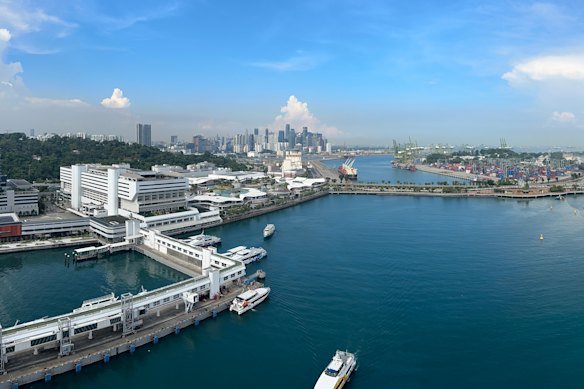
There was a noticeable scent of desperation from our fuel-hungry prime minister in Singapore on Friday, almost as strong as the infamous chilli crab from its local hawkers’ markets and bustling quays.
Labelling his last-minute FIFO diplomatic mission to Singapore a success – be it a minor or unbridled one – will only be possible once fuel supplies to Australia are guaranteed, which they aren’t and never will be, based on latest local intel.
Sure, there’s merit in reaching out to a key energy trading partner amid our current fuel crisis, itself fuelled by the ongoing Middle East conflict.
Similarly, the Cook government’s overdue and somewhat expected response to the crisis this weekend is also welcome – strategic stockpiling of diesel above federal requirements purely for use in WA, the world’s second-largest state.
It wasn’t the first time Albanese (or many other world leaders) had recently contacted his counterpart, Singaporean Prime Minister Lawrence Wong.
And with good reason, as more than a million Aussies visit Singapore annually and two-way trade was valued at $47.4 billion in 2024, making it Australia’s largest trade partner in South East Asia.
Approximately one-quarter of Australia’s fuel is sourced from Singapore’s vital refineries – the world’s third-largest hub behind Houston and Rotterdam – and one-third of Singapore’s LNG is from Australia, the majority from WA.
Various nations have sought time with Wong to secure some sort of assurance – or even a guarantee – that fuel supplies would be maintained amid ongoing uncertainty.
Our PM is one of just two to secure a meeting since the war began, the other being with South Korea.
And with regional fuel stocks diminishing and some key producing nations – including Malaysia, which also exports to Australia – already signalling moves to prioritise domestic needs, it was prudent of Albanese to leverage Australia’s status as a critical gas supplier to the island nation; its main source of power generation for its eclectic six million population.
But my recent trip to the Lion City – having missed Albo by a matter of hours as he jetted in privately and I returned from a family holiday – confirmed that no guarantees would be made.
Locals and business leaders reiterated to me last week what many in the Indo-Pacific already knew for some time: domestic requirements would always remain the priority.
Singaporeans, who are already paying more than $4 per litre at the bowser, will always come first. And most (if not all) locals are expecting fuel rations or restrictions to commence in the very near future.
Toughening times in the clean, green and increasingly expensive city where a certificate of entitlement required to own and drive a car costs upwards of $200,000 – the banks are making money hand over fist.
Locals often refer to the plush, burgeoning urban paradise as “the city of funds and fines” with everything from littering and spitting, and even homelessness, deemed illegal with heavy infringements.
Times, and the burgeoning city state itself, have changed since I first visited almost 25 years ago as executive producer of Perth’s 96FM Breakfast program.
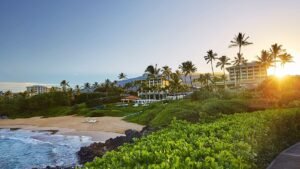
We escorted a few dozen Perth punters who’d won our competition with Visit Singapore to join us for an outside broadcast at the historic Shangri La Rasa Sentosa Resort, the first major hotel situated on the now uber-family friendly Sentosa Island.
Clean and green are just the tip of the iceberg for this island paradise – “sentosa” means tranquillity in Malay, but it was formerly a brutal prisoner of war camp and pirate haven.
These days, think Disneyland on steroids, with the $6.8 billion Resorts World Sentosa complex housing Universal Studios Singapore, Harry Potter Experience, Oceanarium, Dopamine Land and Singapore’s only casino – all wrapped up in just 500 hectares, or five square kilometres. Rottnest Island is 19 square kilometres.
Of course, all this takes enormous amounts of energy to build and maintain, largely from our LNG.
Perth links abound, too, with the hotel’s marketing manager, Sean Soh, a UWA alumni who plans to holiday in WA with his wife and first child; his dad worked at the hotel when I came through more than two decades ago.
After reminiscing, Sean kindly hooked us up with some tasty bites at Trapizza and family fun at the Palawan experience including electric go-kart Hyperdrive across a three-level indoor track – all off-site but owned, operated and marketed by Shangri La.
Western connections continue in Singaporean high(er) places, with former Chamber of Minerals and Energy of WA chief executive Paul Everingham among the plethora of expat “locals” in town as the highly regarded inaugural chief executive of the Asia Natural Gas and Energy Association – although after more than three years he’s just taken up a new gig on the executive team at Chris Ellison’s MinRes leading strategy and growth.
Importantly, as many know, good connections go far, especially in the west and especially those with “energy”.
Very importantly, Singapore produces no crude oil of its own.
It imports about 70 per cent from the Middle East, with its refineries on Jurong Island (which the PM toured in hard hat and PPE) set up to process the region’s heavy grades.
This will only stoke fears further here in Australia at our dwindling bowsers, compounded by the ever-growing risk that these key refineries could scale back production, forcing more countries to impose export controls.
But Singapore isn’t standing still; it’s sprinting, with some incredibly exciting developments on foot while more than 75 per cent of the population resides in government housing, albeit predominantly high-rise apartments on 99-year leases.
The political positioning of Friday’s jaunt from both sides was fascinating: Wong openly avoided making any guarantees about future supplies to Australia in pre-prepared statements and subsequent media Q&A.
The “joint statement” released on Friday opens with the line: “We … reaffirmed the strength of the relationship and the deep reservoir of strategic trust between our two countries.”
Interesting use of the word reservoir. And key word reaffirmed is cited five times in the statement of about a dozen stanzas.
Although it does go (slightly) further than the agreement struck last month to maintain the flow of fuel and gas between the two nations, committing to “maximum efforts” to meet each other’s needs.
Again, no guarantees.
Start the day with a summary of the day’s most important and interesting stories, analysis and insights. Sign up for our Morning Edition newsletter.
 Russell Quinn is a business commentator, travel writer, and senior director of Sodali & Co.
From our partners
Read the full article here