




 Markets

Labor’s new gambling laws will remove the current blackout on gambling ads during sports matches on streaming services, allowing online platforms to start showing registered adult users unlimited wagering ads in half-time and quarter-time breaks unless subscribers explicitly opt out.
As Prime Minister Anthony Albanese defended the government’s contentious legislation, some MPs across the parliament were incredulous, saying the carve-out had been poorly communicated and appeared to allow more gambling advertising rather than less.
Critics are warning this will mean streaming services are flooded with gambling ads because digital platforms – where a growing number of Australians watch sport – will for the first time have looser restrictions than television channels showing the same game between the hours of 6am and 8.30pm.
Under current settings, both broadcast and streaming services are prohibited from airing gambling ads for five minutes before and after games, as well as during half-time or quarter-time breaks, between 5am and 8.30pm. The new laws keep those rules for television, although the start time is pushed back to 6am.
But Labor’s proposal will override the existing blackout for streaming services, government sources confirmed. Instead, streaming platforms will be able to show gambling ads during breaks, and up to the start of play, at any time of day provided users are registered, over 18 and have the option of opting out of ads.
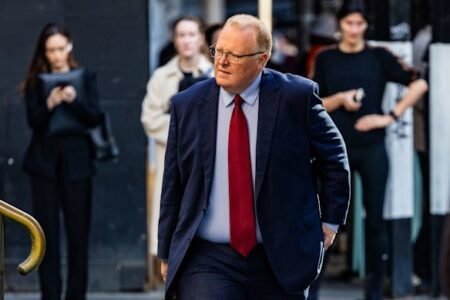
Liberal MP Simon Kennedy, who last week argued in the Coalition party room that the opposition should take a hard line on the issue and strengthen Labor’s bill in negotiations, said the government had “taken a bad problem and made it worse”.
“Australians will be stunned to learn that Labor’s bill creates a new right for streaming services to show gambling ads during every break in live sport. If you’re streaming online, a gambling ad can appear after every quarter or during half-time or during weather breaks,” he said.
“That’s not reform. It’s a retreat. Instead of reducing gambling advertising, the prime minister has created more opportunities for gambling companies to target Australians.”
Communications Minister Anika Wells argued the proposed laws for streaming were stronger than current settings as they could protect children from seeing gambling ads at all times of the day, describing the new requirement for registration, age-assurance and opt-outs as a “triple-lock function”.
The laws suggest the opt-out measure must be simple, effective and accessible. They also require online streaming services to check whether users are 18 – similar to the age assurance requirements that tech companies are using to enforce Labor’s teenage social media ban, to mixed results – which may mean streaming platforms capture extra personal information.
“We know the trend for viewing in Australia is that more than half of the population now view these things online through streamers. And that is how, as technology evolves, households will continue to evolve,” Wells said this week.
“So, ultimately, if you don’t want your child to see [gambling] advertising, you will have the ability to lock it out completely.”
Audience insights from the FIFA World Cup, screened by SBS, show 47 per cent of 3 million viewers watched the Socceroos play Paraguay through the SBS On Demand streaming service.
A spokesperson for SBS told this masthead the number of streaming accounts and advertising opt-outs had both increased during the World Cup, but declined to provide figures. The latest available data, reported by Crikey in April, said 16,000 of the streaming service’s 12.9 million registered users had chosen to opt out of ads, including for gambling – about 0.12 per cent.
“Australians will be stunned to learn that Labor’s bill creates a new right for streaming services to show gambling ads during every break in live sport.”
Liberal MP Simon Kennedy
Albanese rebuffed Kennedy’s concerns when questioned about the new streaming service rules on Friday morning. “The Member for Cook [Kennedy] has a particular view. It’s not necessarily the view of the Liberal Party,” Albanese told ABC radio.
“There are different regulations for different times. There is a carve-out that anyone can choose from their devices. So, for example, if they’re streaming something online, people can exclude themselves from any gambling advertising, full stop.”
Albanese also rejected arguments the legislation did not go far enough, in light of criticisms that the government ignored recommendations from a 2023 report by the late Labor MP Peta Murphy, who called for a blanket ban on wagering advertising.
“I think we’ve got the balance right,” Albanese said. “It actually, in some ways, goes further than that report went. It’s a comprehensive approach. It deals with issues such as particularly online, which has expanded substantially like in other areas of our lives. It deals with overseas gambling as well.”
Labor’s package moves to ban the newer online keno and offshore lottery industries, which were not featured in Murphy’s report. It also targets influencers who promote gambling on social media, and will phase in an advertising ban for stadiums and jerseys.
Independent MP Kate Chaney said Albanese’s claim that his “reforms go further than the Murphy report is outrageous”.
“When it comes to ads, you can’t go further or make it simpler or easier to enforce than a complete ban,” she said.
“Instead, the government is proposing a complicated picture of half-measures and carve-outs. This package may actually result in more ads during sport – the legislation introduced would mean that scheduled and unscheduled breaks would be carved out from the current rule against ads during live sport broadcast online.”
Wells’ package, which limits broadcast gambling ads to three per hour between 6am and 8.30pm, is weaker than the laws developed by her predecessor, Michelle Rowland.
Rowland’s plans would have capped gambling ads to two an hour on each channel until 10pm, banned gambling ads for an hour before and after live sport, and included a blanket ban on betting ads on digital platforms. Albanese put Rowland’s package on ice to avoid a brawl with media and sports bosses ahead of last year’s election.
Professor Samantha Thomas, a gambling reform expert at Victoria’s Deakin University, said the government was not protecting families.
“It assumes gambling ads are fine for everyone to see on streaming platforms. It then asks families to do the work of opting out,” she said. “We should not be asking parents and young people to dodge gambling advertising. We should be making sure they are protected from it in the first place.”
The package will be scrutinised by a Senate inquiry over the next five weeks, during the parliamentary break.
Start the day with a summary of the day’s most important and interesting stories, analysis and insights. Sign up for our Morning Edition newsletter.
 Natassia Chrysanthos is Federal Political Correspondent. She has previously reported on immigration, health, social issues and the NDIS from Parliament House in Canberra.Connect via X or email.
From our partners
Read the full article here