






 Markets
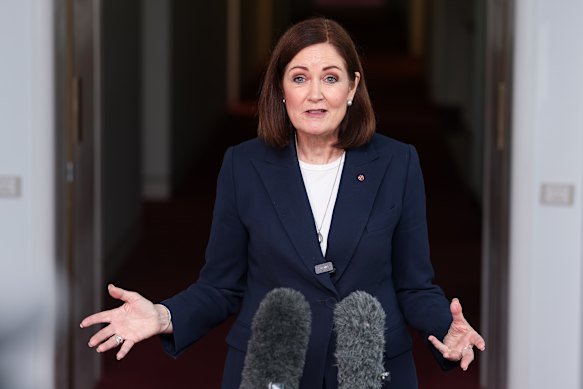
Shadow communications minister Sarah Henderson needs to have a Bex and a good lie-down. All she could do during the hysteria of the Telstra outage was to meddle with the system and blame the government (“‘Time travel’ glitch triggered by upgrade behind Telstra crash”, July 9). Her personal “testing” of the emergency network would have added to the traffic and contributed to the chaos. And her attempt to sheet home blame to the government merely made her look ridiculous. Telstra is a private company which attempts to keep faith with customers, but sometimes, as we all know, even in the best-regulated families, there can be accidents. Trying to make political capital out of such an issue is a sign of just how desperate the Coalition has become. With the Liberals nearly going out of business, it is surely not a time to focus on such trivialities. If Henderson is going to blame the government for every mistake, misstep or mishap that occurs, without due reason or evidence, she is going to be a very busy person indeed. Derrick Mason, Boorowa
Barnaby Joyce began his comments on the Telstra outage by saying “I don’t want to be paranoid or a conspiracy theorist”. Whenever someone feels the need to start with that disclaimer, it’s usually a fair indication that a conspiracy theory is about to follow. Sure enough, before investigators had established the cause of the outage, Joyce was publicly suggesting China may have been responsible (“Joyce and Taylor ‘half-cocked’ on Chinese missile claim: minister”, July 9). Not because Australia’s intelligence agencies had identified any evidence. Not because cybersecurity experts had reached that conclusion. But because, in his own words, the idea simply “came to him” while he was on a phone call after a Chinese missile test in the Pacific. That’s a remarkable basis on which to point the finger at a foreign power. The most alarming part wasn’t the accusation itself. It was the complete absence of evidence behind it. National security is too important to be reduced to political guesswork. Recklessly speculating about foreign interference before the facts are known does nothing to strengthen Australia’s security. It simply fuels fear, spreads misinformation and undermines confidence in the agencies charged with investigating these incidents. Senior politicians should know the difference between evidence and imagination. Australia deserves better than national security by brainwave. Denise McHugh, Tamworth
In the AI world we live in, I cannot understand why phones on one network (Telstra) don’t just switch automatically to others (Optus or Vodafone) in emergency situations. In the case of NSW Rail, it’s unpardonable if they could not switch to Optus when they knew Telstra was having issues. Communication infrastructure failures can happen any time and emergencies like Wednesday’s should never happen at all. Ariyur Rangarajan, Baulkham Hills
Simple solution to no service: If your carrier goes down, your phone automatically switches to a new provider’s service, so if Telstra stops, your phone will switch to Optus, for example. Just find someone smart enough to get it sorted. John Burnage, Abbotsford
Vacuum of knowledge
Jillian Segal, the special envoy to combat antisemitism, feels the ABC pays too much attention to the Gaza Health Ministry (GHM) when reporting on infant and childhood deaths in Gaza (“Segal says Gaza ‘over-represented’ in ABC coverage”, July 9). Given the Israeli government’s refusal to allow Western media into Gaza, where are we supposed to get our information? If the envoy doesn’t accept the GHM statistics, there are numerous credible organisations only too willing to inform us of the reality in Gaza. UN investigations, Amnesty International, Medicins sans Frontieres, the International Criminal Court, International Court of Justice, numerous esteemed medical practitioners from Western nations with first-hand experience – all are desperate to inform (and confirm) the staggering death toll among infants and children in Gaza. George Williams, North Balgowlah
Missile logic
How much more transparent does Australia’s outgoing defence chief Admiral Johnston and his ilk expect China to be (“Exiting chief urges ADF to prepare after China missile”, July 9)? China has made it clear that it reserves the right to use military force should Taiwan declare independence, and it should be no surprise that it might want to demonstrate to the US and its allies the military force it has at its disposal to avoid that eventuality. The US wasn’t prepared to allow Soviet nuclear capable missiles to be based in Cuba. It follows that China wouldn’t want an independent Taiwan to be used as a US base. Rather than whingeing, perhaps Australia would be better off recognising that China is going to do missile tests and naval exercises in international waters nearby, and approach China to negotiate some safety protocols. John Moratelli, Castlecrag
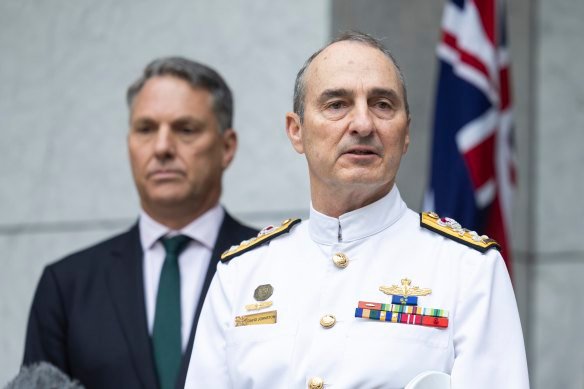
It’s shocking that the Chinese would test their missiles in our vicinity. As Australians, we would never allow a foreign country to test missiles and atomic weapons on our soil. Um, or would we? Robert Hosking, Paddington
Balance to strike
Australia and India have a great opportunity to strike a breakthrough deal to finally deliver uranium to India when our two leaders meet this week (“Australian uranium to supercharge Indian nuclear power surge in breakthrough deal”, July 9). Negotiations began under then-PM Manmohan Singh in 2008 but have not yet reached the expected delivery levels. India’s nuclear power strategy goes back decades, with its first commercial nuclear power station commissioned in 1969. Supplying uranium to India will help it meet its burgeoning energy needs, including a power-hungry data centre industry, which will ultimately benefit Australia through stronger trade and security ties. However, Anthony Albanese should also question the decline in India’s democratic system, including its falling press freedom and poor treatment of minorities, including attacks on churches and other religious sites. We want to power India’s energy needs but must not ignore human rights violations under Narendra Modi’s government. Manbir Singh Kohli, Pemulwuy
Which parallel universe are we living in when we herald a breakthrough deal to supply India with uranium to power nuclear reactors to produce energy and yet won’t even have a discussion about using it ourselves? We need to act like a mature country capable of having a debate about nuclear energy by removing the Howard government-imposed moratorium on nuclear power so that we can sensibly evaluate the pros and cons. If markets decide it is too expensive, as many commentators argue, it won’t attract any investment and will not happen. But why are we too timid to even have the debate? Dale Bailey, St Leonards
One for the pages
Your correspondent appeals to the “education tsars” to improve students’ reading skills (Letters, July 9). I would argue that this responsibility lies first with families. On the outback property where I grew up, my mother and grandmother taught me to read before I was five so I could entertain myself. They later gave me lessons via correspondence from Sydney. Neither were trained teachers and both were flat-out running the homestead. When we moved to Sydney, I was two years ahead of my peers. Reading quality books is the key to intellectual development and all the language skills. It also enables us to walk in other people’s shoes, encouraging empathy. Parents and carers play indispensable roles in encouraging reading, in any language, by reading themselves as well as to children, taking kids to libraries and having discussions that nurture verbal expression. Conversely, scenes such as families in a restaurant with everyone staring at a device are surely symptomatic of the malaise to which your correspondent refers. Barbara Chapman, South Yarra (Vic)
Politics interfere with local tier
The ICAC investigation into the Hills Shire Council, senior Liberal Party figures and fugitive developer Jean Nassif is a stark reminder of why political parties should have no place in local government (“The council allegations at the heart of ICAC inquiry”, July 9). Councils exist to manage parks and reserves, collect garbage, maintain roads, and assess development applications. None of these responsibilities require party ideology. Yet too often, decisions are made along party lines rather than in the best interests of ratepayers. Local government has increasingly become a stepping‑stone for political careers, attracting the wrong people for the wrong reasons. Communities deserve councillors focused on service, not factional advancement. It’s time to remove party politics from the council chamber and return local government to what it should be: practical, non‑partisan, and accountable. Chris Kalmar, Castle Hill
Data doesn’t add up
As a trained accountant, I find the data centre boom doesn’t make sense (“The golf course in the middle of Sydney’s data centre land rush”, July 9). With 39 projects already in the pipeline and more in the wings, I hope they don’t all fly. The numbers don’t bear closer analysis – an issue which think tanks and research institutes have already identified. The financial benefits go to the investors, with little for the host state and its people. These massive buildings will not only use up our land, but also our power and water. They will need building workers to construct and will pay tradies more than they would get building homes for Australians. And once they are operational, they will require very few staff. It’s also likely most of their output is destined for other countries. In the interim, we are short of housing and equally short of building workers to build more. It simply doesn’t add up. Margaret Wright, Millers Point
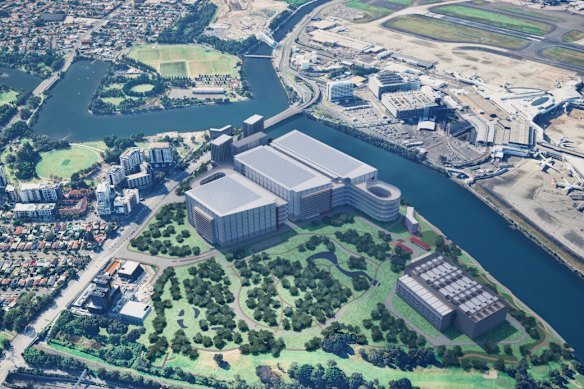
The traditional Indigenous name for the Cooks River is Goolay’yari (place of the pelican). Abused and polluted for years, the river is now one of Sydney’s worse-kept secrets. Linked to Sydney harbour via the greenway and connected to an extensive network of shared bike and pedestrian paths stretching from Cronulla to Parramatta, the river is a much-needed green space for inner west residents and wildlife. The proposed construction of a 25,400 square metre data centre on its banks threatens many of the natural habitats that have returned as well as public amenity along the river. The need for data centres will not diminish, so strong planning guidelines need to be implemented to protect environments during their construction and operating phases. The pelicans have returned. It would be a tragedy to force them out again. John Bailey, Canterbury
It’s encouraging that state and federal energy ministers are finally meeting to discuss data centres (“Green energy giants say data centre boom a win for nation”, July 9). Right now, it feels as though big‑tech corporations are rolling out hyperscale, AI‑driven data centres at breakneck speed with almost no oversight. We don’t want communities dealing with horrible noise, higher power prices and water shortages due to poorly regulated data centre growth. Climate and Energy Minister Chris Bowen must ensure that any new data centres are placed in appropriate locations and bring enough renewable energy and battery storage to strengthen the grid rather than drain it. Larni Dibben, Glen Iris (Vic)
Australia must stop pretending that the data centre boom is a harmless tech trend. Last year, data centres alone drove half of the nation’s growth in electricity demand. Unless these hyperscale, AI‑driven warehouses build more renewable generation and storage than they consume, they don’t power innovation but rather siphon off clean energy, strain the grid and increase climate pollution. The Climate Council warns that data centres could push wholesale energy prices up by 26 per cent in NSW by 2035. Placing a moratorium on new developments until the Albanese government imposes real, enforceable standards is both sensible and necessary. Letting data centres expand unchecked is not progress – it’s surrender. Sarah Brennan, Hawthorn (Vic)
Let down by the law
How can a victim of rape or domestic violence have any confidence in a legal system that time and again serves up a slap on the wrists to the offender, sometimes already with a history of violent and aberrant behaviour (“Anastasia fought the justice system twice. Her rapist’s punishment has devastated her”, July 9)? I wonder how many victims will read Anastasia’s story and think that the search for justice is too traumatic? And I wonder how many perpetrators will see this as a sign that their behaviour will experience minimal consequences should they get caught. Shirley Whybrow, Balmain
More focus, please
It’s understandable that councils would prefer to locate high-rise units on the highway rather than destroy the leafy hinterlands of their suburbs, but the proposed redevelopment around Roseville’s historic cinema should be handled with careful planning (“Roseville Cinema vows to beat doubters”, June 8). A recent stopover for lunch at a fondly remembered, gracious Pacific Highway spot revealed tatty shops, ugly verandah signage that no council should have allowed and a general down-at-heel feel about the place. We moved on somewhere else. How quickly the action or inaction and poor decisions of a council can send a suburb down the gurgler. Donald Hawes, Peel
It would be a shame to see Roseville Cinemas go. They have the best choc tops in town. Vicky Marquis, North Sydney
- To submit a letter to the Sydney Morning Herald, email letters@smh.com.au. Click here for tips on how to submit letters.
- The Opinion newsletter is a weekly wrap of views that will challenge, champion and inform. Sign up here.
Read the full article here