






 Markets
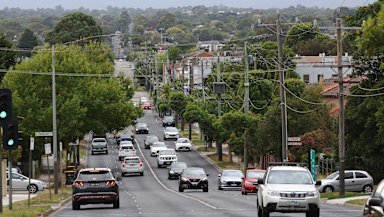
When I was growing up a few suburbs away during the ’80s and ’90s, if you had told me I’d end up living in any suburb that contained “Croydon” in its name, I would have been aghast.
My only foray into the suburb had been a few visits to a teenage disco called HotTraxx, and I remember being wary about travelling there, as my dad dropped me off wearing my Doc Martens. While I had no upper hand in prestige or ranking, having grown up in an equally “rough” suburb down the road in Ferntree Gully, I still carried with me the old stories of Croydon boys picking fights at the station.
But Croydon Hills has pleasantly surprised me and captured my heart.
After a decade of living in bayside and interstate – perhaps in an effort to shed the far-eastern suburbs image – the call back to the leafy green hills on the edge of the city became irresistible after I had a child of my own. Nudging the edge of the Yarra Valley, this part of Melbourne was perfect for us, with its country-style living and views of the Dandenongs, while being close to Eastland shopping centre and the Ringwood interchange.
At first, we moved to Warranwood (between Warrandyte and Ringwood, and which has some cracking wineries), but it turns out that some suburbs are just too hilly for some of us. After more searching, we found a less trendy, less fancy and, despite the suburb’s name, less steeply inclined, home 1½ kilometres down the road in Croydon Hills.
The house turned out to have been one of the first Croydon Hills estate homes – it once served as the original AV Jennings display and office site, raised above the street and built from one of their early configurable designs. Now we spot houses like ours across the estate.
When we bought it, the home had been largely untouched since the ’80s. We felt it important to honour and retain some of its quirky features, such as a built-in fold-down ironing board complete with the original pamphlet (I imagine, to impress prospective buyers), and a mid-century-style doorbell that can be heard echoing through the valley. We were even able to retain the inconveniently placed central kitchen by sneaking in extra storage elsewhere. That said, we marvel at how “close living” families must have been in the past when my husband chooses to stand in front of every cabinet I need, always.
Today as you drive past the entrance of Croydon Hills, it’s easily identifiable through a large “estate entrance” sign where there would have once been apple and lemon groves. This small, almost square, 2.3-square-kilometre pocket was full of irrigation dams that often doubled as swimming holes for locals. Subdivision slowly eroded the orchard until the 1985 housing estate that we know today took hold. Sadly, a few years back, we saw one of the oldest properties – a few doors up – lost to fire. I watched alongside other locals as the flames took hold, leaving little more of the property and planted garden than a few charred trees and the old verandah columns.
Here in Croydon Hills we’re surrounded by several other “Croydon” suburbs, including Croydon North, Croydon South and Croydon proper, with its shiny new train station, shops and numerous community parks, pools and sports spaces. We may not have any landmarks, but we have our own natural identity, connected to the landscape, and where the rhythms of family life dominate.
It’s fairly quiet here, but that all changes during the school run hours. A morning and afternoon procession of four-wheel-drives crawl in and out of drop-off and pick-up zones, a reflection of the many schools around here, including Luther College and Yarra Valley Grammar. The local coffee shops get particularly busy on Fridays at school drop-off time.
Outside those hours, green walkways and parklands take centre stage. In a move that now feels striking for its forward-thinking, developers preserved natural bushland and waterways. Today, 13 parks remain stitched together by a meandering walking trail linking lakes, reserves and pockets of native vegetation – like a winding, green serpent running through the suburb.
I was excited to find in my first years here that one can spot some yellow walking icons on the footpaths to guide walkers throughout the tracks. You can follow the pedestrian cut-throughs past lakes and quaintly named landmarks such as Jumping Creek, Settlers Hill and Candlebark Reserve – as well as the Indigenous names of Narr Maen and Yarrunga Reserves.
On these walks, you will see local kids enjoying the BMX jumps, dodge kangaroos and horse crossings, pass a homemade echidna crossing sign for a beloved resident, ogle into the backyards of the expansive homes that back onto reserves and waterways, and take in some well-frequented cafes. This walk almost inevitably leads across to Croydon and the McAdams square shops, a hub that includes a Jefferies providore grocery store and a much-loved chemist. For their weekly shop, Croydon Hills residents do gravitate to bigger centres further away.
Growing up, Croydon Hills never seemed particularly exciting – not trendy, not bustling, not on the radar. And it still can feel somewhat removed from public transport. But mid-life has a way of reshaping priorities. A suburb built around raising children starts to make a lot more sense. We cannot see ourselves moving from an area that can grow with our family through the stages of life, so long as we time our road trips outside of school hours and my husband stays out of my way in our tiny kitchen.
Rebecca Laface is a Croydon Hills resident, novice gardener and project manager.
The Opinion newsletter is a weekly wrap of views that will challenge, champion and inform your own. Sign up here.
 Rebecca Laface is a Croydon Hills resident, novice gardener and project manager.
From our partners
Read the full article here